
To the top of Kilimanjaro and safari

Kilimanjaro (5895 m) is one of the Seven Summits and the highest point in Africa. The volcano in Tanzania is extremely popular and for good reason: the path to the top runs through wonderfully diverse nature and you can enjoy distant views at the top. In terms of climbing techniques, it is a fairly easy mountain – no complex climbing equipment is needed, it is more of a work of the hind legs. The matter is made more difficult by the height, which this mountain already has quite a bit of. To maximize the likelihood of reaching the summit, we have chosen the 8-day Lemosho trail, which has a success rate of 90% (on Kilimanjaro, it is only 70–80% on average) and is also one of the most beautiful trails. The mountain is obliged to use local porters and guides, which gives you the opportunity to try out “comfortable” mountain hiking.
Our trip is not limited to conquering Kilimanjaro: after the mountain, we will go on a three-day safari adventure by jeep in the national parks of Tanzania, as Tanzania is considered one of the best African countries for nature travel. On the safari, we will see wildlife and an abundance of exotic animals in their natural environment. It is a truly memorable trip, where we will experience authentic African culture and the best parts of Tanzania.
Who is this trip for?
Beginners and more experienced climbers alike. Kilimanjaro is one of the easiest 5000+ m (almost 6000 m) mountains to climb.
Adventure enthusiasts looking for a great challenge and a special trip.
Overview – short & sweet
Goal: Kilimanjaro summit (5895 m) and safari
Dates: 05.–19.06.2023
Activity: Mountain hiking and safari
Adventure guides: Triin Tobi and Laura Jakobson
Technical difficulty level: 1/5 (suitable for beginners)
Physical difficulty: 3/5 (requires good physical fitness)
Group size: 12 (including 2 locomotives)
Early bird (until 01.02.2023) – €4290
Less dizzy chicken (from 02.02.2023) – 4690€
Please note: For community members discount of -5% applies
(I.e. If the trip is canceled due to circumstances caused by the pandemic, we will refund the advance payment in full!

Travel cost
Price includes
Entire trip organization and on-site guidance
Elamus+ group leaders (2), including an Estonian doctor
Local mountain guides with Kilimanjaro summit experience
All overnight stays during the trip
Breakfasts in hotels
Three meals on the mountain and on the safari trip and drinking water
Porters to carry equipment on the mountain
Salaries and taxes for guides, cooks, cook assistants and porters
Rescue Board fees (required in the national park)
Mountain permits
Safari trip with an English-speaking guide
Airport transfer
Stylish Elamus+ designed sports shirt
Image material
Health assessment and pulse oximeter for the group, supplemental oxygen
Group pharmacy (including high-altitude medications)
Price does not include
Flight tickets (~750€) and visa (~50€)
Insurance (travel insurance and mandatory sports insurance suitable for mountain hiking)
Personal hiking equipment (climbing equipment is not needed)
Lunches and dinners outside the mountain and safari
Tips for local helpers on the mountain and on safari
Personal hygiene products and medications
Registration for the trip
Before registering, please read travel conditions. To secure your place on the trip, you must pay an advance payment (3€) within 400 working days of receiving the confirmation and invoice by e-mail; 2 months before the trip, 50% of the trip cost and 1 month before the trip, the remaining cost. If there are less than 30 days left until the trip, the total cost (100%) must be paid. Read more: frequently asked questions ja package tour information sheet.
Schedule and activities
Day 1 – We arrive in Tanzania
On June 5th we will gather at Kilimanjaro Airport (JRO). Everyone has to get there on their own, but you can ask the tour operators for advice on flight tickets so that everyone arrives on time and maybe even together. From the airport, a transfer will take us to the town of Moshi. Depending on the time of arrival, there will be time to look around the town. We will spend the night at a hotel.
Day 2 – Let's get settled in
We will have a full meal in the morning and get to know the life and atmosphere of the city of Moshi. This is one of the main starting points for going to Kilimanjaro. We will rest, pack and prepare for the upcoming hike. We will spend the night in a hotel.
Day 3 – Kilimanjaro Gates
We start the morning with a hearty breakfast and drive for about 3 hours to the Kilimanjaro “gate” (Londoross Gate 2250 m), where all bags are weighed, as according to Tanzanian law, a porter is allowed to carry up to 20 kg of customer equipment in addition to his own bag, and mountain permits are also checked. Next, we drive through the rainforest to the Lemosho Gate (2100 m), where we have lunch. During the rainy season, it may happen that the very beginning of the trail cannot be reached by vehicle and we walk the last kilometers. From there, there is nothing more than about 3–4 hours (6 km) of walking. pole-pole at a pace (slowly in Swahili) to Mti Mkubwa camp (2650 m), where tents and food are already waiting for us, as the support team will arrive faster than pole-pole It's worth keeping your eyes open on the road, as you may see elephants and buffaloes.


Day 4 – Up, up and up
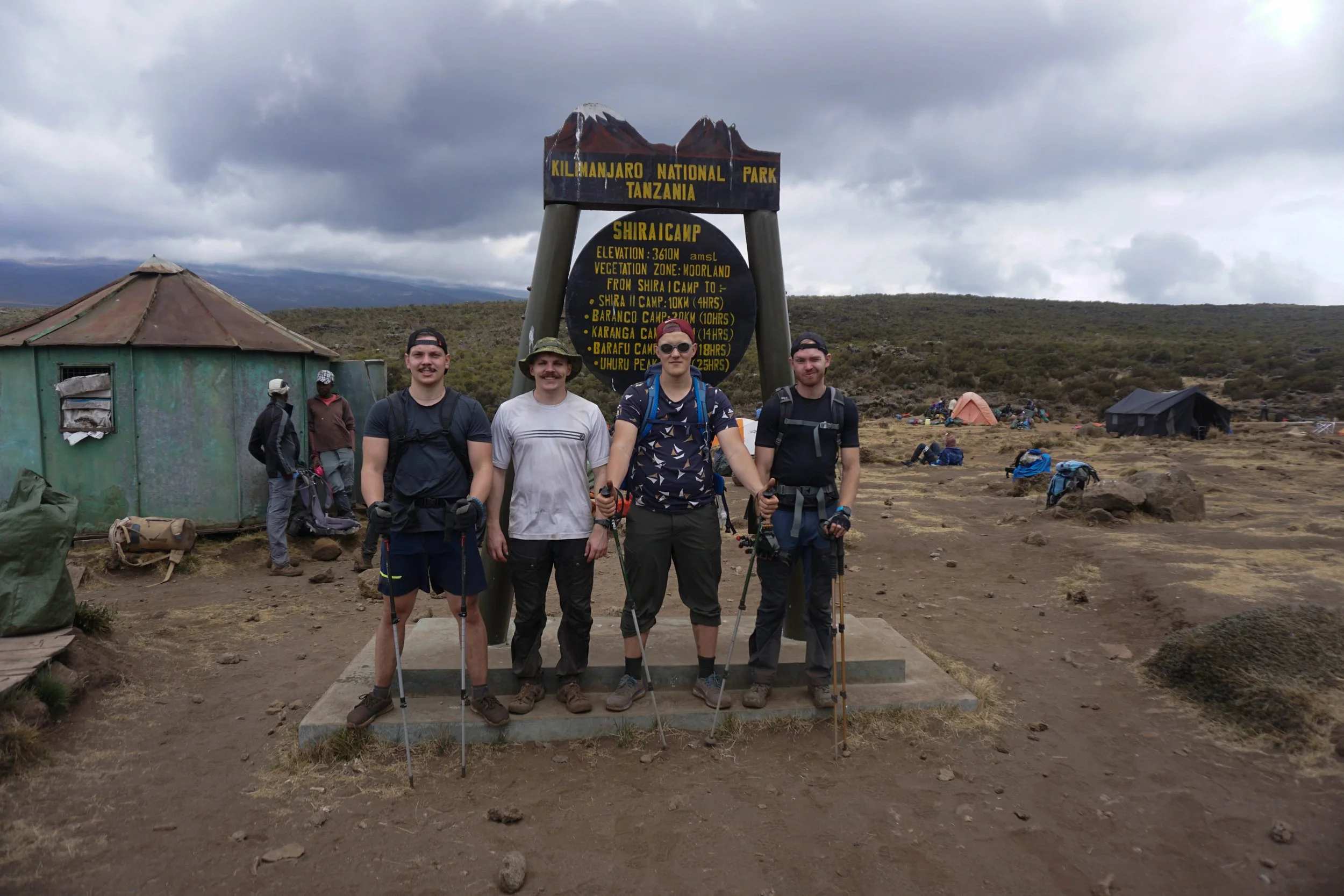
After breakfast, we move from Mti Mkubwa camp (2650 m) first along a similar landscape to the previous day, but from the south the jungle disappears and we move lower until we finally start to see through the trees and bushes, we have reached the lowland heathland landscape. After about 5–6 h (8 km) we reach Shira I camp (3610 m). By this time, the first ones already have a headache and their legs are starting to get tired. Fortunately, when we reach the camp, the support team has already prepared everything for us and all we need to do is eat and go to bed. If we are lucky, we can also wash our dusty feet in the wash basin – what a luxury. It is also worth mentioning that not all hikers stay at this camp, but those who have more days left, continue on to Shira II camp.



Day 5 – Acclimatizing to the altitude
It will be an easier day, as we move from Shira I Camp (3610 m) across the Shira Plateau to Shira II Camp (3850 m), which only takes about 1–2 h (4 km). The camp offers a view of the valley below and the western slope of Kilimanjaro towering above. The air is already cooler and it is worth finding jackets. The plateau is also not bounded by cliffs, so it is worth being prepared for cold nights. The goal is to get used to the altitude, or acclimatize. Those who are fit and not yet very ill with altitude sickness can hike even higher, rest there for a few hours and come back down.


Day 6 – We cross the 4000 m mark
Second day of acclimatization. We move from Shira II camp (3850 m) first along the flat moorland and in the second half of the day also along steeper rocky slopes to Lava Tower, also known as Shark's Tooth (4600 m). This is a remnant of former volcanic activity. We will have lunch there, but it is possible that some people will skip lunch due to altitude sickness (and those with a good appetite will have a fight for survival with the local hungry creatures who want to get their bite). Body and mind refreshed, we move down again to Barranco camp (3900 m). The whole day takes about 6–8 h (10 km).


Day 7 – A more peaceful day on the mountain
In the morning we wake up in frozen tents, but we are allowed to sleep longer, because we plan to have a shorter day. The trail starts from Barranco camp (3900 m) along a narrow stone path straight up for about 300 meters, where you can also put your climbing skills to the test. We walk leisurely again, because the path is narrow and in addition to us, there are probably many other people on the mountain, all of whom have to go up the same way. When we reach the top, we rest a little, enjoy the view and acclimatize. We then pass through a large valley and after about 4–5 hours (5 km) we reach Karanga camp (3995 m). We have lunch and rest. It is worth mentioning here again that not everyone stays at this camp, but there are those who go straight to the next camp to then reach the summit.


Day 8 – Summit Camp
We climb from Karanga Camp (3995 m) to Barafu Camp (4673 m). The day takes up to 4–5 h (4 km). Since we will start the summit climb the following night, we immediately throw ourselves into the tent after lunch, as every second of sleep counts. We are woken up again for dinner, and we discuss what to pack for the summit climb and what to be prepared for. Back in the tents, those who are lucky will still fall asleep, but most are anxiously awaiting the alarm that will ring at 23.30:XNUMX p.m.


Day 9 – Summit day!
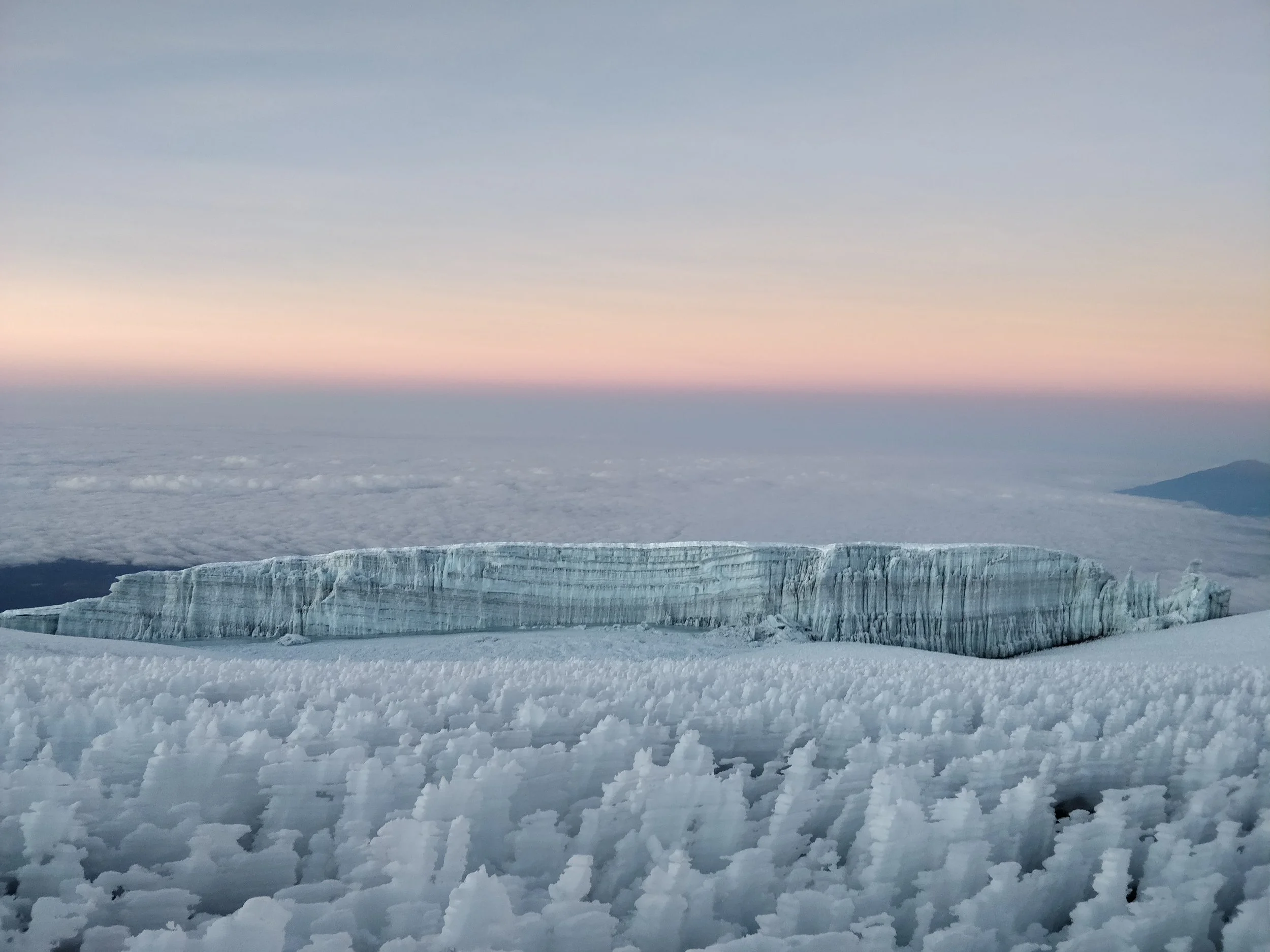
We wake up at 23.30:4673 p.m., have a quick and refreshing breakfast (or rather dinner) and, with headlamps and warm clothes on, set off at midnight from Barafu Camp (5895 m) towards the summit of Kilimanjaro, also called Uhuru Peak (5756 m). The climb is steep and slow and mostly done by looking at the toes of our boots. Before the summit comes Stella Point (100 m), where we have to admit with disappointment that it is not the right peak yet. About 7 m before the summit we reach a narrow path lined with icicles. The entire climb to the summit takes about 8–5 h (4 km). There we enjoy the panoramic view and an even more wonderful sunrise, take the obligatory summit photos and, since both the cold and the altitude are biting, we begin the descent (6 km) with our feet on boiled noodles to Mweka Camp (12 m) at the top of the rainforest zone. It is worth mentioning here that conquering a mountain is not only about reaching the top, but also about getting down, so you should also be careful when going down so that you don't slip with your soft feet. When we reach the camp, we eat, those who can, that is, we celebrate, those who can't, throw the tent in to sleep.


Day 10 – Back down
We wake up, have breakfast, pack up and move from Mweka Hut (3100 m) along the slopes of the rainforest to Mweka Gate (1640 m), which takes about 3–4 h (10 km). Here we receive official diplomas, assuming we reached the top of Stella Point or Uhuru, and leave the tip to the support team. The cars take us back to the hotel in Moshi, where we can finally wash and rest! Accommodation at the hotel.

Day 11 – Tarangire National Park

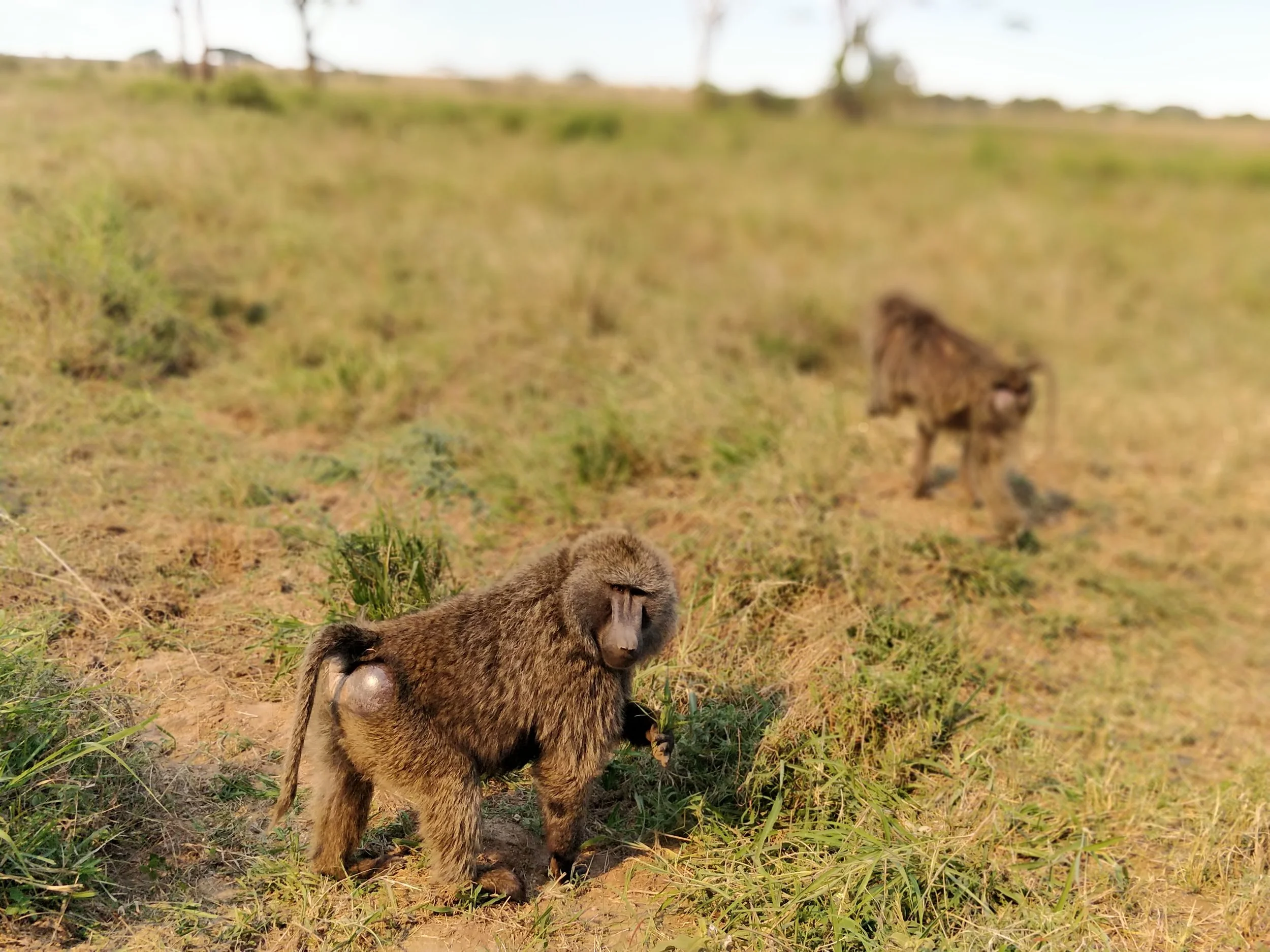
A three-day safari begins. We are picked up from the hotel and taken to Tarangire National Park (approx. 4 hours), which is the sixth largest national park in Tanzania and is named after the Tarangire River that flows through the park. The Tarangire River is an important part of the ecosystem in a place with a year-round dry climate, as it is the main source of clean water for animals. Tarangire is also home to Tanzania's largest elephant population, it is also an ornithologist's paradise, being home to more than 500 bird species, and Tarangire National Park is considered a conservation unit for lions. We can encounter zebras, giraffes, wildebeests, buffaloes, antelopes, anubis and many different predators. We spend the night in comfortable huts in the wild.
Day 12 – NGOrongoro Conservancy
Today we plan to visit the Ngorongoro Conservation Area, which is a World Heritage Site. It is named after the Ngorongoro Crater, which is the world's largest inactive, untouched and unfilled volcanic caldera, home to some twenty thousand large wild animals. It was formed about 2–3 million years ago when a large volcano exploded and collapsed. The crater is considered one of the seven natural wonders of Africa. From the edge of the crater, we will have the opportunity to admire the entire 600 m deep and 20 km diameter crater floor in its entirety. On the way to Ngorongoro, we will also have the opportunity to get acquainted with the life and customs of the Maasai village tribe. We will spend the night in comfortable huts in the wild.




Day 13 – Lake MANyara National Park
After breakfast we drive to Lake Manyara National Park, famous for its resident flamingos and the opportunity to see majestic lions among the acacia forests. At the other end of the park is a hippo pond, where you can get out of the car and observe these large animals from a safe distance. Overnight at the hotel.
Day 14 – REST DAY
We rest and prepare for the return trip. There is still time to enjoy local life in Moshi and shop at the market (e.g. buy cheap souvenirs to take home for a mural). Accommodation at the hotel.
Day 15 – BACK HOME
All done. Now all you need to do is get back home. Transfer to Kilimanjaro (JRO) airport and from there take a flight back to your home country.

NB! There may be minor changes to the schedule and planned activities. for example, due to weather and conditions or the wishes of passengers.
Tanzanian specificities
Tanzania has two official languages: Swahili and English.
The official currency of Tanzania is the Tanzanian shilling (1€ = 2324 TZS), but many places also accept US dollars. It is cheaper to pay in the local currency, but larger purchases are made in dollars. Also, make sure that the banknotes are not older than 2006.
The sockets are different from those in Estonia (like the English plug) and an adapter is required.
Tap water is not drinkable and only use bottled water (make sure the bottle caps are closed, as it may happen that the bottles have been refilled with tap water).
It is not allowed to take regular plastic bottles from stores to Kilimanjaro, but reusable hiking bottles are allowed.
Tipping safari and mountain guides is strongly recommended (almost mandatory), and hotel/restaurant staff also expect tips.
Kilimanjaro has a group of 10 people with 1 head guide, 3–4 assistant guides, 1 cook and 1 assistant cook. There are 2–3 porters per climber. The allowance is $25 for the head guide, $15–20 for the assistant guide, $15 for the cook, $10 per day for the kitchen assistant and $7–10 per day for the porters. It is recommended to allow around $200–250.
The safari costs approximately $25 per car per day.
The support staff will be very grateful if you leave them your old clothes or hiking equipment as a gift, or if you have brought some souvenirs from Estonia.
Keep $1 or 1000 shillings in your pocket, you never know when you might need to tip.
On safari, it is recommended to wear clothing in colors that will not attract attention or scare away animals.
People are very friendly.
Dare to trade!
Medical information
In Tanzania, there is falciparum Malaria risk is present throughout the year in all areas of the country below 1800 m above sea level. It is recommended that people travelling to malaria-prone areas take antimalarial medication as a prophylaxis. Read more: https://www.kliinikum.ee/patsiendiinfo-andmebaas/malaaria/
Vaccination:
Check that you have received the national immunization schedule vaccines and their booster doses, as well as seasonal recommended vaccines (including the flu and Covid vaccine).
It is highly recommended to get vaccinated against hepatitis A when traveling to Tanzania.
Yellow fever vaccine is mandatory for all travelers over 1 year of age arriving from countries with a yellow risk level (including those who have transited through an airport in a country with a yellow risk level within the last 12 hours). The certificate will become valid 10 days after the vaccine.
From Kilimanjaro
Seven (mountain) peaks (english) Seven Summits) are the highest peaks of six continents, but since Europe and Asia, which are actually continents, are counted separately, there are seven peaks in total, not six. Kilimanjaro (5895 m) is the highest peak in Africa, located in the Kilimanjaro National Park in northeastern Tanzania, which is a UNESCO World Heritage Site. It is originally a stratovolcano with three separate cones: Kibo or Uhuru Peak (5895 m), Mawenzi (5149 m) and Shira (3962 m). The latter two are extinct, but Kibo is a dormant volcano that can still become active, i.e. Kibo still has a magma chamber that has not solidified. Kibo last showed activity 200 years ago, so the trip should definitely not be left behind, a little sulfur smell before the summit is normal. Kilimanjaro is the world's largest freestanding (detached, not part of a mountain range) with a volcano.
The 8-day Lemosho trail we have chosen is considered the most beautiful trail on the mountain, and it is not as crowded as some others. Sufficiently long acclimatization significantly increases the probability of reaching the summit, which is 8% for an 90-day trail; while for example, only 6% for a 75-day trail. It is a high enough mountain not to underestimate the importance of acclimatization and the dangers of altitude sickness.
Kilimanjaro has a large number of porters, but unfortunately their welfare and working conditions are often inhumane – breaking the rules, they are made to carry dozens of kilograms of equipment, are not fed enough, and are mistreated. An organization has been created to improve this. KPAP, which ensures that porters are treated humanely. We have chosen a local partner with more than 10 years of experience, a guide company that is also part of the KPAP program and with whom we have previously collaborated. For the well-being of both you and the porters, to ensure a memorable and positive experience for everyone!
Travel documents and footnotes
The participant is responsible for the validity and condition of their travel documents. For this trip you will need:
passport;
visa, which can be formalized at the Tanzanian border (~50€);
sports insurance suitable for mountain hiking (read more on the FAQ page). A suitable sports insurance policy must be carried and is a prerequisite for participating in the mountain hike.
travel insurance.
At least one month before the trip, we will make a decision whether the trip is possible under Covid-19 conditions. If the trip is canceled due to circumstances caused by the pandemic that make the trip impossible (e.g. closing of national borders), we will refund the advance payment in full.
Plan your trip early and start training for it. We will organize several trial trips, training sessions and recommend training plans beforehand. It would be a shame if the peak was only behind the physique. Also a good opportunity to get in shape. ;)
Summits are not guaranteed. As you might expect, weather is king in the mountains. So it is entirely possible that weather or dangerous conditions will prevent us from even attempting the summit. Nevertheless, it will definitely be an awesome experience!
Although at the end of the day everyone is still responsible for their own actions and consequences, we do our best to mitigate the risks associated with mountaineering. As a result, the group leader has the right to make ongoing decisions about the competence of the participants, the suitability of their equipment, physical/mental capacity, etc. and, if necessary, for example, to prohibit participation on summit day if it endangers the health of the group or the participant themselves. Hopefully, of course, there will be no need for this.
Read more also travel conditions or feel free to ask the adventure locomotives.
Don't worry, let's do it!
My altitude record is Munamägi. Can I still do it?!
Yes, you can. Going straight to the top of such a high peak may seem daunting at first glance, but it's not that bad at all – especially if you have a good hiking guide at your side. You have to train and mentally prepare yourself for the effort. However, no mountain should be underestimated.
But I don't have any hiking gear, who can afford to buy it?
You'll still have to spend a little, but not much. Hiking and climbing equipment can be rented at a very reasonable price and, of course, borrowed from friends. In addition, you can use any kind of clothing you have - for example, a ski jacket is also very good for the mountain. The more resourceful can manage with almost no additional expenses.
Will I survive?
It's an extreme sport/hobby, but you shouldn't be too afraid here. Of course, there are certain dangers in the mountains and you have to take them into account, but that's what makes it so exciting. The most important thing for the group leader is to ensure the safety of the participants. The point is still to have an enjoyable experience and not let the mountain go away. ;)
Okay, I registered. Now what?
Well, theoretically you could just vanish into thin air and appear on a plane. That's possible, but we highly recommend taking part in preparatory events - it's part of the fun. We organise preparatory hiking training, advise on suitable insurance and equipment, where to rent cheaply, what to train for, etc. We will definitely review the equipment you have collected just before the start of the trip and send reminders about important things.
Read more also frequently asked questions.
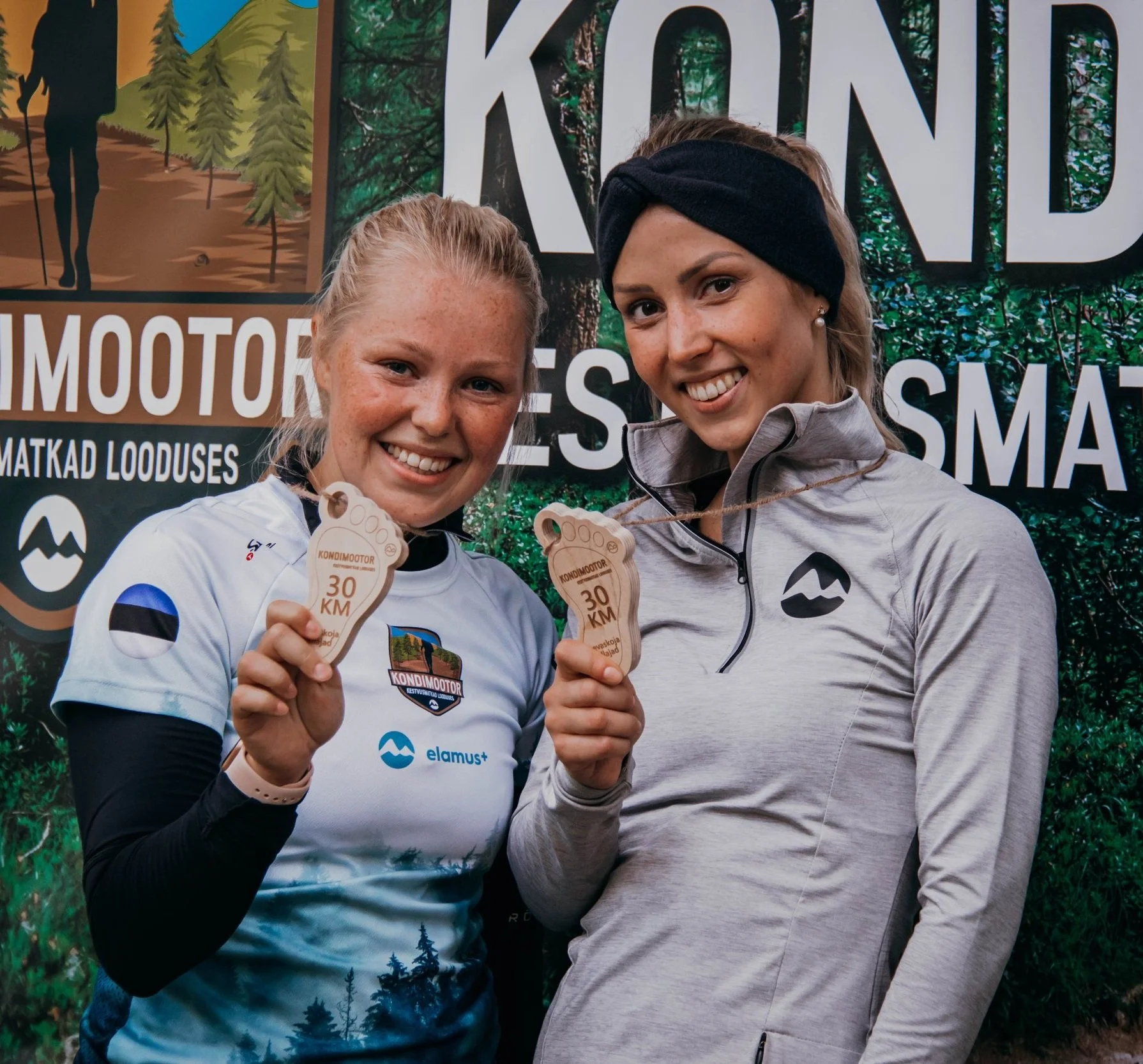
Locomotives Triin and Laura