
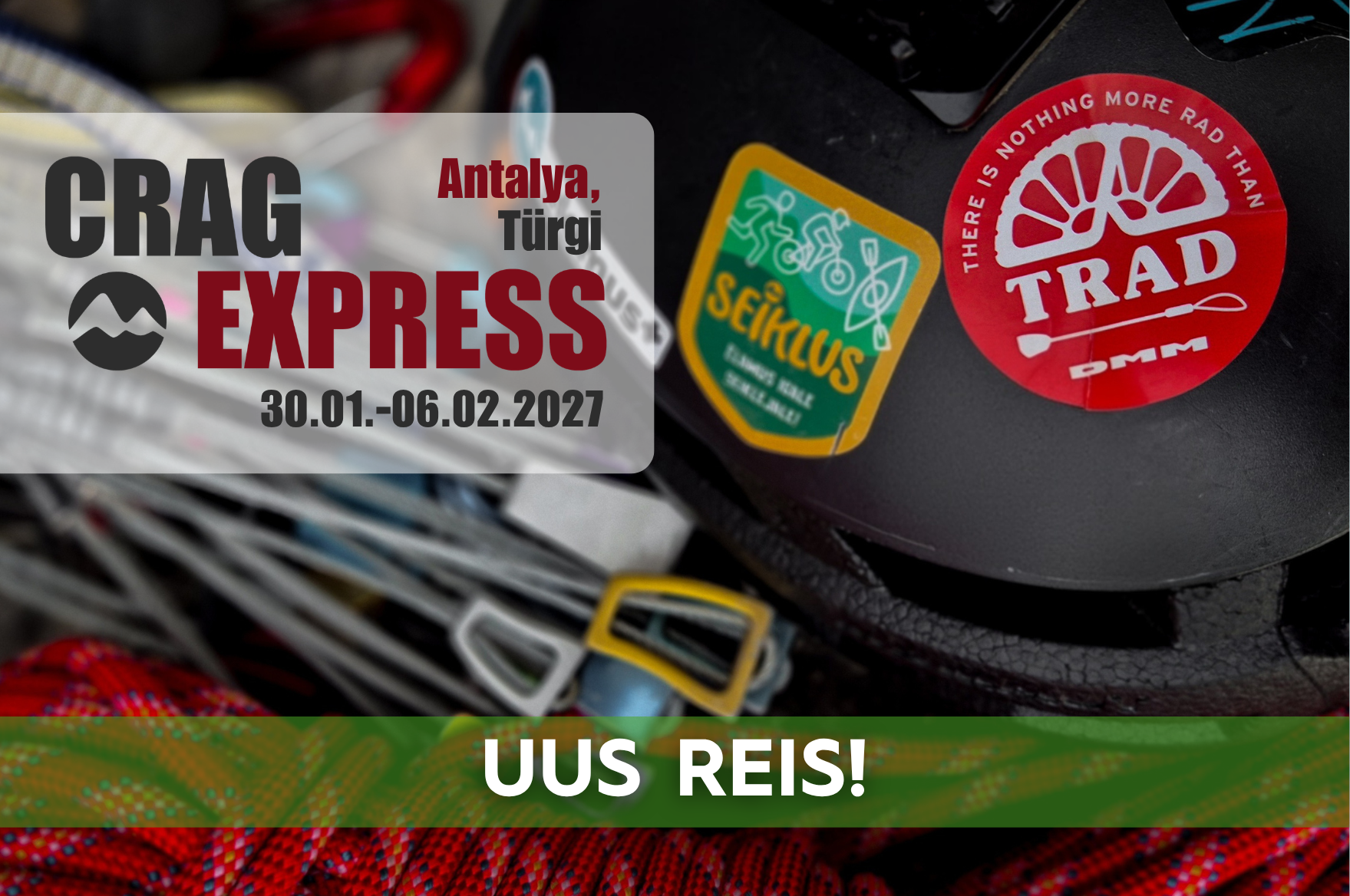
Trad-Climbing training week in Turkey!
A trip for serious climbing fans! Crag Express is a series of trips where we take you to discover exciting crags all over Europe. This particular trip is an advanced version of Crag Express, where we practice traditional (trad) climbing. We call it Trad Express.
Trad climbing has a long history in the UK, USA and South Africa, but it is still a niche field in Estonia. Trad Express was created to give Estonian climbers a practical and accessible opportunity to experience trad climbing, learn its basic skills and become part of the growing Estonian trad climbing community.
This is not just a climbing trip. Trad Express is a practical trad climbing training week where participants move step by step from building anchors and placing belay devices to post-climbing trad routes, removing equipment and belaying first. lead) to trad tracks. For advanced players, we also offer the opportunity to explore trad multi pitch with paths.
The trip is designed for climbers who:
• Have a red card from the Estonian Climbing Association (leading climbing competence).
• Have some outdoor climbing experience.
• Want to learn trad climbing.
• Want to try trad equipment before making a major investment.
• Prefer to learn through practical climbing.
Previous trad climbing experience is not required.
Participants should be able to climb routes of approximately 5c–6b difficulty on an indoor climbing wall.

We're escaping the dark winter to the warm cliffs of Turkey! Specifically, we're visiting the countless cliff paths around Antalya.
We will spend a total of 6 full days on the cliffs. On the first days we will get to know the equipment and learn how to place it. On the following days we will climb shorter and easier routes. On the last days, participants will have the opportunity to trad multipitch.
We will be moving around with rental cars to explore as much as possible during these 6 days. We will be staying in bungalows located in the immediate vicinity of the cliffs, where there are also cooking facilities. The nearest cliff is 200 m from the accommodation. Grocery stores and several restaurants are also within easy reach.
About the region
Antalya is a city on the southern coast of Turkey, on the Mediterranean Sea, surrounded by the Taurus Mountains. The most famous climbing center in the region is Geyikbayırı, located about 25 km from Antalya. It is one of the most important winter climbing destinations in Europe. The highest mountains in Geyikbayırı reach over 2500 meters, but the climbing areas are mainly located at an altitude of about 450–1000 meters. In addition to Geyikbayır, there are several other climbing areas in the Antalya region, such as Olympos, Çıralı and Çitdibi.
The climbing culture in Geyikbayır is quite young. The area was discovered for climbers around 2000, and the first 30 or so routes were opened there between 2000 and 2002. An article published in Klettern magazine in 2002 brought the area to the attention of European climbers, and this began a rapid development. In the following years, new sectors were bolted and Geyikbayırı became the most important climbing area in Turkey. Today, there are over 1000 routes there, and together with the surrounding areas, newer topo books describe nearly 1600 sport routes.
The main attraction of Geyikbayırı is the very high quality limestone and the huge variety of routes. There are technical vertical walls, slabs, pockets, large cornices and especially characteristic tufas ja stalactitesThe difficulty of the routes ranges from about 5a to 9a, with a very large proportion of the classics falling between French difficulty levels 6 and 7. The area is very well suited for climbers of different levels, as the easier and more difficult routes are often located quite close to each other.
February is one of the best months for climbing in the Antalya region. The average daily maximum is around 12-15 °C and the temperature drops to around 3-6 °C at night. Although winter is the rainiest period in Antalya, with an average of around 10-12 rainy days in February, the rainy periods are often short and the region has many sectors and negative routes that can be climbed even after the rain if the conditions are right. The climbing season in Geyikbayırı generally runs from October to April, with January-February being the classic winter climbing season.
The sea water in the Antalya area in February is around 17–18 °C, which is still very warm compared to the Estonian winter weather, although it is already rather chilly for swimming.
NB! To come on the trip, you must be able to climb at least 5c indoors with protection.
👉 SEE EQUIPMENT LIST HERE 👈


Overview - short & sweet
Objective: Trad climbing training camp in Turkey
Dates: 30.01.-06.02.2027
Activity: rock climbing
Adventure guides: Kaarel Kuslap and Rene Ollino
Technical difficulty level: 3/5 (required) lead security skills)
Physical difficulty: 1-3/5 (according to the goals you set for yourself)
Group size: min 8, max 10 (including 2 guides)
Trip price
Early bird (until 30.11.2026) — €1190
Late Registration (from 01.12.2026) — €1429
NB! Elamus+ community members get a 5–10% discount. Read more and check your discount eligibility. community members page.
Travel cost
Price includes
Transportation from Antalya Airport to your accommodation and back (rental cars)
Rental car use and fuel on the island throughout the trip
Accommodation (bungalows)
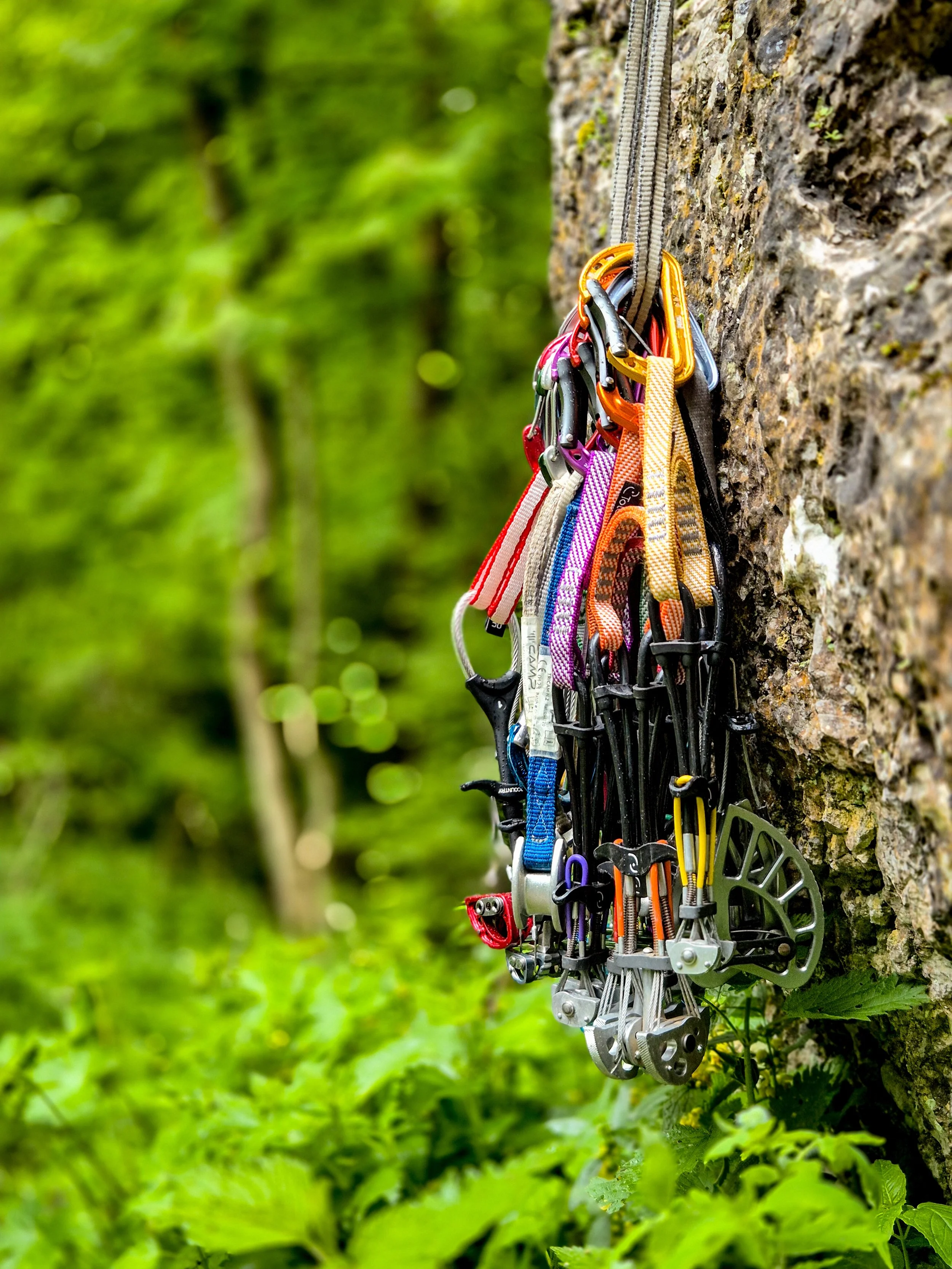
Group equipment: ropes, express, 4 trad kits, pharmacy, topo book
On-site trad ja multi-pitch training with internship
Stylish Elamus+ sports shirts
On-site instruction by EKR3 certified climbing coaches (1:4 instruction)
Memorable memories
Price does not include
Flight tickets Tallinn-Antalya-Tallinn (prices from €200)*
Transport to and from Tallinn Airport
Meals (in the bungalows we cook together and split the costs between us)
Insurance (travel insurance and MANDATORY sport insurance suitable for climbing )
Personal hygiene products and medications
Personal climbing equipment: climbing shoes, climbing harness, helmet, safety device, self-belay device, carabiners, etc. (helmet and harness can also be rented if necessary) Elamus Pluss)
Unscheduled excursions, transport, etc. (or if you want to do something extra, e.g. diving)
*For more information about a specific flight, please ask the adventure guides.
Registration for the trip
Before registering, please read travel conditions. To secure your place on the trip, a prepayment (20%) must be paid within 3 working days of receiving the confirmation and invoice by e-mail. If there are less than 30 days left until the trip, the total cost (100%) must be paid. Read more: frequently asked questions ja package tour information sheet.
Schedule
Day 1 (30.01): Voices on the plane
The most sensible way to get to Turkey is by direct flight from Tallinn. We fly to Antalya airport, where we meet the locomotives. We must be in Antalya no later than 7:00 PM. There we get into rental cars, which we drive for a few hours along the bright blue Mediterranean coast to Geyikbayırı. This city is the main climbing center in the region and will be our base for the rest of the week. There we have bungalows (a wooden one-story summer house) with both double beds and single bunk beds. We will assemble the rooms on site according to your preferences.


Day 2 (31.01): we will go over ropework skills
The week begins with theory and practical exercises, during which we learn how to build anchors, place belay points and use systems. We each build stations from different equipment, try hanging in them and evaluate and give each other feedback. We compare the properties and uses of different equipment. In addition, we give a lecture on terminology and the history of trad climbing.
In the evening we will summarize the day and make plans for the following days. In addition, in the evenings you can play board games, watch climbing films and go to local restaurants to get acquainted with Turkish cuisine.
Days 3-7 (April 01-05.02): CLIMB!
Every day we have a meeting to set the goals and routes for the next day. Rene and Kaarel try to direct the groups to multipitch and try easy trad routes, but it's also perfectly okay to just test your limits on the sport routes for a few days. Or take a day off from climbing altogether, for example by exploring local hiking trails.
General progression plan:
Trad trail post-climbing
Learning to remove equipment
Practicing equipment placement in top security top rope)
Evaluating placements
Developing track reading skills
Independent trad lead-climbing under the supervision of an instructor
Trad multipitch towards the end of the journey
We can either have dinner and breakfast together or use the services of nearby restaurants. However, the prices at the restaurants are reasonable enough to enjoy local delicacies every night!
Day 7 (06.01): return flight to Snowy Estonia
We travel back the way we came to winter Estonia.
NB! The schedule and planned activities may be subject to minor (or major) changes — for example, due to weather and conditions or passenger requests.
Don't worry, let's do it!
I've never climbed natural rocks before. Can I still do it?!
This trip is an advanced trip, we recommend starting your outdoor climbing with a regular Crag Express trip to, for example, Kalymnos, Poland or El Chorro.
I really want to come on the trip, but I don't know how to do this security stuff. Can I still come?
However, you need to learn how to belay in order to be able to climb rocks. If you don't know how to do it yet, there are several options:
In the climbing factory (Tartu) or In the Ministry of Climbing (Tallinn) complete green and red card training, which gives you the right to climb independently in indoor halls, but during the process you will also learn how to belay.
Join Elamus+ with mountaineering training, where in addition to climbing, you can also learn the most important knots, solve rescue situations, and other exciting rope work. You will have time to learn belaying before the trip.
It is also possible to take private training from us,in Tartuor in Tallinn.
But I don't have any personal climbing equipment. Where can I get it and what kind of equipment is suitable?
You can rent or buy climbing equipment. When renting or borrowing, keep a critical mind. Climbing equipment has a lifespan of 8-10 years. If you find used old equipment somewhere, it's worth remembering that your own life depends on it. If things seem decent, renting can really save you some money by bringing it with you for one trip. Elamus+ The equipment rented by us is safe and has already been inspected by the adventure guides, so there is no reason to worry when renting from us.
It is wise to try out the equipment when buying. A climbing harness and slippers should be comfortable. A rope suitable for outdoor conditions is a 60-80 m long, weatherproof, and 9,5-10,5 mm thick dynamic rope. The thicker the rope, the harder it is to climb with it. However, a thicker rope has a longer lifespan.
If you are a confirmed visitor and are missing a few items that you need advice on purchasing, feel free to ask the tour guides for advice.
What is trad climbing? Can I come on the trip if I've never done it before?
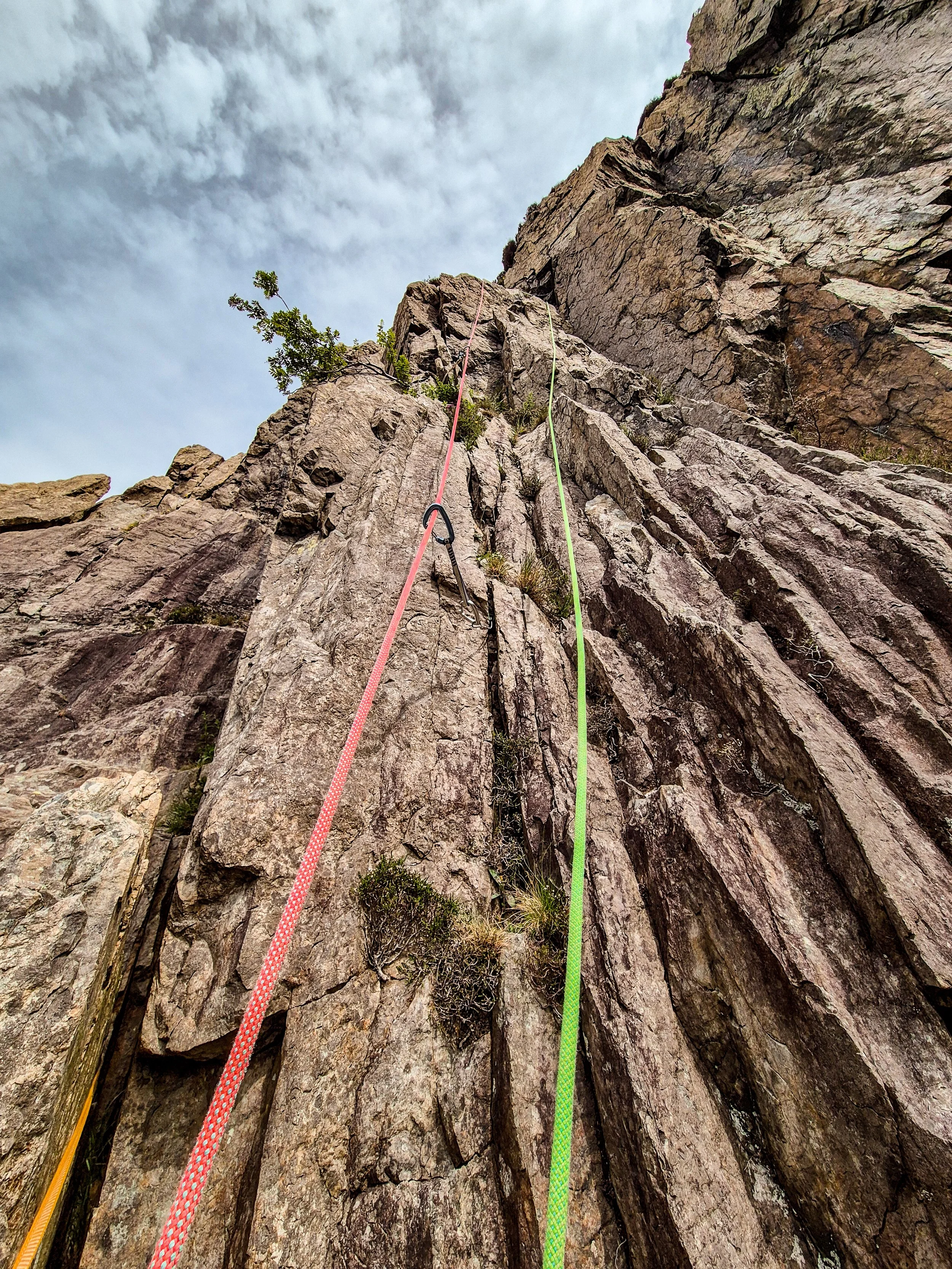
Trad means climbing on a route where no bolts or other safety points are installed. The lead climber installs various crevice tools in the rock cracks, which are later removed. Trad, or traditional climbing, is also called clean climbing, because it preserves the rock better (no objects are drilled into the rock). Practicing trad climbing is also beneficial for alpinists who want to climb AD and more difficult routes, because there is also a need to place crevice tools on the route from time to time.
You don't need to have any previous experience with trad climbing to come on the trip - that's the purpose of this trip, to learn it on the spot.
Read more also frequently asked questions.


Travel documents and footnotes
The participant is responsible for the validity and condition of their travel documents. For this trip you will need:
Passport; Estonians are visa-free for 90 days, but the passport must be stamped and an ID card is not acceptable. The passport must be valid for at least 150 days after the start of the trip.
sports insurance suitable for climbing (read more on the FAQ page). A suitable sports insurance policy must be carried and is a prerequisite for participation in the trip.
travel insuranceNB! We recommend that you take out travel insurance immediately after receiving confirmation of your registration for the trip, so that you are also covered for longer-term health problems.
Plan your trip early and start training for it. If you've never been to rock climbing before, now is the time to familiarize yourself with the terms: eight-knot, express, station, backstep and safety equipment. It would be a shame if you couldn't come along just because you don't have safety skills. If necessary, we can arrange some private training to reinforce safety techniques when climbing a big wall. Read more FROM HERE. ;)
Although at the end of the day everyone is still responsible for their own actions and consequences, we do our best to mitigate the risks associated with climbing. As a result, the group leader has the right to make ongoing decisions about the competence of the participants, the suitability of their equipment, physical fitness, etc., and, if necessary, prohibit access to certain routes if it endangers the health of the group or the participant themselves. Hopefully, of course, there will be no need for this.
Read also travel conditions.
Contact

Adventure guides:
Rene Ollino
Tel: 5660 0428
Email: rene.ollino@gmail.com
