
High cliffs and croissants - yes!
A trip for true climbing enthusiasts! Crag Express is a travel series that takes you to discover exciting crags all across Europe. This trip is perfect both for seasoned climbers and beginners who have never climbed outdoors before. All you need is the desire to climb and the ability to belay—we’ll teach you everything else on the spot.
We have made many trips to this heart of European mountaineering, but never before have the rocks been the focus of these trips.
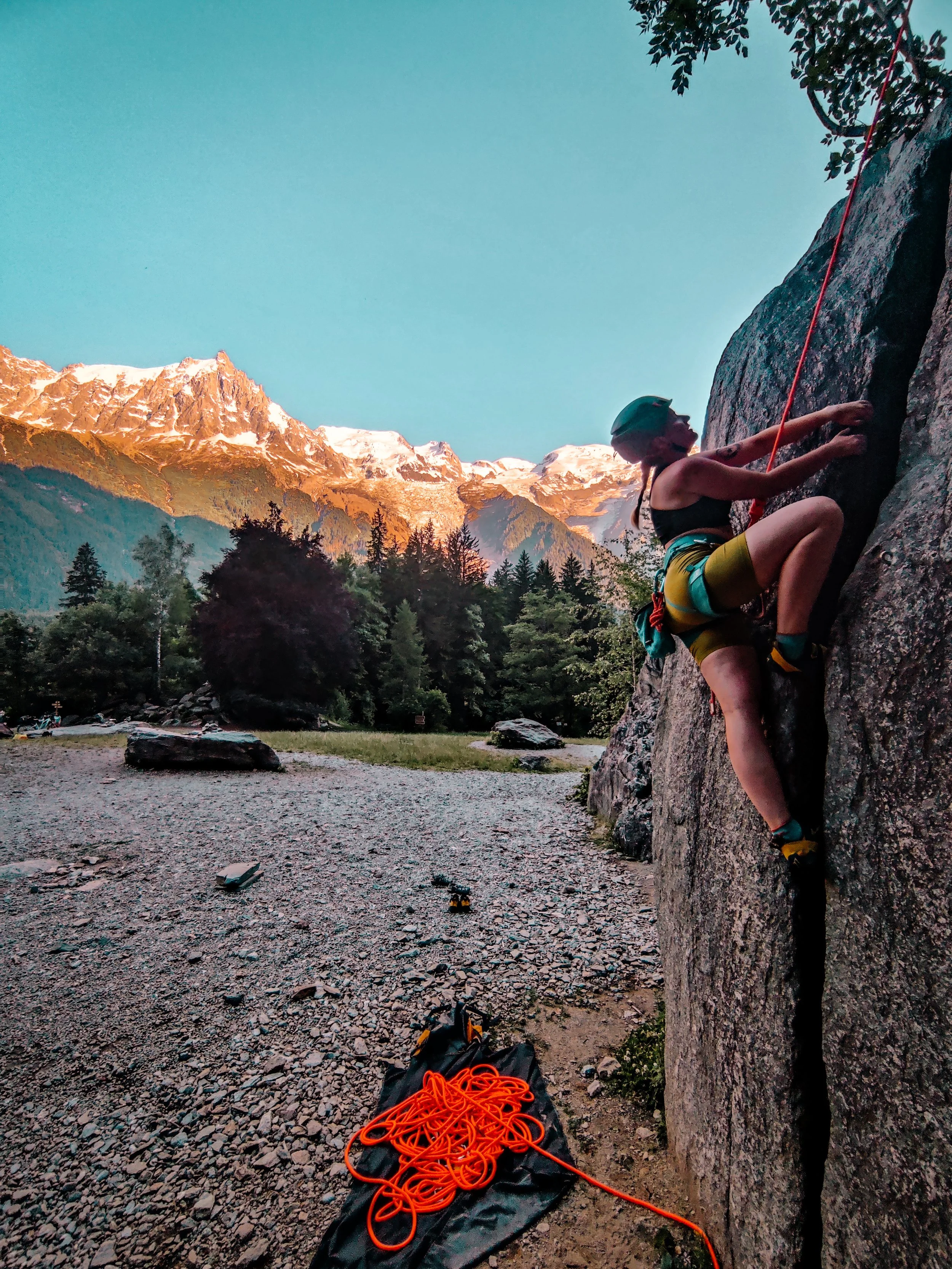
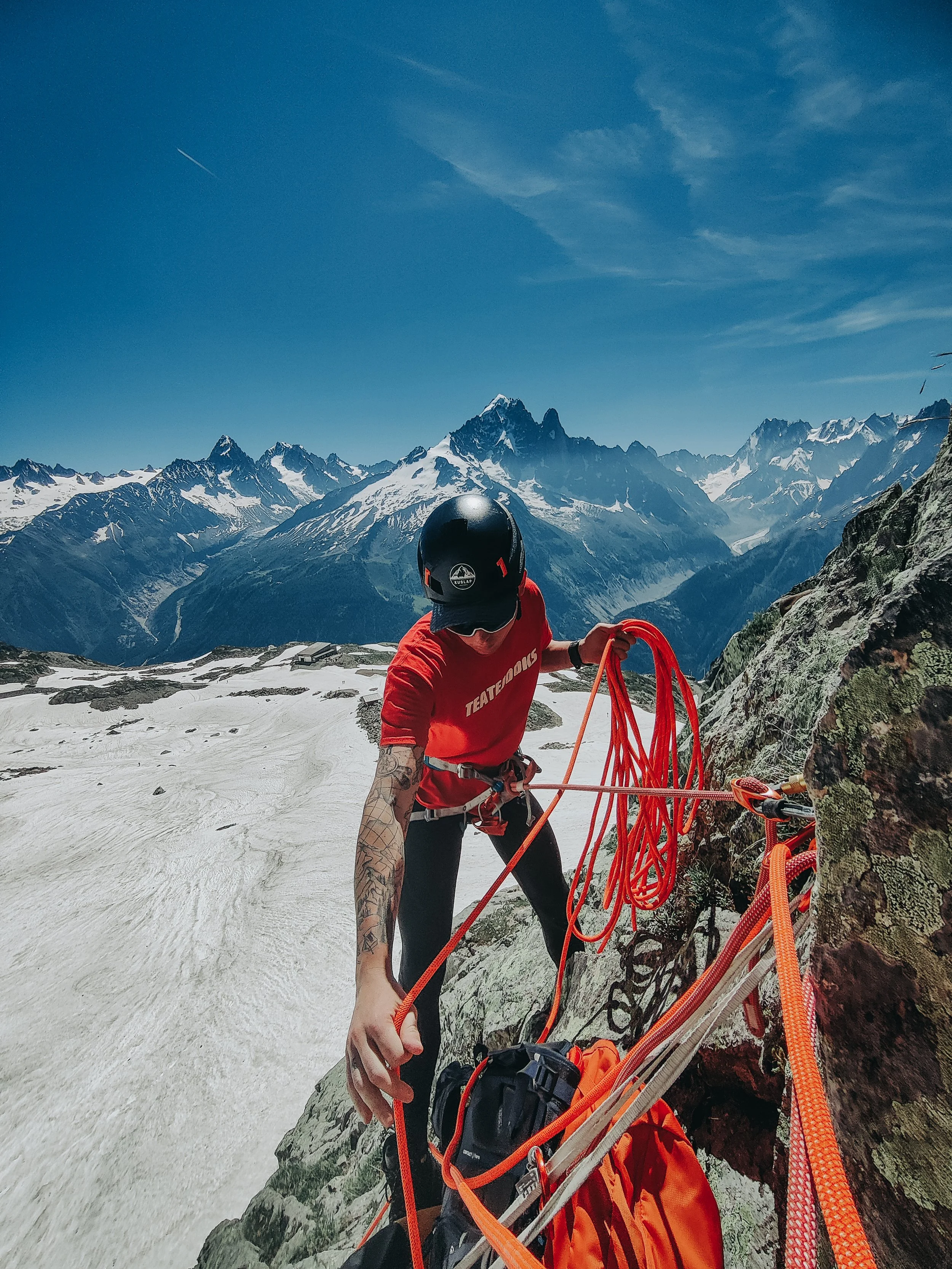
Many people travel to Chamonix to climb Mont Blanc. But in fact, the Chamonix Valley has plenty of exciting crags, multi-pitches and rock routes to explore!
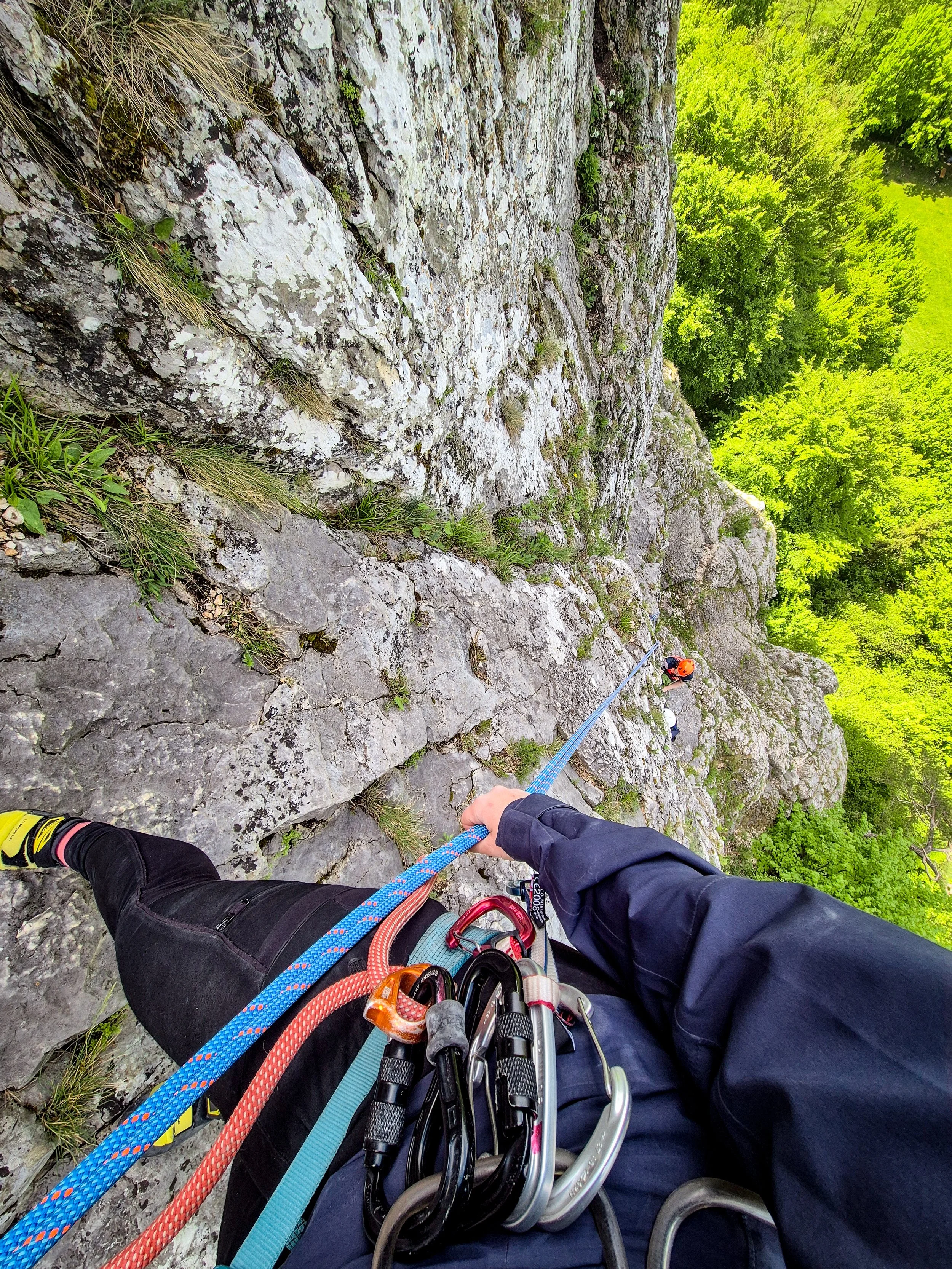
The trip is suitable for climbers of all levels. A beginner climber can learn the specifics of outdoor climbing at a leisurely pace on easier routes, while a more experienced climber can even climb a few multi-pitches every day - there are many of them in this area. There are opportunities for both sport and trad climbing.
Speaking of the latter... We will also be holding a trad climbing workshop on site, during which anyone who wishes can learn how to place their own belay devices.
We will be climbing in Chamonix for 6 full days. During this time, the schedule is completely free - those who want to can climb all days from morning to evening; those who want to can take a few hiking or city days in between, tour the via ferrata trail, or enjoy the local atmosphere in any other way that suits them.
We are staying in a lovely, peaceful campsite 4 km from Chamonix. Frequent buses and trains leave from the campsite in all directions - both to the city and to the mountains.
About the region
Chamonix is the town where modern mountaineering began in the late 18th century. In addition to the famous Mont Blanc, the valley is home to several 4000m peaks, as well as lower, technical cliffs with exciting routes. In addition, the valley has several single ja multi-pitch crage, to get there you first have to take a gondola ride higher - climbing the 3000 m high Brevent cliff is quite impressive, for example.
Chamonix also has a wide variety of climbing and hiking equipment shops, restaurants, grocery stores, etc. It's common to see people walking around with climbing equipment or mountaineering boots on in the streets. A truly extraordinary place to visit!
NB! To come on the trip, you must be able to climb and belay at least with a safety harness.
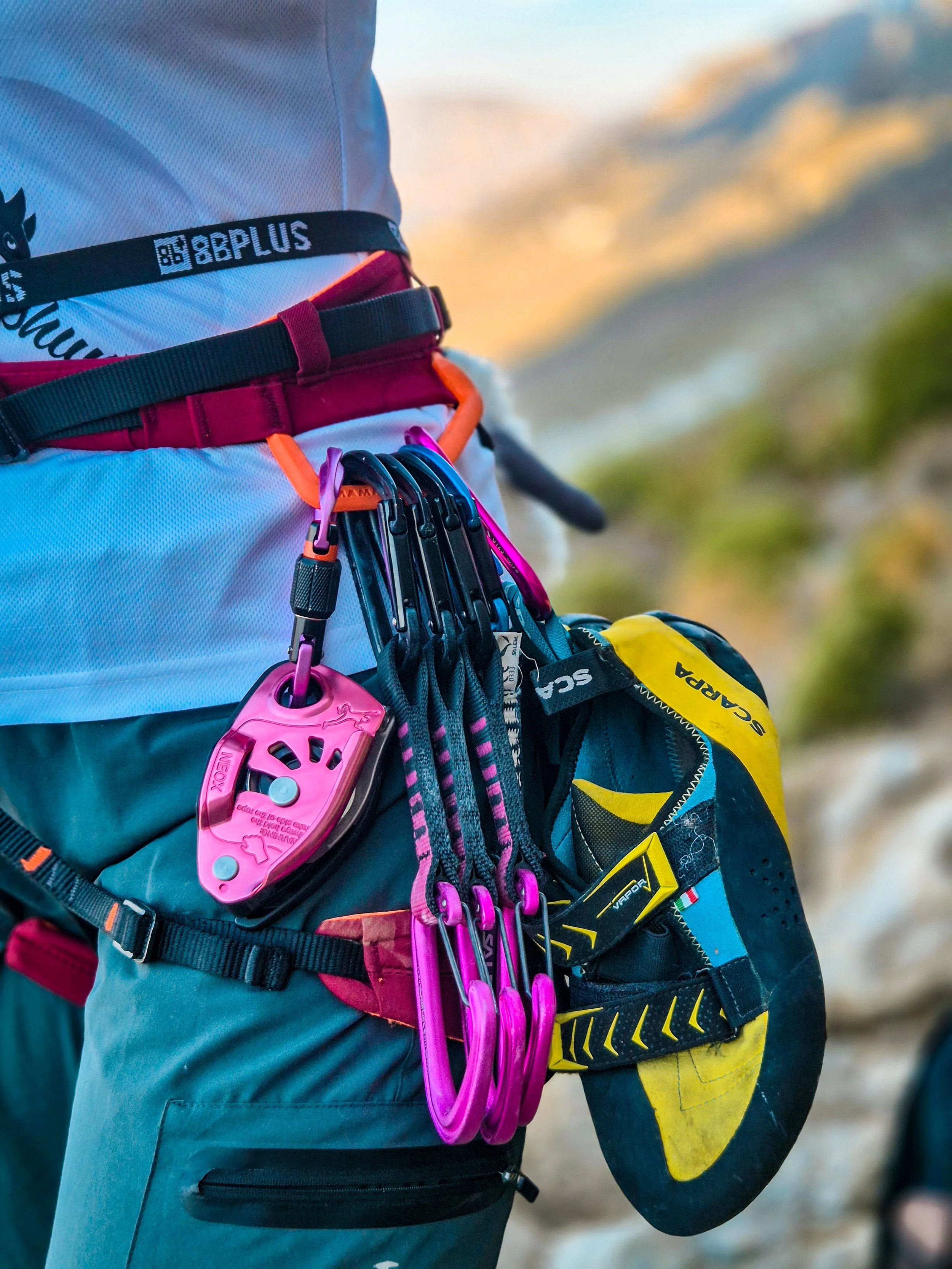
It is not necessary to buy all the climbing equipment yourself (ropes, quickdraws, carabiners, slings) - group equipment is included in the tour price. However, if you and your climbing partner want to be independent of group equipment, you can bring a rope and quickdraws with you.
👉 SEE EQUIPMENT LIST HERE 👈
Overview - short & sweet
Goal: Climb the rocks in Chamonix
Dates: 25.07-01.08.2027
Activity: rock climbing
Adventure guide: Kelli Saar, Jurgen Rekk
Technical difficulty level: 2/5 (belaying skills required)
Physical difficulty: 1-3/5 (according to the goals you set for yourself)
Group size: min 8, max 12 (including 2 guides)
Trip price:
for early registrants (until 30.11.2026) — €1090
for those considering longer (01.12.2026-31.03.2027) — €1190
for last minute decision-makers (from 01.04.2027) — €1290
NB! Elamus+ community members get a 5–10% discount. Read more and check your discount eligibility. community members page.
Travel cost
Price includes
Accommodation in a cozy tent camp near Chamonix
Gondola tickets for the entire trip (Mont Blanc multipass)
Train tickets for travel in the valley
On-site coaching by coaches with EKR3 and EKR4 certificates
Trad climbing and multi-pitch workshops on site
Single entry to the indoor climbing hall
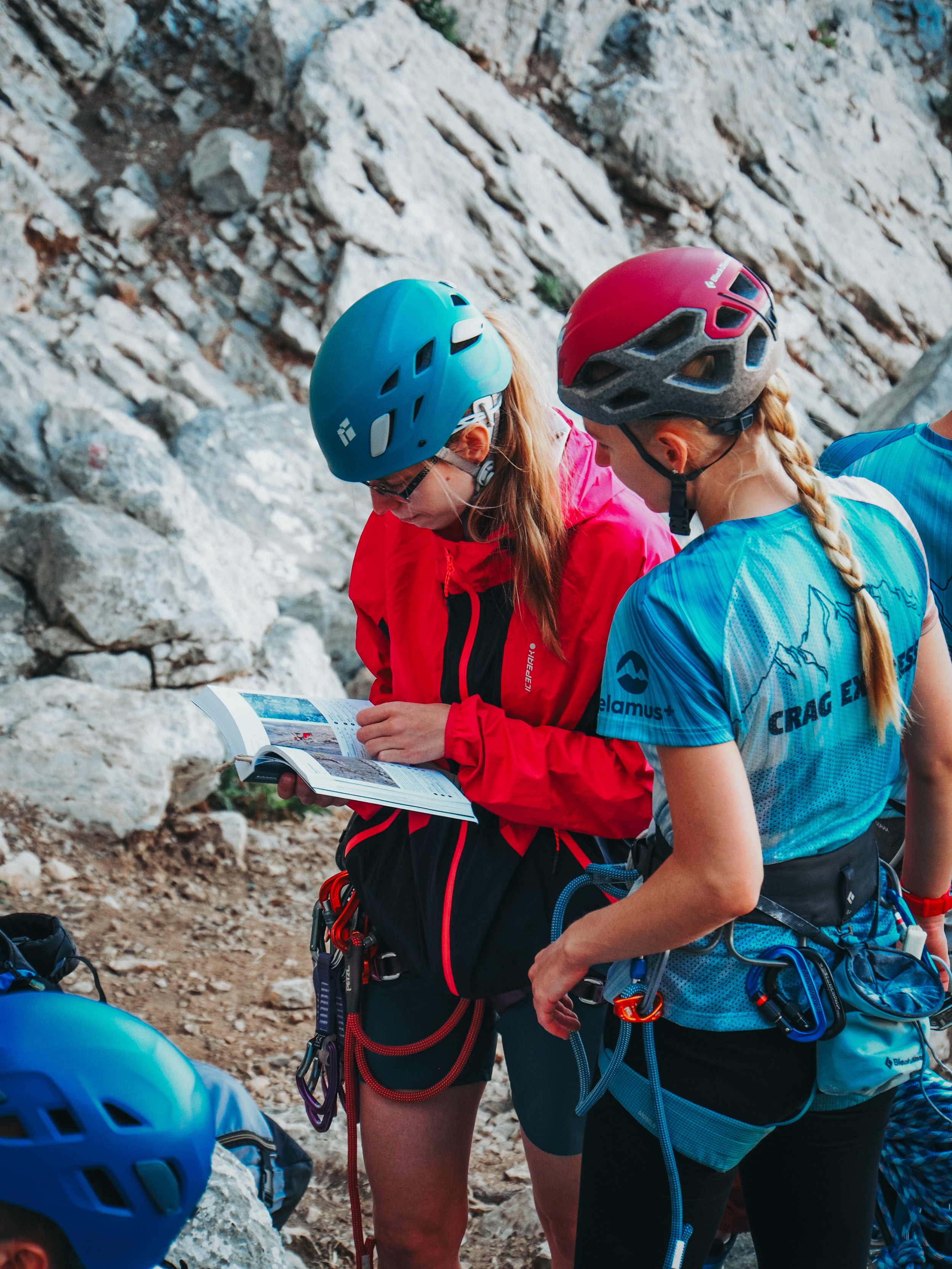
Group equipment: ropes, express, trad equipment (2 sets), pharmacy, topo books
Stylish elamus+ sports shirts
Memorable memories and photos of you climbing
Price does not include
Flight tickets Tallinn-Geneva-Tallinn (including luggage approximately €400)*
Transport from Geneva Airport to Chamonix
Meals throughout the trip
Bus ticket for travel in the valley
Personal climbing equipment (can also be rented if necessary from Elamus Pluss)
Insurance (travel insurance and MANDATORY sports insurance suitable for climbing)
Personal hygiene products and medications
Unscheduled excursions, transportation, etc. (or if you want to do something extra)
*For more information about a specific flight, please ask the adventure guides.
Registration for the trip
Before registering, please read travel conditions. To secure your place on the trip, a prepayment (20%) must be paid within 3 working days of receiving the confirmation and invoice by e-mail. If there are less than 30 days left until the trip, the total cost (100%) must be paid. Read more: frequently asked questions ja package tour information sheet.
Schedule
Day 1 (25.07): We land between the mountains
Everyone arrives in Chamonix at their own time and in their own way. The easiest way to get to Chamonix is to fly to Geneva and take a 1-2 hour bus directly to Chamonix.
Destination in Chamonix: Les Cimes campsite on the edge of town. This will be our base camp for the entire trip. Please be there no later than 6:00 PM. - we will brief you about the upcoming trip and get to know each other.
Locomotive's recommendation: if possible, arrive a day early so you have time to deal with delayed luggage (this sometimes happens when flying to Geneva) or look for missing equipment. And otherwise, it's also nice to explore around. It's a beautiful place!
Day 2 (26.07): How to climb outdoors?
We will spend the first day together at the crag, where there are enough opportunities for climbers of all levels to get into a comfortable climbing rhythm. We will review belay techniques and remind you of the specifics of outdoor climbing.
Days 3-7 (December 27-31.07): CLIMB!
Free plan! Everyone can choose routes of their own difficulty level and climb according to their abilities. At the end of each day we summarize and select the next day's climbing location.
We try to schedule workshops for times when the weather is not conducive to climbing. If necessary, we will also visit the indoor climbing gym in the valley. In any case, you can climb until you feel sick!
If you feel like you need a break from climbing, there are plenty of opportunities to do so in Chamonix:
Walk around the city, visit cafes and local climbing shops (of which there are many!)
Visit the local swimming pool or hotel spas
Try paragliding - a powerful experience to look down at the mountain peaks from above!
Turni via ferrata, on the trails (need to rent a special via ferrata, security kit)
Take the Aiguille du Midi gondola to an altitude of 3800 m and enjoy wonderful snowy views
Hike on the hiking trails surrounding the valley
Day 8 (01.08): Return flight to spring
We travel back to Estonia the way we came, still feeling the embrace of the warm rock on our fingers.
NB! The schedule and planned activities may be subject to minor (or major) changes — for example, due to weather and conditions or passenger requests.
Don't worry, let's do it!
I've never climbed natural rocks before. Can I still do it?!
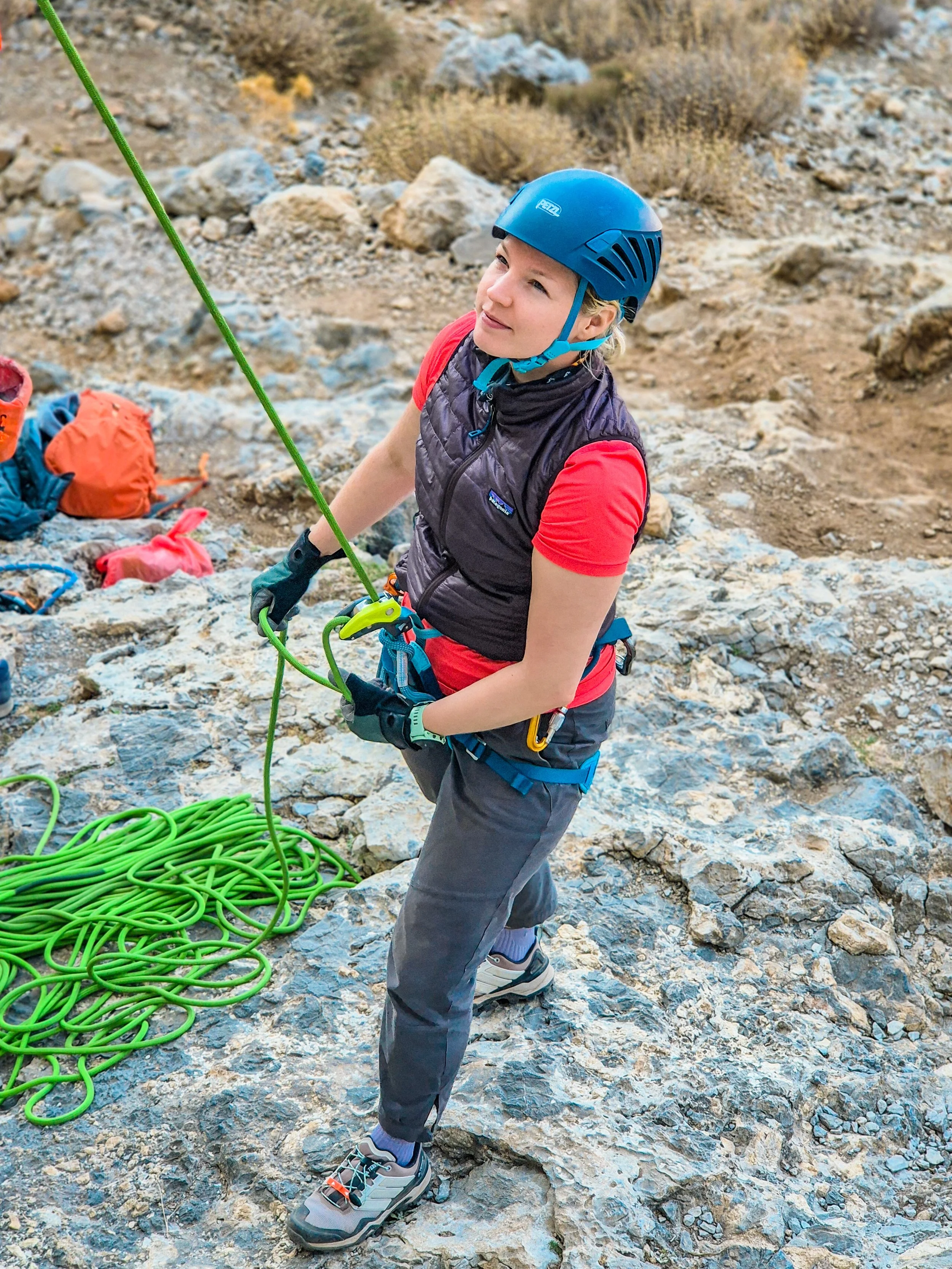
If you are not unfamiliar with belaying and climbing from above or at least with belaying, then you definitely can! Rock climbing is not much different from climbing on interior walls, the only difference is that instead of a predetermined path consisting of colorful blocks, you have to find a suitable rock curve for yourself by feeling it with your hands. Don't worry, we will guide you on site in everything you need.
I really want to come on the trip, but I don't know how to do this security stuff. Can I still come?
However, you need to learn how to belay in order to be able to climb rocks. If you don't know how to do it yet, there are several options:
In the climbing factory (Tartu) or In the Ministry of Climbing (Tallinn) complete green or red card training, which gives you the right to climb independently in indoor halls, but during the process you will also learn how to belay.
Join Elamus+ with mountaineering training, where in addition to climbing, you can also learn the most important knots, solve rescue situations, and other exciting rope work. You will have time to learn belaying before the trip.
It is also possible to take private training from us,in Tartuor in Tallinn.
But I don't have any personal climbing equipment. Where can I get it and what kind of equipment is suitable?
It is possible to rent or buy climbing equipment (there is a very large selection of different equipment on site). When renting or borrowing, keep a critical mind. The lifespan of climbing equipment is 8-10 years. If you find used old equipment somewhere, it is worth remembering that your own life depends on it. If things seem decent, renting can really save you some money by bringing it with you for one trip. Elamus+ The equipment rented by us is safe and has already been inspected by the locomotive engineers, so there is no reason to worry when renting from us.
It is wise to try out the equipment before buying. A climbing harness and slippers should be comfortable. A rope suitable for outdoor climbing is 60-80 m long, weatherproof, and dynamic with a thickness of 9,5-10,5 mm. The thicker the rope, the harder it is to climb with it. However, a thicker rope will last longer.
If you are a confirmed visitor and are missing a few items that you need advice on purchasing, feel free to ask the tour guides for advice.
Read more also frequently asked questions.
Travel documents and footnotes
The participant is responsible for the validity and condition of their travel documents. For this trip you will need:
ID card/passport;
sports insurance suitable for climbing (read more on the FAQ page). A suitable sports insurance policy must be carried and is a prerequisite for participation in the trip;
travel insurance.
Plan your trip early and start training for it. If you've never been to rock climbing before, now is the time to familiarize yourself with the terms: eight-knot, express, station, backstep and safety equipment. It would be a shame if you couldn't come along just because you don't have safety skills. If necessary, we can arrange some private training to reinforce safety techniques when climbing a big wall. Read more FROM HERE. ;)
Although at the end of the day everyone is still responsible for their own actions and consequences, we do our best to mitigate the risks associated with climbing. As a result, the group leader has the right to make ongoing decisions about the competence of the participants, the suitability of their equipment, physical fitness, etc., and, if necessary, prohibit access to certain routes if it endangers the health of the group or the participant themselves. Hopefully, of course, there will be no need for this.
Read also travel conditions.