
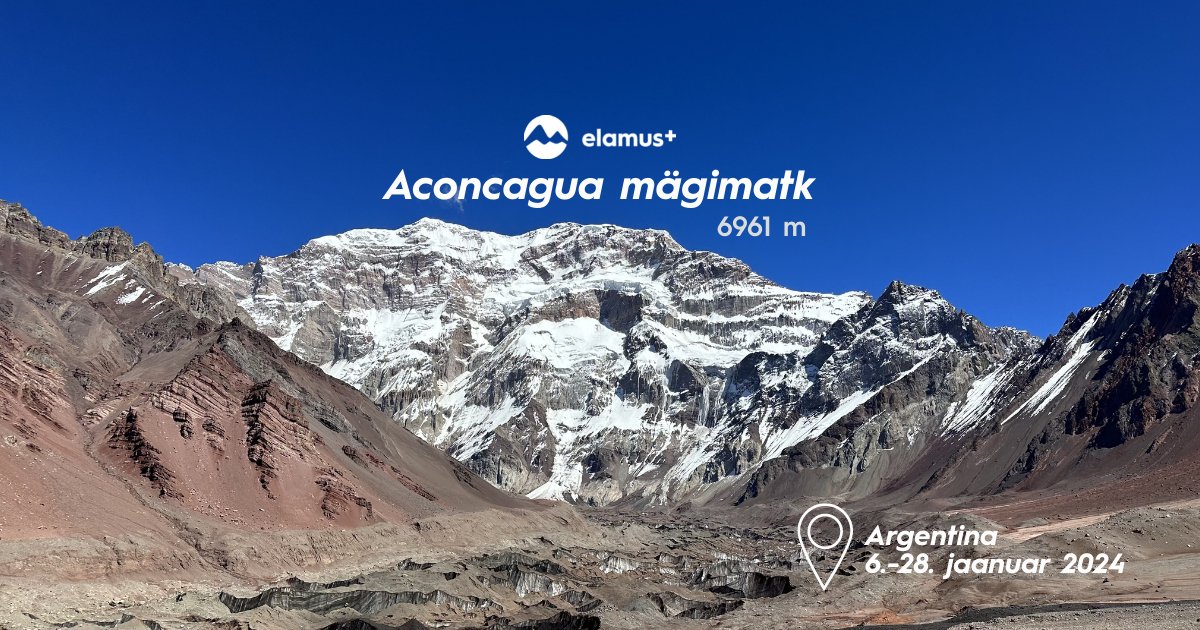
The peak of South America - almost 7000 m!

We are aiming for altitude records and will tackle Aconcagua (6961 m) in Argentina, the highest mountain outside Asia. Aconcagua is considered the highest “walking mountain”, but this peak should not be underestimated. At almost 7000 m, it is still a completely authentic high-altitude condition, where breathing is difficult, movement is difficult, winds are strong and temperatures are bitterly cold. But we like effort and adventure!
Since it's a long expedition, we'll make it a little more enjoyable and take advantage of the infrastructure set up on the mountain: mules help us carry our equipment, we'll eat food prepared by chefs, and if we wish, we'll even surf the web. For an additional fee, you can scrub yourself clean under warm water - what more could you want? These are the services at the base camp, from there we're completely on our own and we'll still strive for the summit under our own power. By the way, Aconcagua is home to the highest art gallery in the world, so you could even say that this is a trip for art lovers.
After the mountain tour, there is an option to join an additional tour, where we will spend a few more days touring Argentina. Delicious wine, delicious beef steak and local attractions are worth checking out thoroughly if you have already gone this far. This optional additional tour is not included in the package price, so the costs are everyone's responsibility and we will work out the exact plan together with the group.
What are the basic requirements to participate in this trip?
Previous mountain hiking experience above 4500 m required, preferably above 5000 m.
Very good physical shape — long days in high-altitude conditions, sometimes with a heavy backpack.
No special mountaineering skills are required (mainly walking with cats), but it wouldn't hurt either.
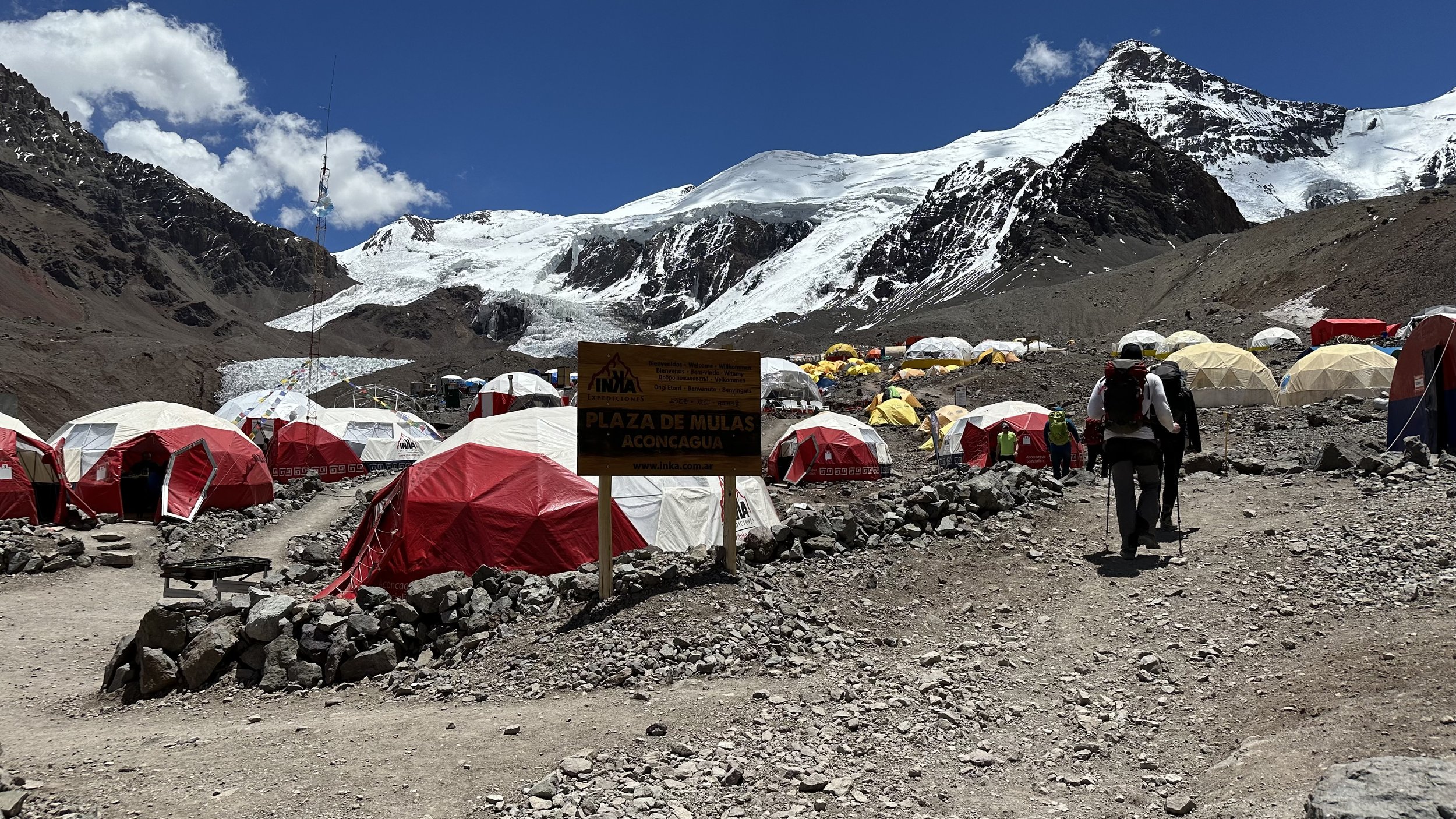
Photo: Kaspar Eevald
Overview – short & sweet
Goal: Aconcagua peak (6961 m, standard route)
Dates: 06.–28.01.2024 + flight time (additional schedule until 31.01.2024)
Activity: mountain hiking
Adventure guides: Allan Tobi ja Kaarel Kuslap
Technical difficulty level: 2/5 (technically suitable for beginners)
Physical difficulty: 4/5 (high altitude, physically difficult)
Group size: 8-12 (including 2 locomotives)
Early bird (until 31.08.2023) – €4090
Less dizzy chicken (from 01.09.2023) – 4490€
Please note: For community members -5% discount applies (3900€/4270€).
(I.e. If the trip is canceled due to circumstances caused by the pandemic, we will refund the advance payment in full!
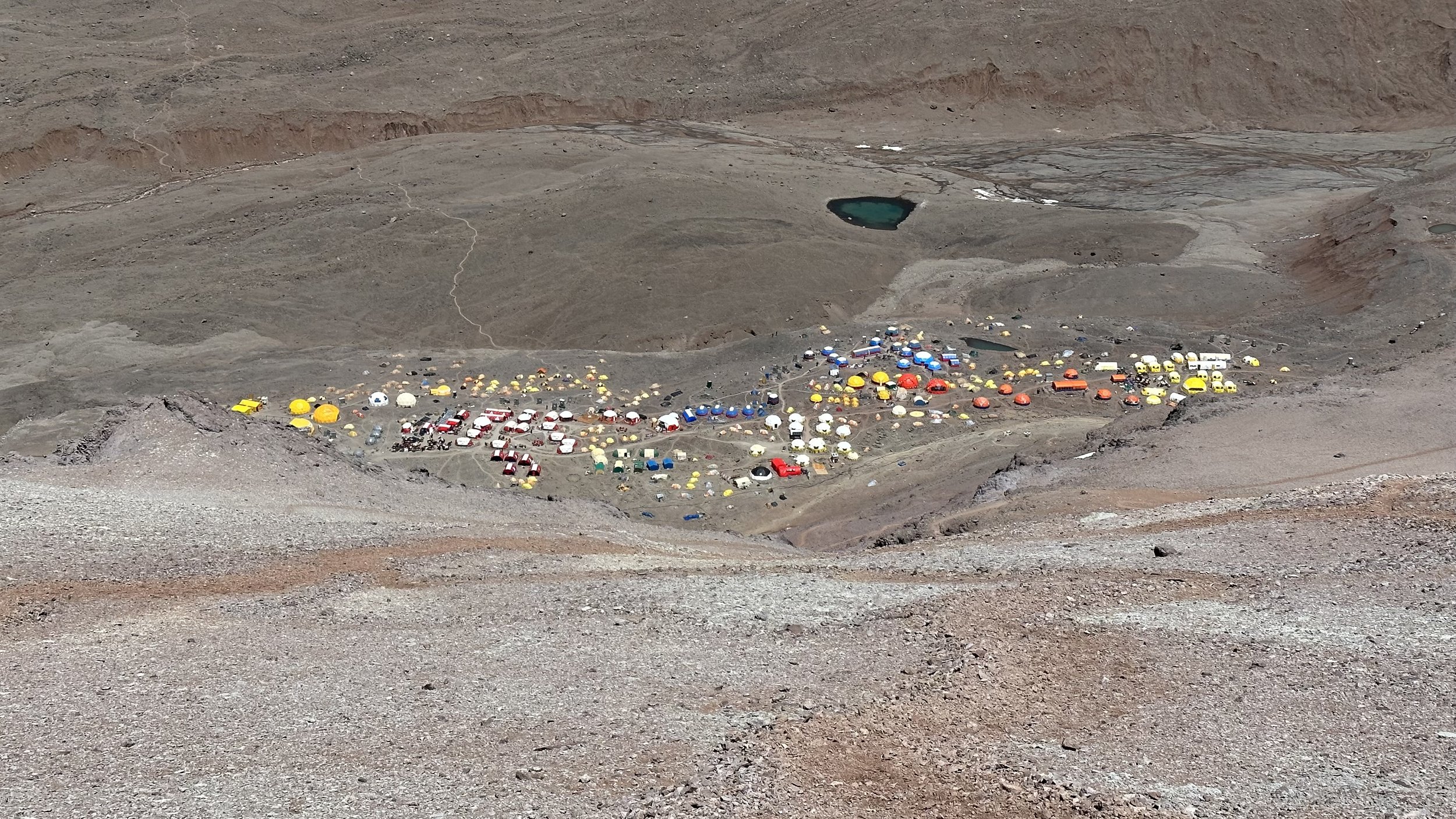
Photo: Kaspar Eevald
Travel cost
Price includes
Travel arrangements and on-site guidance
Elamus+ group leaders (2)
Overnight stays before and after the mountain in a hotel/hostel/apartment
Airport transfers and transportation included in the itinerary
Aconcagua mountain pass and natural park entrance fees
Secure storage of belongings/equipment at the bottom of the mountain and at base camps
Transport mules to Aconcagua base camps and back (10-30 kg depending on the route)
Tent pitches at base camps
Breakfast, lunch and dinner at base camps (up to 9 days)
Services at base camps:
Using the dining tent
Up to 1h/day WiFi in base camps (up to 7 days)
Mobile phone charging at base camps
Use of toilet tents in base camps
Garbage removal from base camp
Stylish Elamus+ designed sports shirt
Pictures and video from the trip
Health assessment and pulse oximeter for the group
Group pharmacy (including high-altitude medications)
Price does not include
Flight tickets (from ~1500€)
Insurance (travel insurance and mandatory sports insurance suitable for mountain hiking)
Personal hiking equipment
Additional services on the mountain (porters to high camps, shower, battery charging, etc.) and meals at high camps
Food and drink off the mountain
Extra activities and transportation for them
Tips (optional)
Personal hygiene products and medications
Registration for the trip
Before registering, please read travel conditions. To secure your place on the trip, you must pay an advance payment (3€) within 400 working days of receiving the confirmation and invoice by e-mail; 3 months before the trip, 50% of the trip cost and 1 month before the trip, the remaining cost. If there are less than 30 days left until the trip, the total cost (100%) must be paid. Read more: frequently asked questions ja package tour information sheet.
To register for the trip, you must have experience hiking at least above 4500 m and be in good physical shape.
Schedule and activities
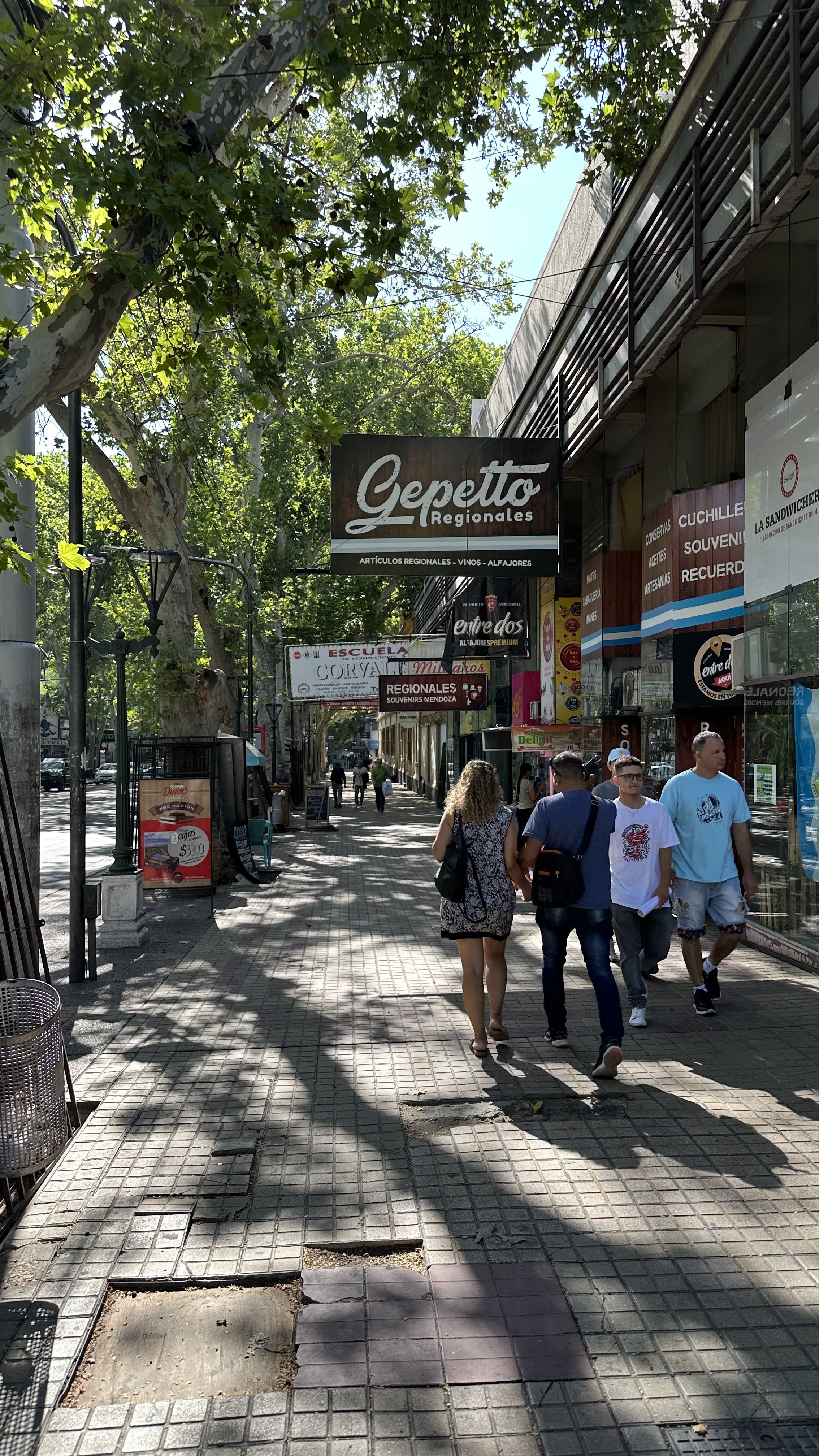
Photo: Kaspar Eevald
DAY 1: We gather in Mendoza
The starting point of the trip is the city of Mendoza in Argentina. It usually takes over 20 hours to get there from Estonia, so it's worth considering this. You can ask the adventure coach about flight tickets and ideally we will arrive more or less at the same time, but we must be there no later than the morning of January 6th. From the airport, a transfer will take us to the accommodation. During the day, we will apply for a mountain permit (you need to be there in person) and replenish our supplies at the shop.
Day 2: We start the acclimatization program
Tõus: 300-600 m / matkaaeg: 2-4 hAcclimatization is key to success on such a high mountain, and we start in the Cordon del Plata mountain range. From Mendoza, a transfer bus takes us to the settlement of Vallecitos (2900 m), from where we hike to the first camp at 3200 m or 3500 m, depending on our mood. From here, we will spend the night in our tents throughout the mountain program.
Days 3-4: First peaks
Tõus: 700-1000 m / matkaaeg: 6-8 hWe put on our peak bags and go to climb two nearby peaks, Stepanek (4100 m) and Adolfo Calle (4272 m). The peaks are optional, of course - if you are feeling unwell, you can turn around earlier and rest at the camp. We will spend the night at the same camp.
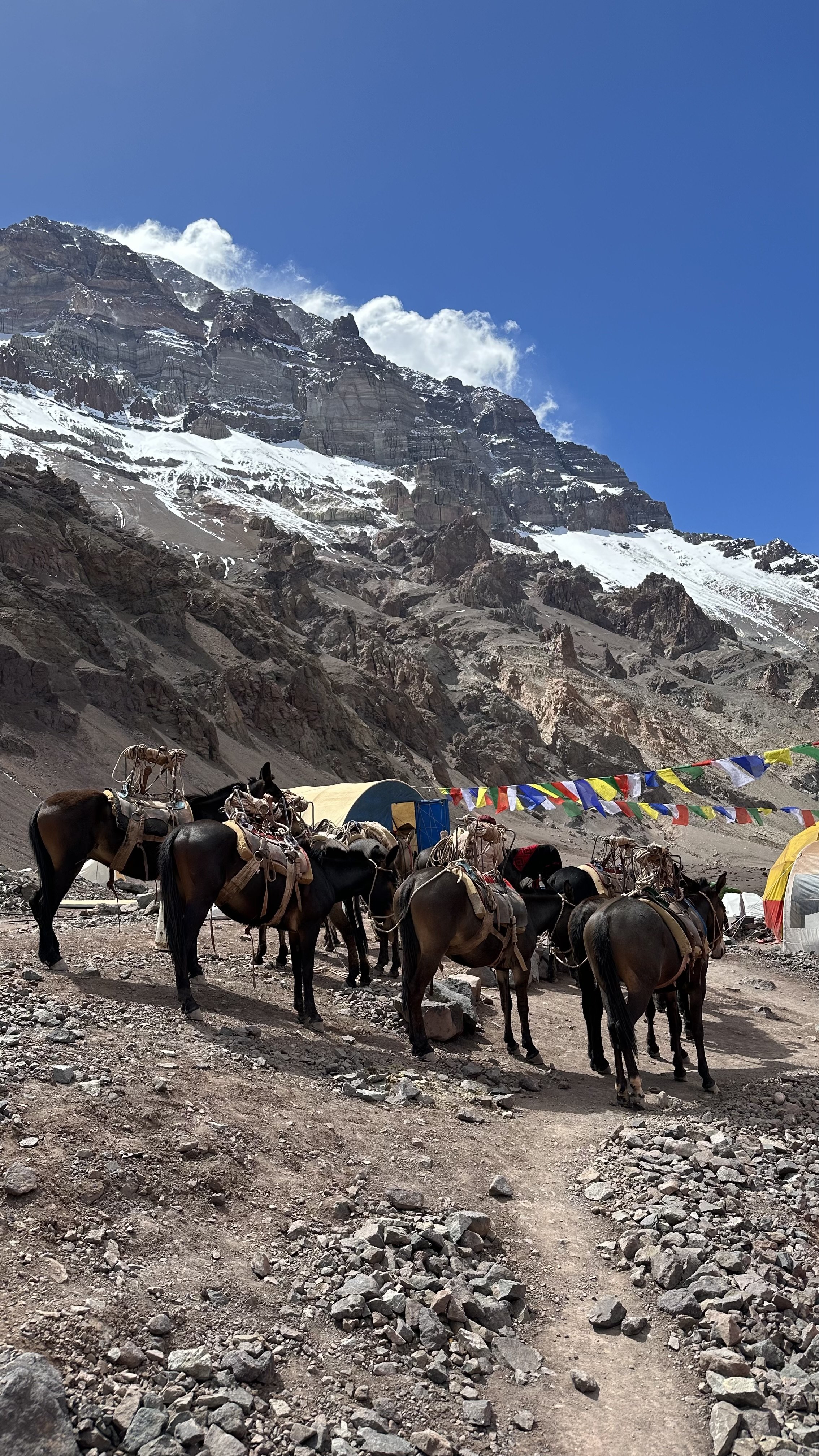
Photo: Kaspar Eevald
Day 5: Towards Aconcagua
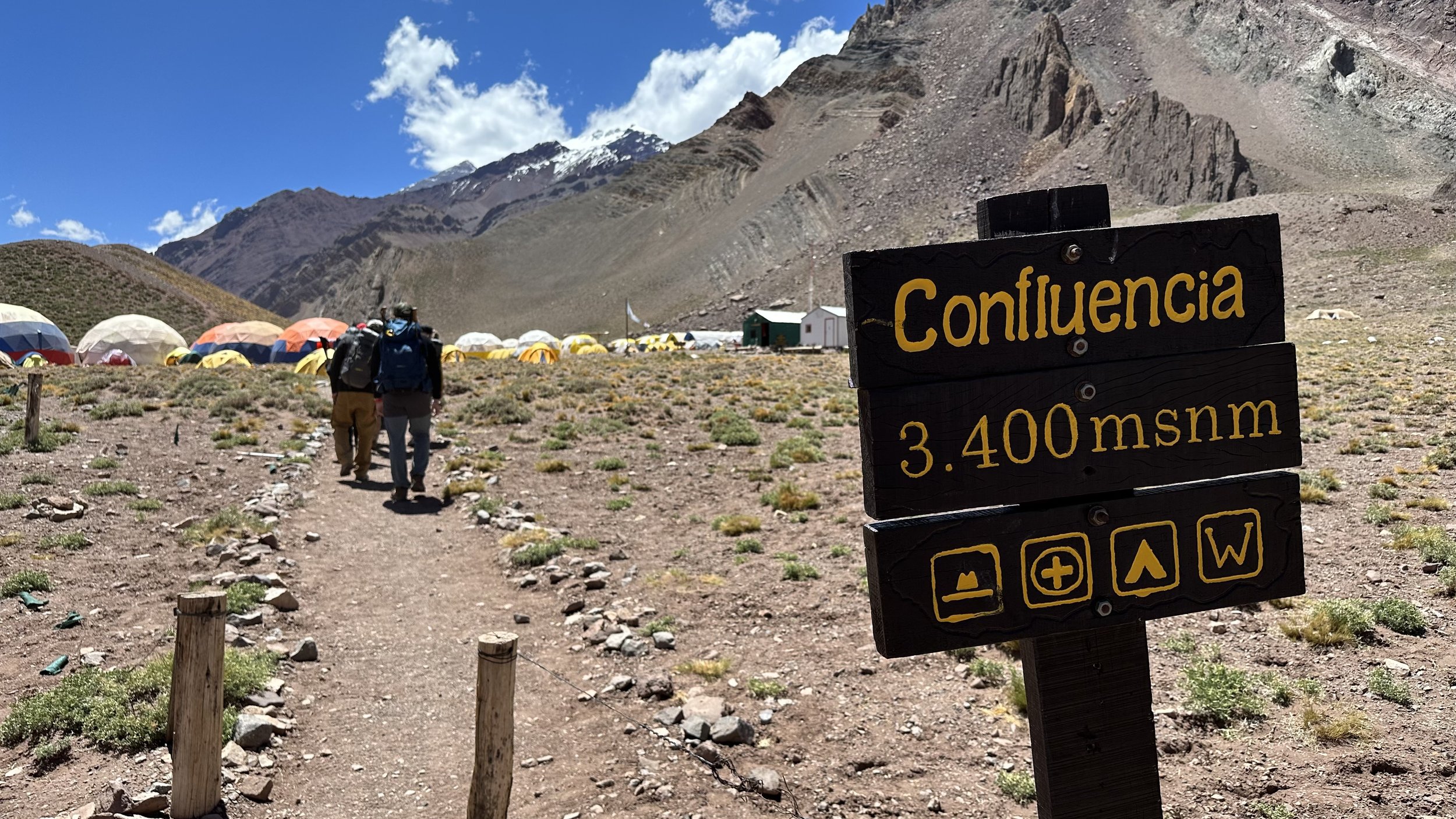
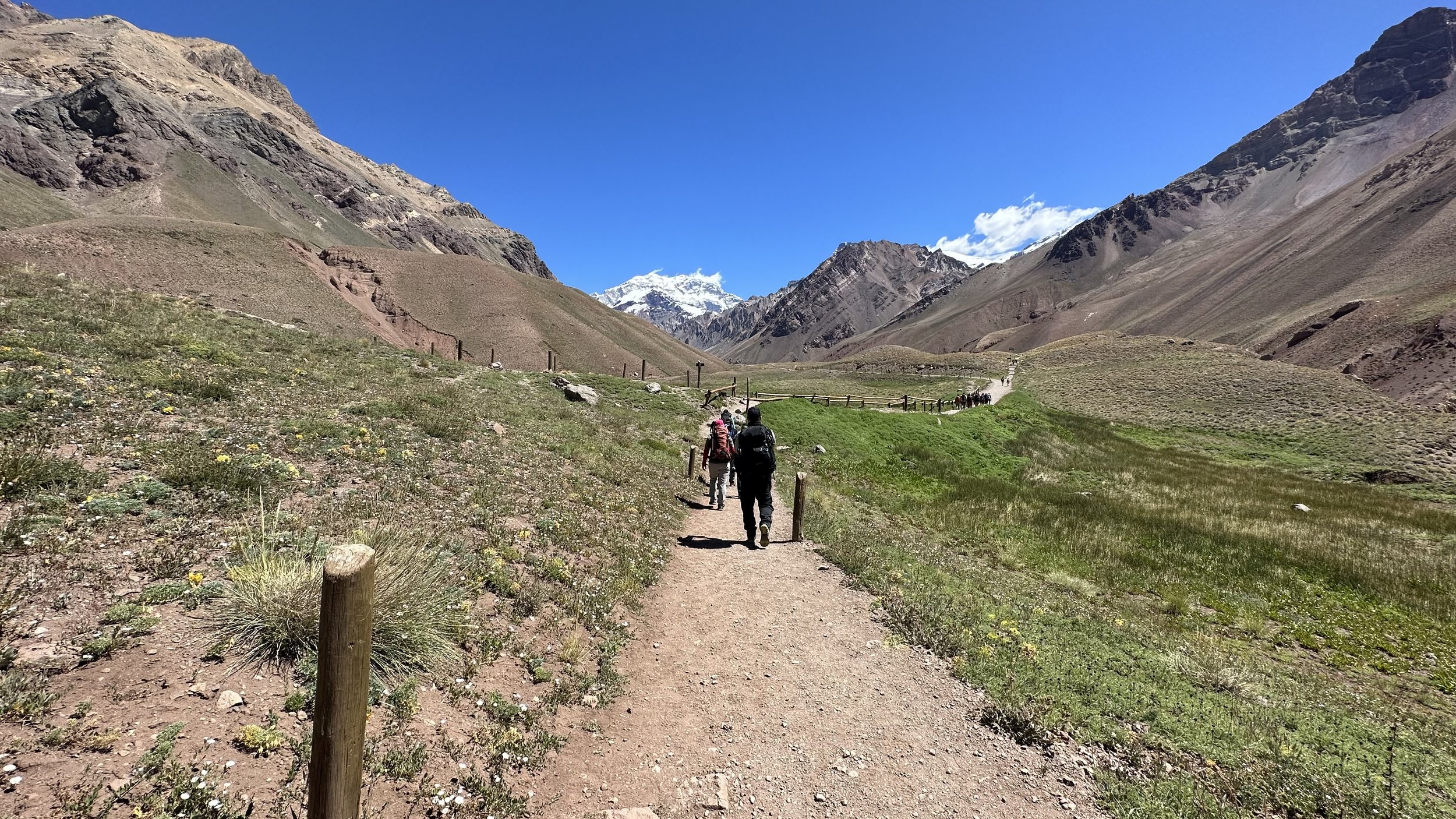
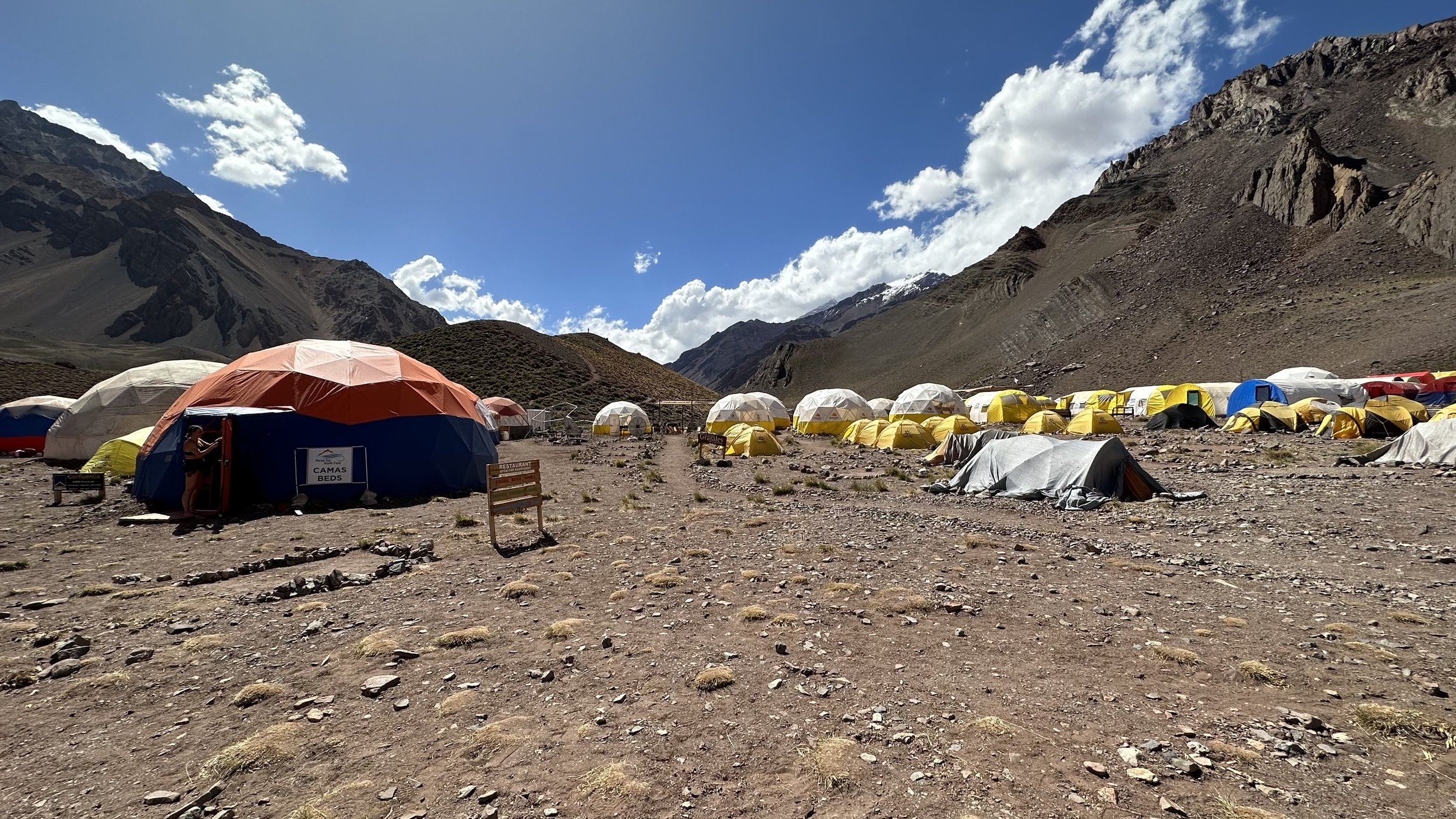
Tõus: 700 m / matkaaeg: 4-6 hWe pack up our tents and in 1-2 hours we are back down in Vallecitos, where a reliable transfer bus will pick us up. We head straight to Aconcagua's starting point, Penitentes, where we distribute some of our equipment on the mules (one bag towards Plaza de Mulas and optionally one bag towards the intermediate camp Confluencia), leave our city clothes in the storage area and make a short additional trip towards the Horcones park gates. From there we set off towards the first base camp, Confluencia (3400 m). The hike takes about 3-4 hours. Dinner is now served by the camp cooks.
At this camp, we will also undergo a mandatory medical check-up, where our health indicators will be checked and whether we can continue. The doctor has the right to not allow hikers to continue, but this will probably not happen thanks to our pre-acclimatization.
Day 6: To the Sutsaka viewpoint
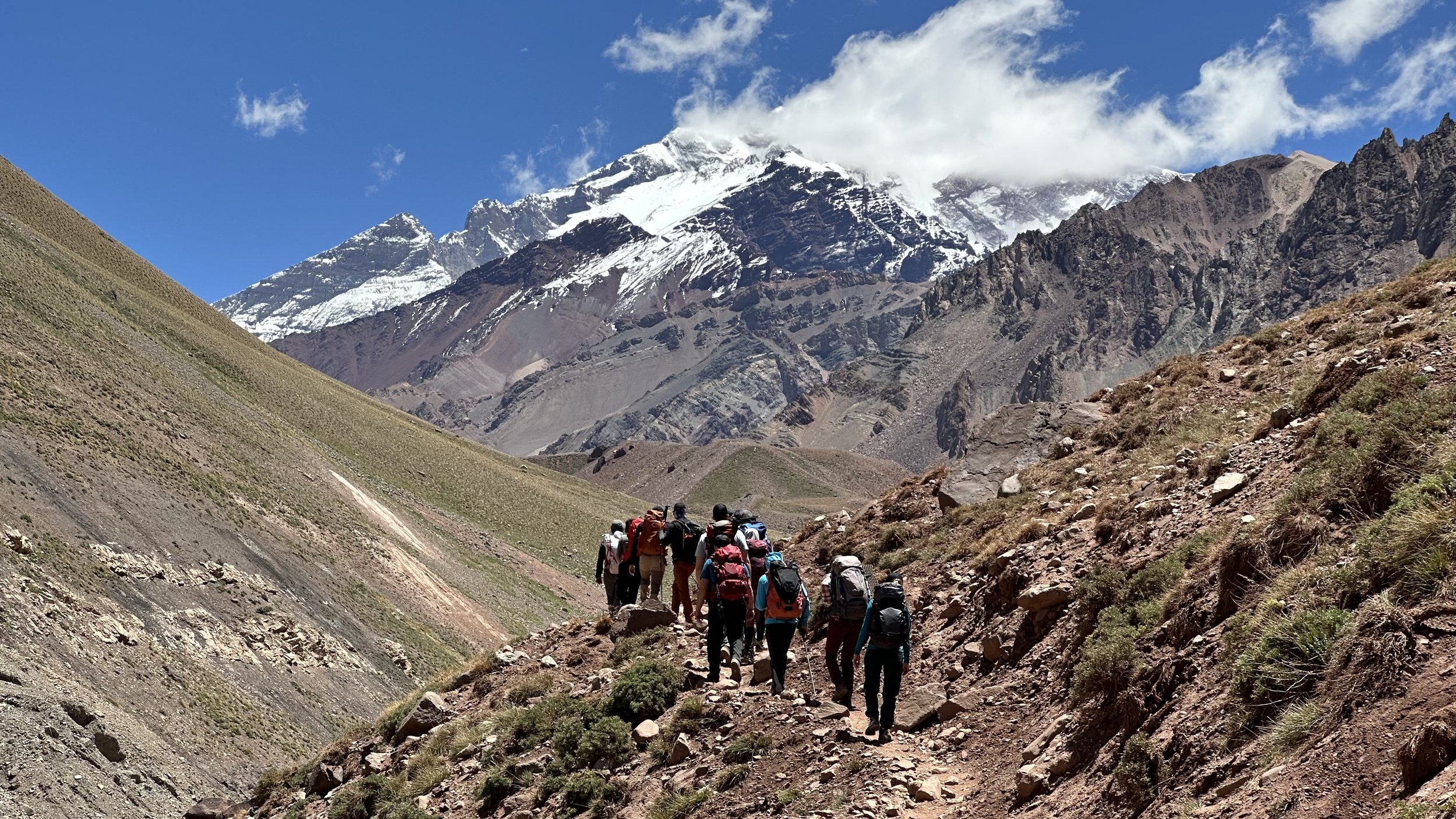
Tõus: 700 m / matkaaeg: 5-7 hWe continue with the acclimatization program and take a hike with daypacks to the Mirador Plaza Francia (4100 m) viewpoint, from where we can already see Aconcagua towering in the distance. Meals all day long will be provided by the camp cooks again. We will spend the night again at the Confluencia camp (3400 m).
Day 7: Long day to the second base camp
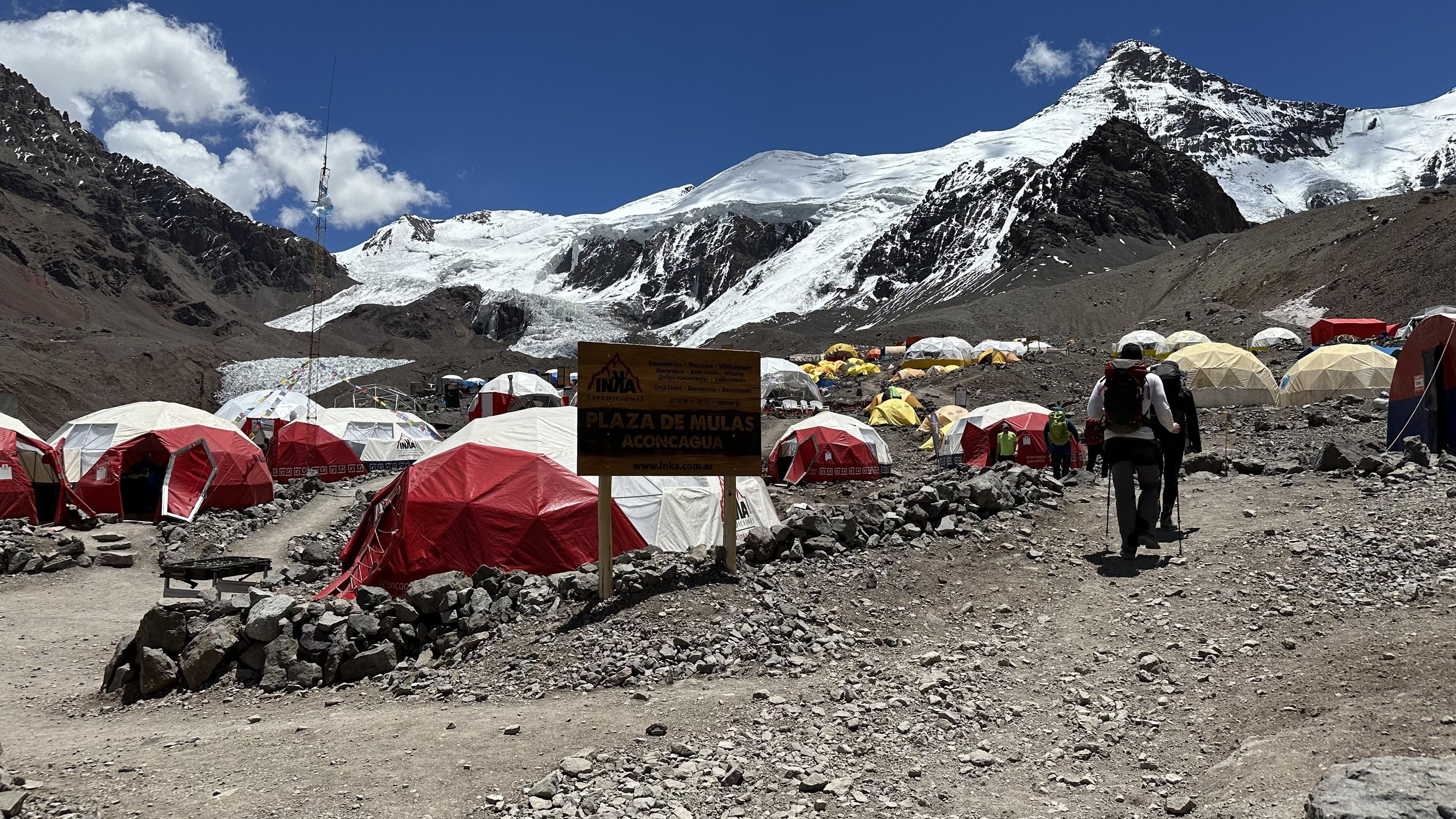
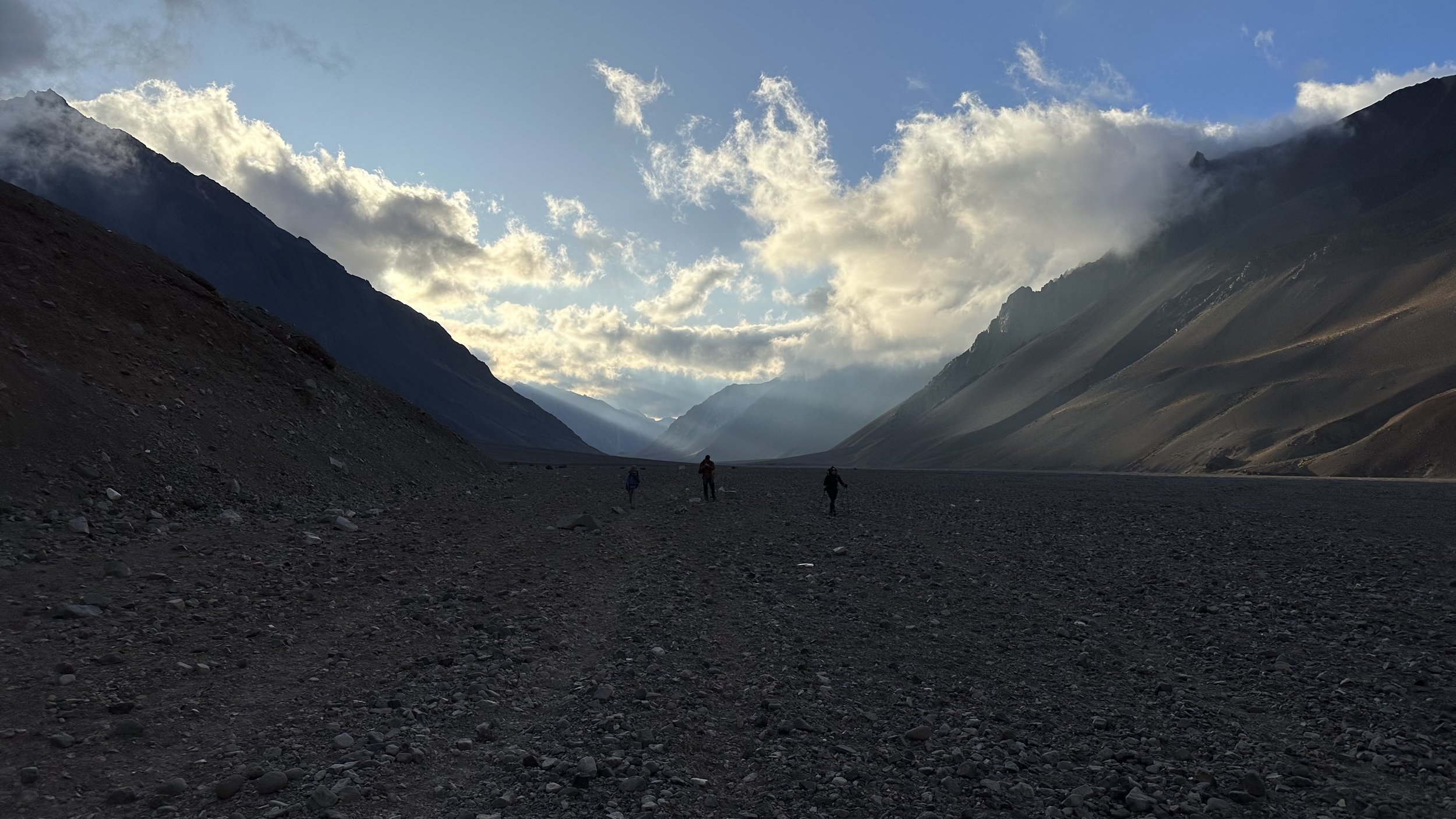
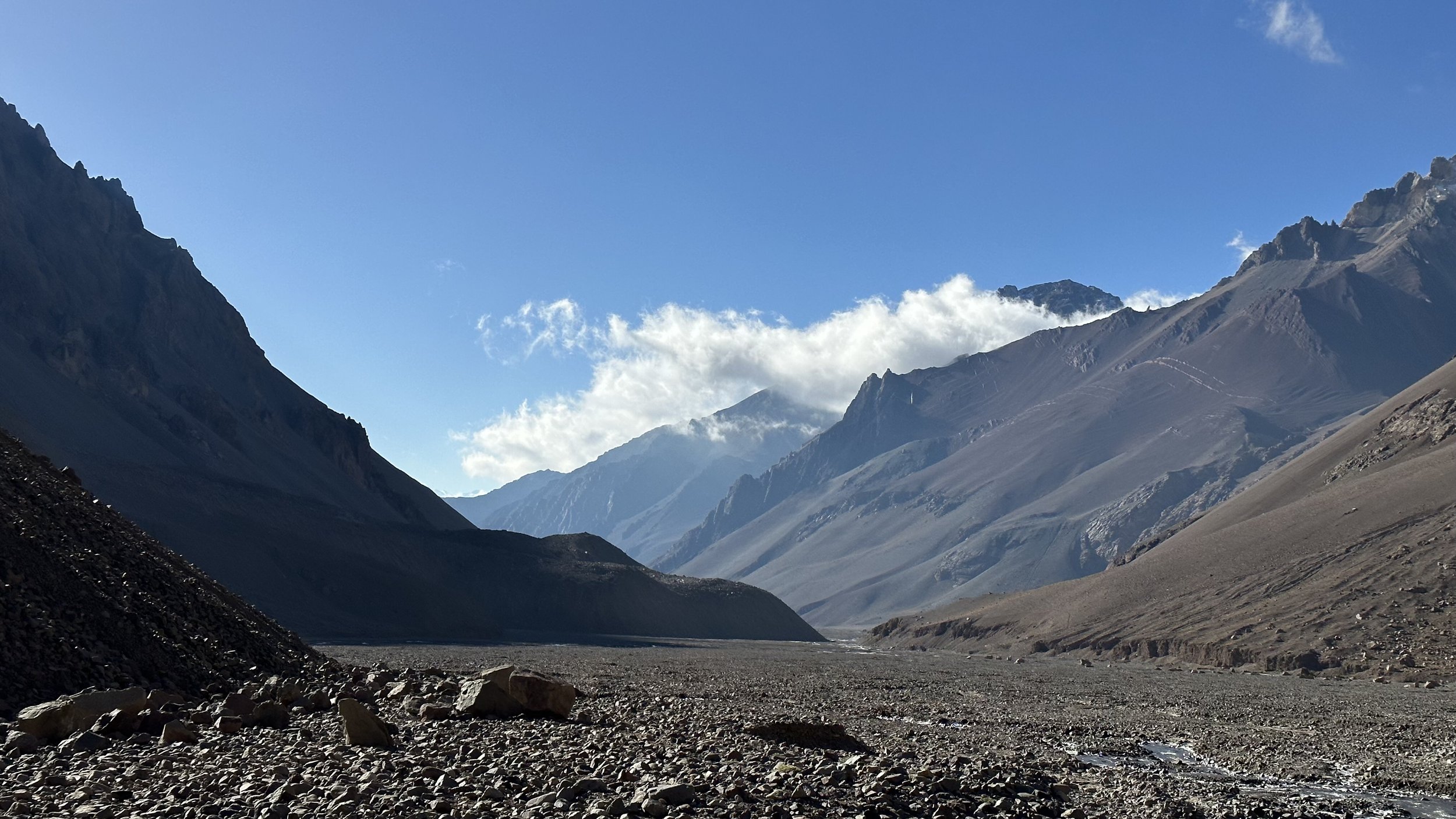
Tõus: 900 m / matkaaeg: 8-10 hThis is the longest day of the trip in terms of mileage — we cover about 20 km to the second base camp in Plaza de Mulas (4300 m). There is a bit of a climb at the end, but otherwise a long and wide climb towards Aconcagua. However, nothing insurmountable, especially considering that heavier equipment is already waiting for us at the next camp by then. We also undergo a medical check-up in Plaza de Mulas.
Days 8-9: Rest days at base camp
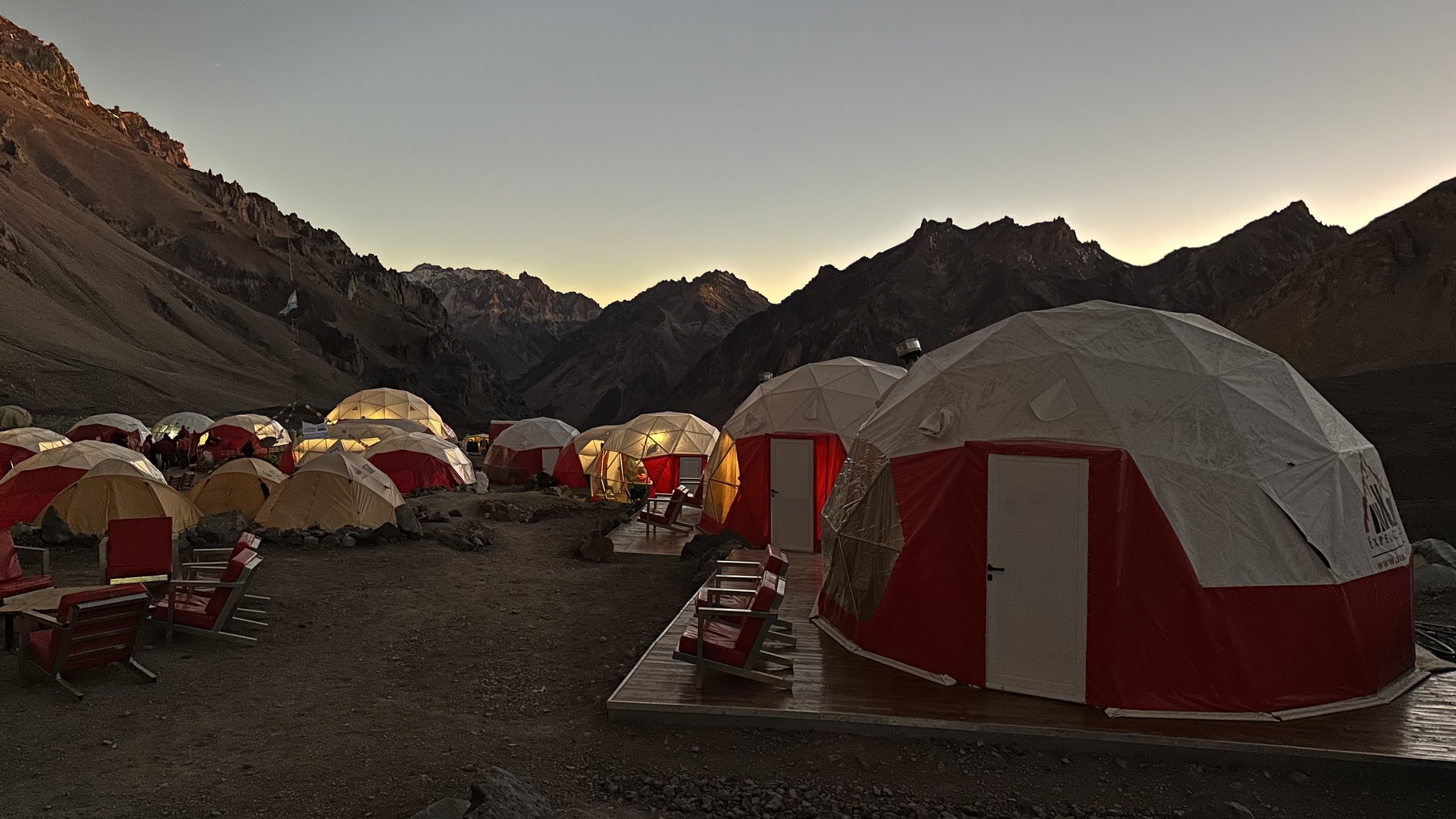
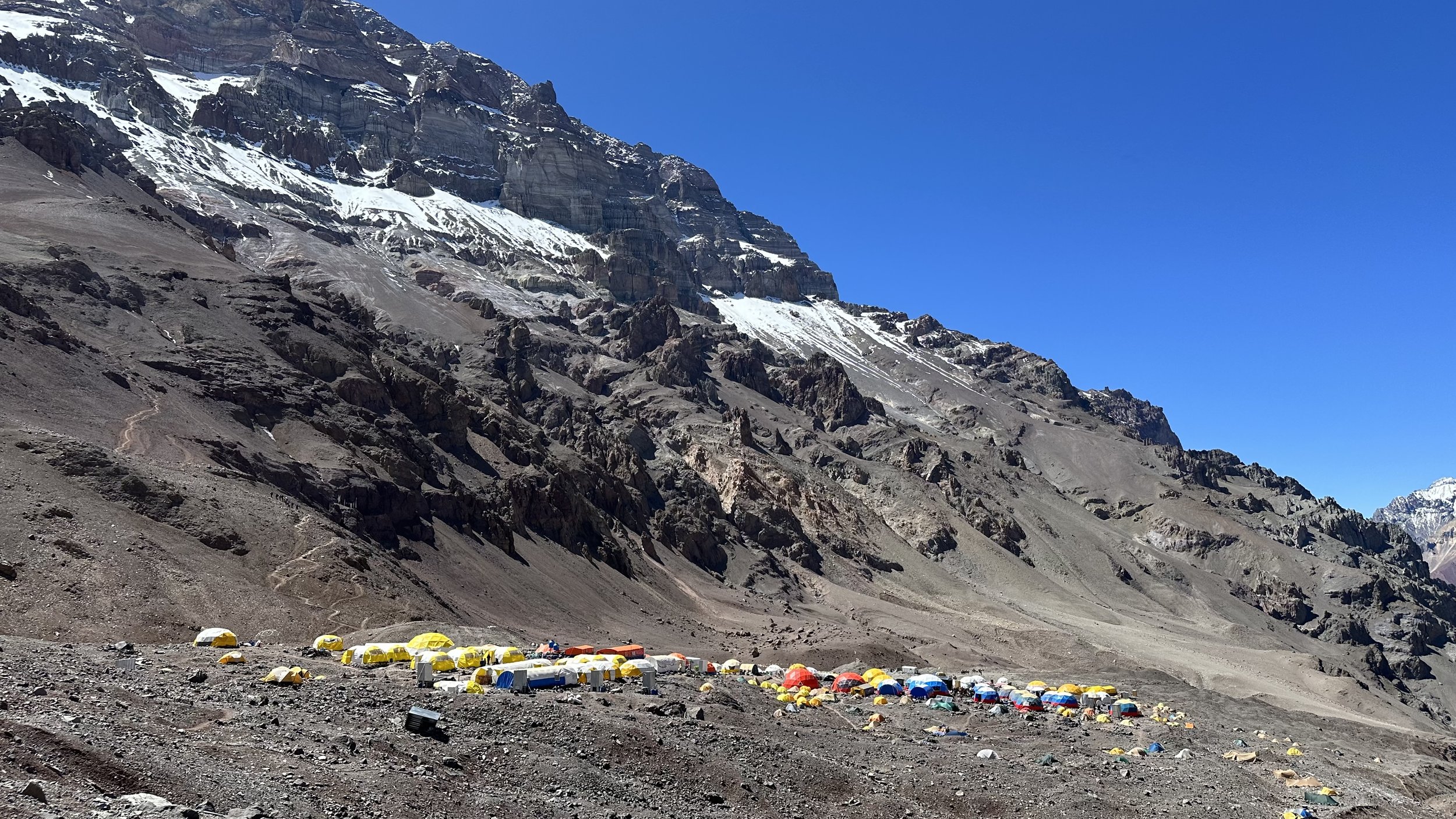
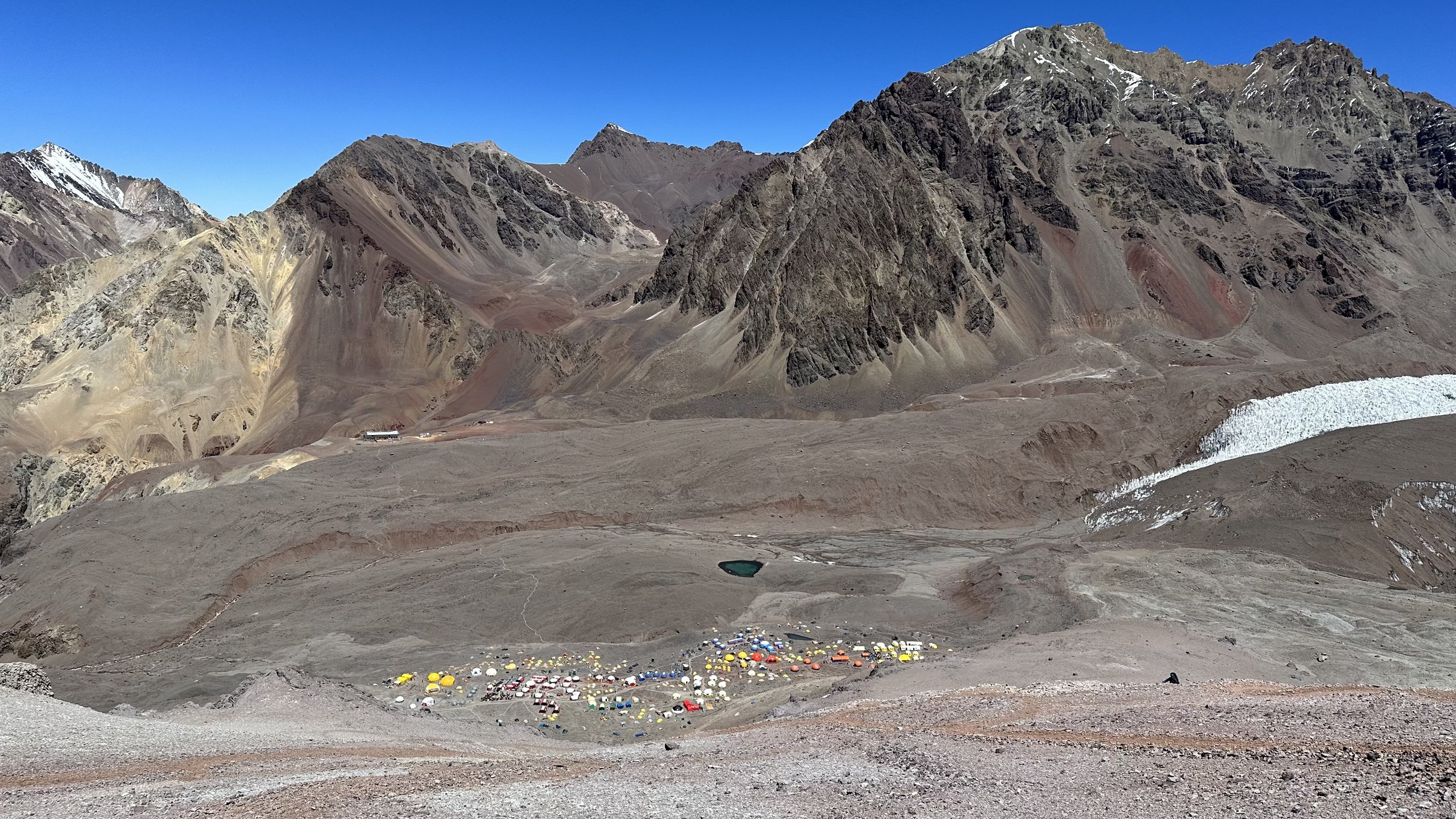
We will rest and acclimatize at the Plaza de Mulas base camp at 4200 m. If you want, you can wash off the dust, surf the internet, visit the world's highest art gallery, enjoy a coffee or beer, read a book, etc. However, if your feet start to ache during these two days, you can make an additional acclimatization hike towards Mt Bonete (5004 m), which takes about 4-6 hours.
Day 10: Moving equipment to Plaza Canada (C1)
Tõus: 800 m / matkaaeg: 3-5 hWe start with the first rotation to the high camps, during which we also carry some food and equipment up to the top. Head towards Plaza Canada (C1; 5000 m), where we set up our tent and check the conditions - for example, is there any snow to melt water from. Here you can no longer enjoy the services of the base camp, including meals; so you have to stock up on your own food for the high camps or buy high camp food packs on site (85 USD per day). We spend the night in Plaza Canada.
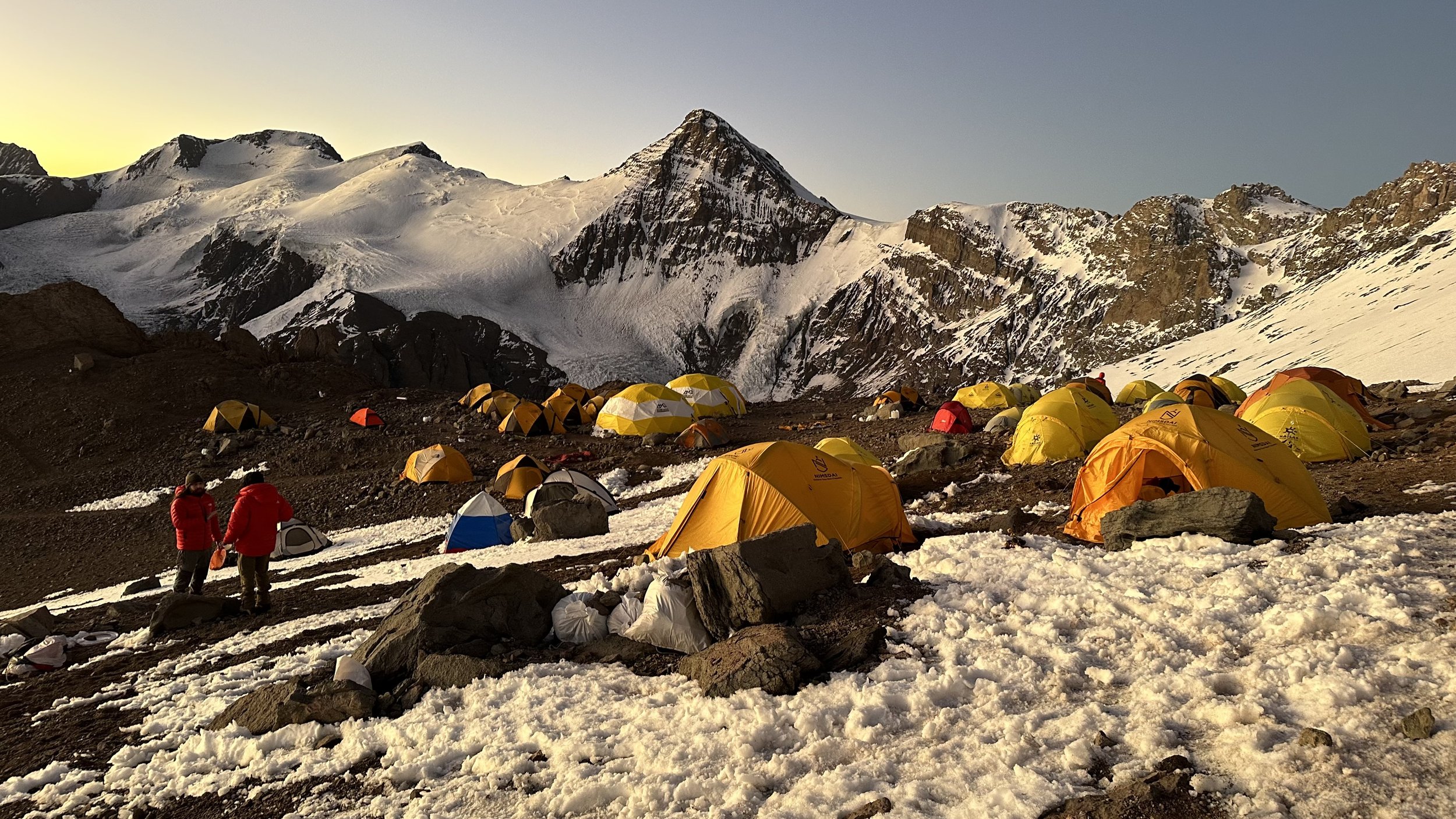
Photo: Kaspar Eevald
Day 11: We touch down at Nido de Condor (c2)
Tõus: 500 m / matkaaeg: 6-8 hIf we feel good, we will go to the Nido de Condores (C2; 5500 m) camp with small bags for acclimatization. It is not important to reach the camp, as the climb there is somewhat more tiring, but it is worth going higher for once. Then we will head back to C1, pack up and go straight back down to base camp.
days 12-13: rest days at base camp
We will spend 2 days in Plaza de Mulas catching our breath and living a (relatively comfortable) camp life. Again, there is the opportunity to go to the top of Mt Bonete (5004 m) to ward off boredom.
Day 14: We start the summit climb
Tõus: 800 m / matkaaeg: 2-3 hIf the weather conditions are favorable, we will begin the long-awaited summit climb. We will pack our equipment and head towards Plaza Canada (C1; 5000 m). With the support of a stronger acclimatization, the ascent this time could go faster than the first time. We will rest and do tent work for the rest of the day.
Day 15: The Condor Nest awaits
Tõus: 500 m / matkaaeg: 3-5 hWe pack up our tents and continue our ascent. We set up camp at Nido de Condores (C2; 5500 m) and catch our breath. Depending on the weather conditions, there will probably already be snow here.
Day 16: Rest day at the condor nest (c2)
We will acclimatize and rest for a day at the high camp. If you have the energy, you can take a walk higher up.
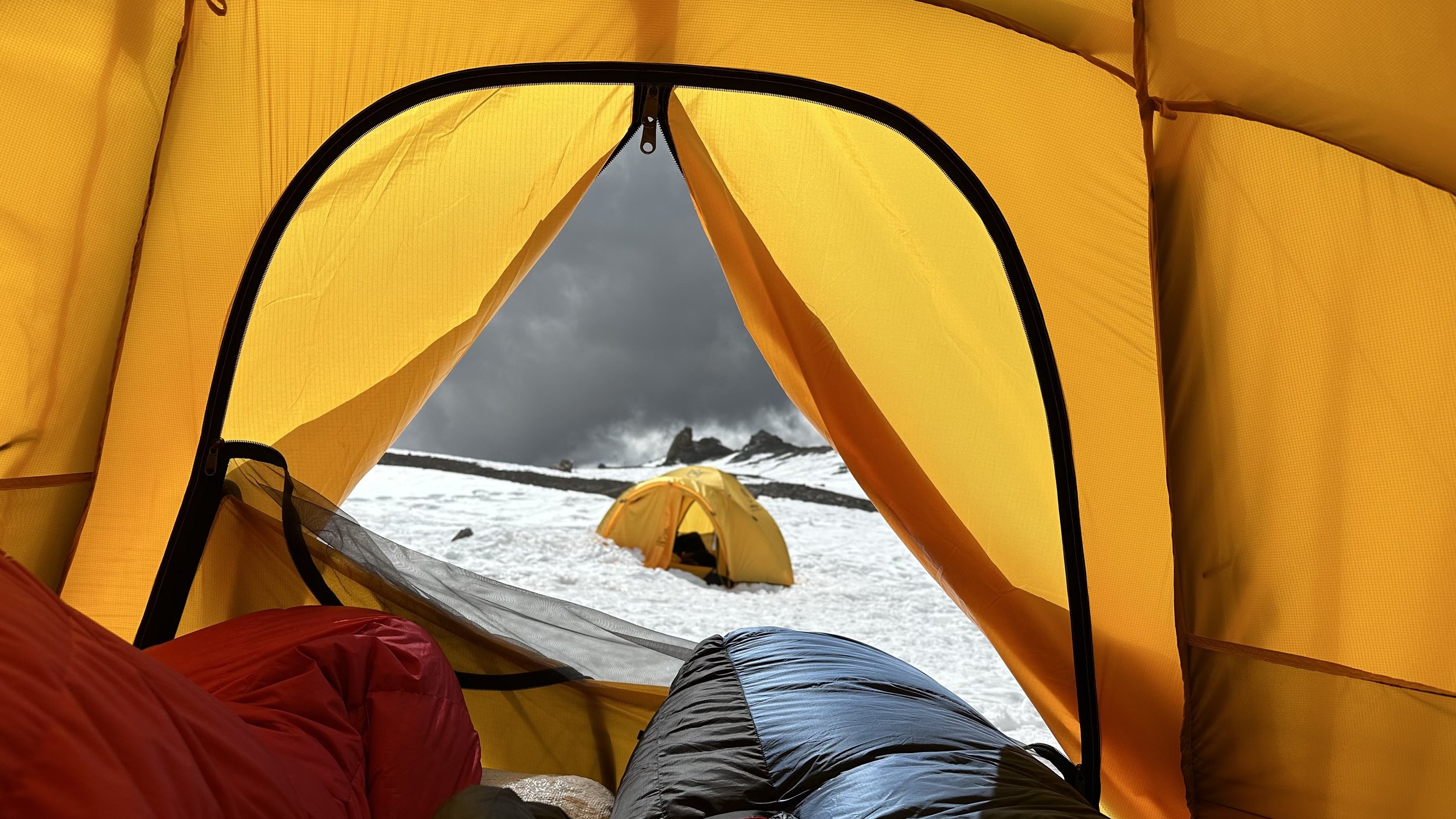
Photo: Kaspar Eevald
Day 17: Still up, cholera (c3)
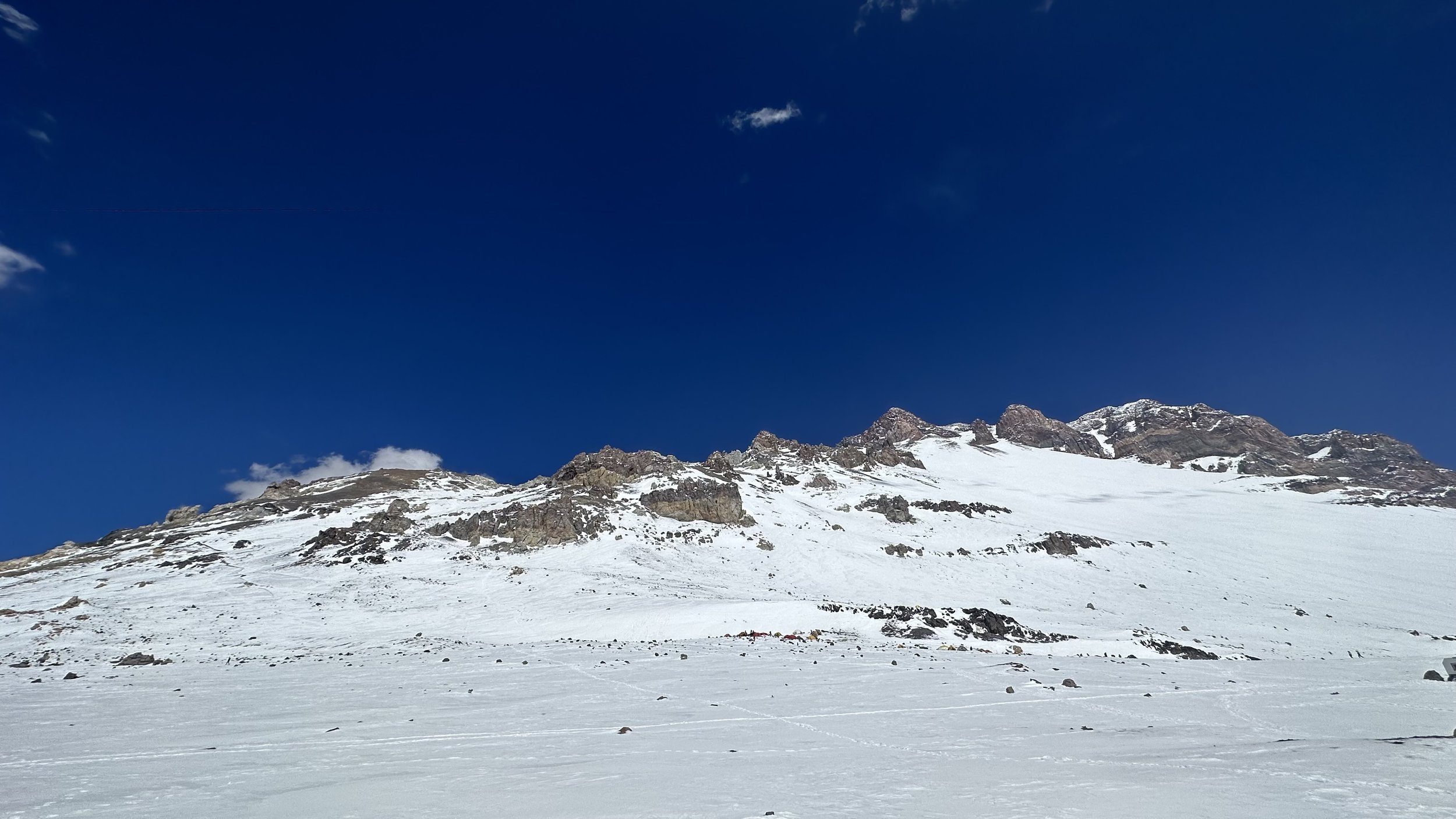
Tõus: 450 m / matkaaeg: 3-4 hWe pack up again and in the thin air we head towards the last camp, Colera (C3; 6000 m). We set ourselves up and try to catch some sleep, because the highlight of the trip and probably the hardest day is ahead.
Day 18: Summit Day
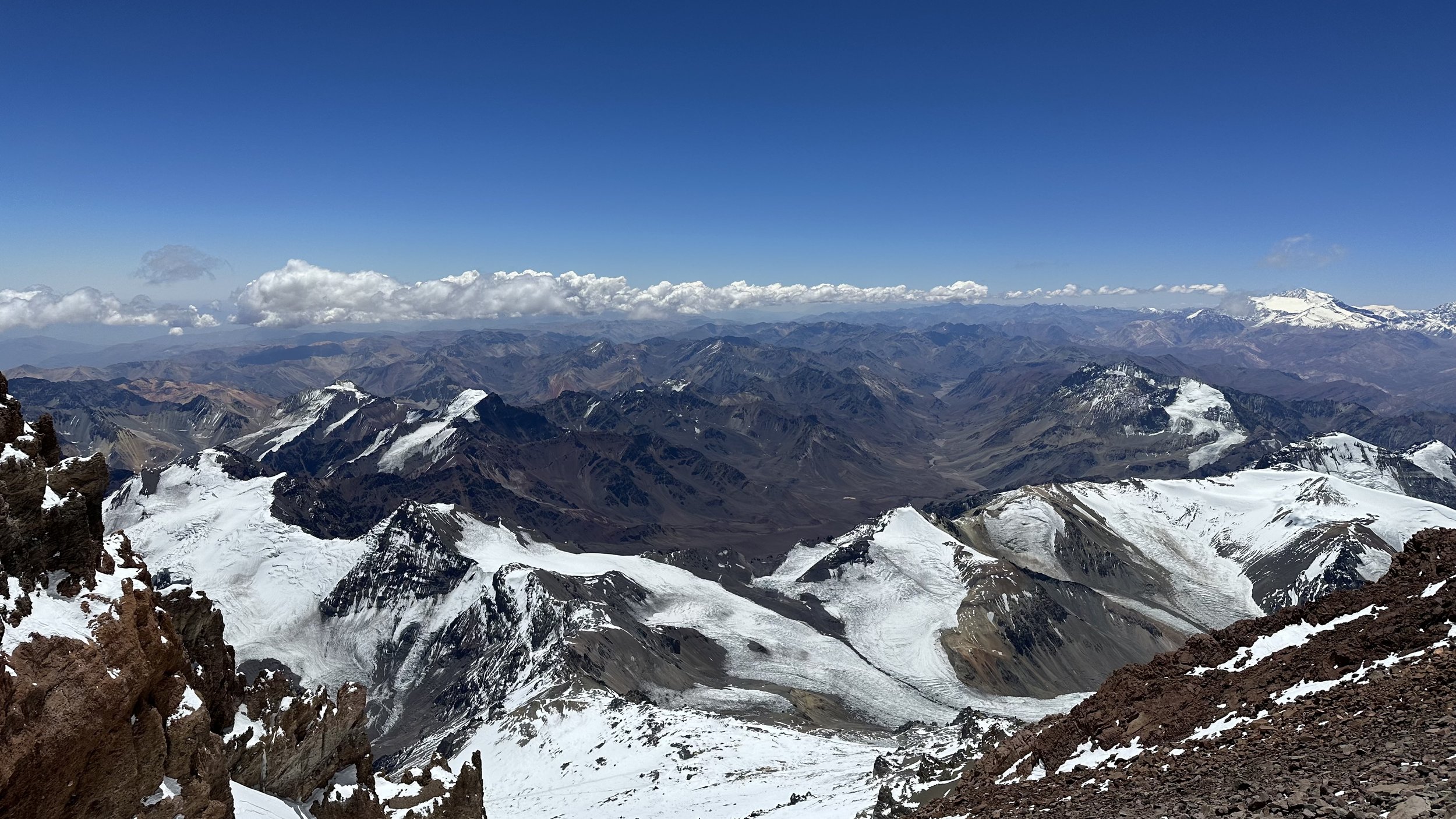
Tõus: 1000 m / matkaaeg: 10-15 hWe wake up early in the morning, around 3 am, and start walking towards the summit in the crisp cold. The steps are arduous and the journey is long, but we keep going. If all goes well, we will find ourselves at the highest point in South America, Aconcagua (6961 m)! We celebrate, take pictures and celebrate - as much as we can - and then we retrace our steps back towards Colera (C3), where we will fall asleep in our tents.
Days 19-20: Back down
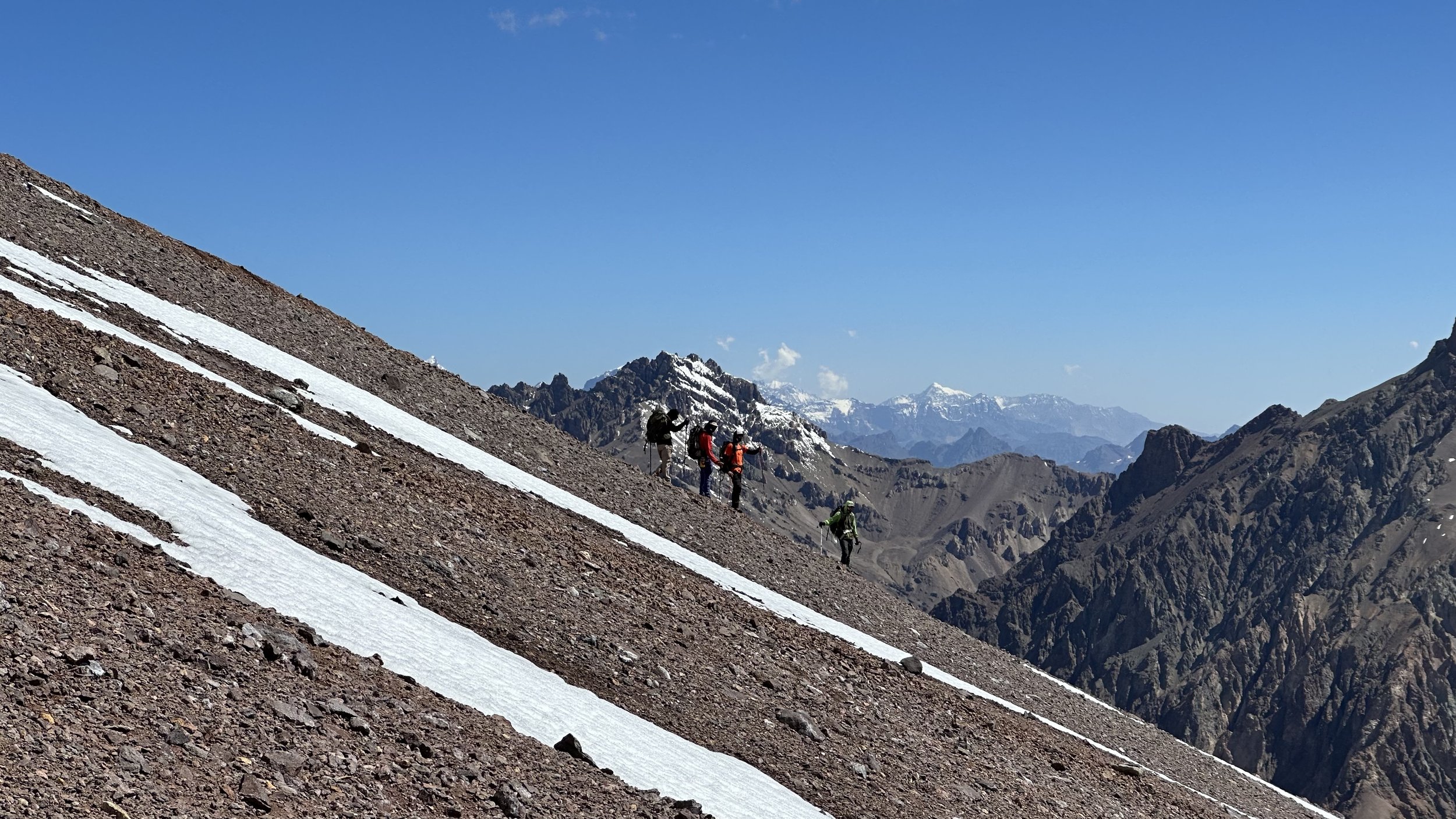
Langus: 1800 m / matkaaeg: 4-6 hWe pack up and head downhill back to base camp Plaza de Mulas, which should take around 4-6 hours. We breathe in what now seems to be enough air, celebrate and enjoy the camp amenities.
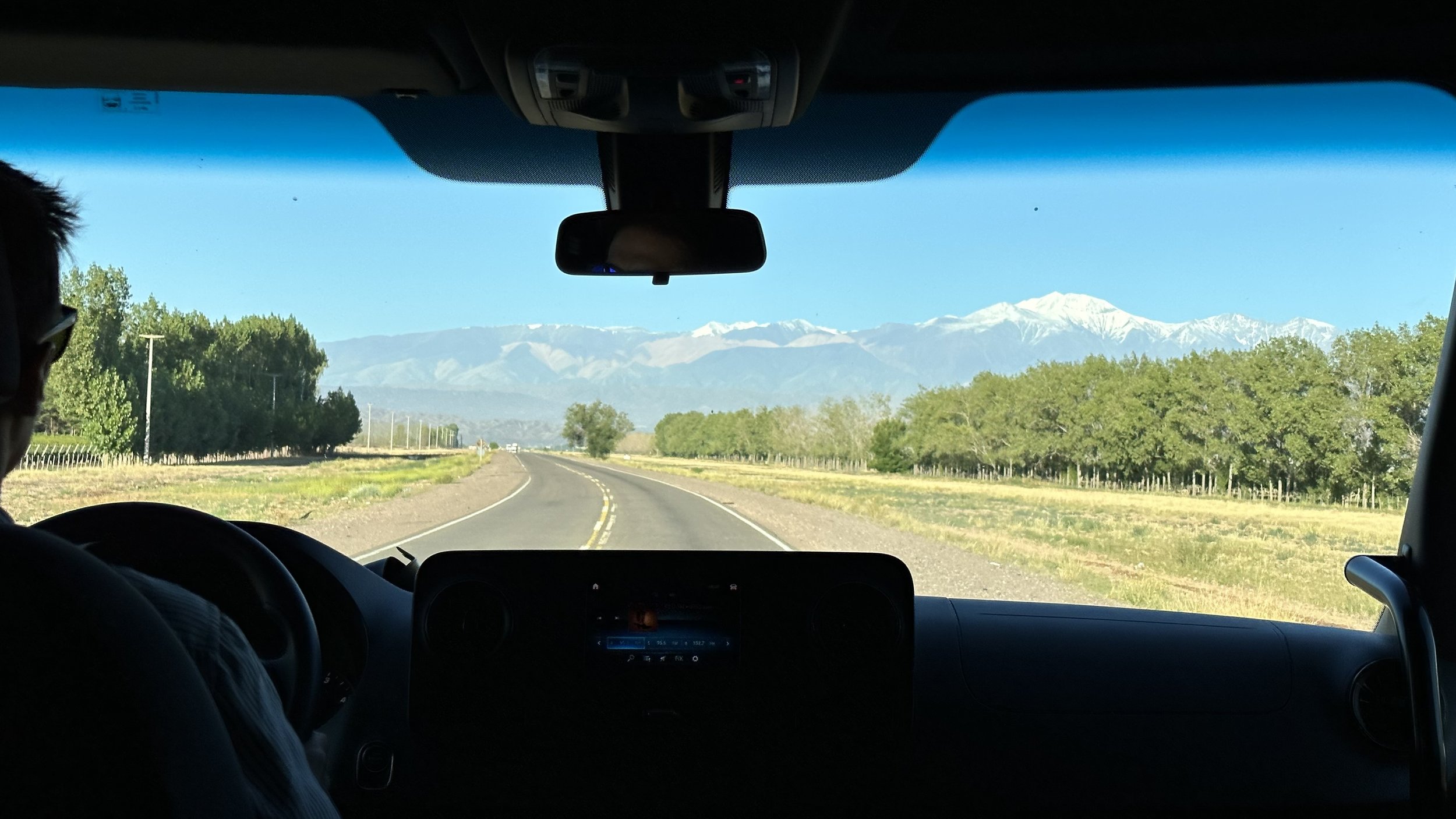
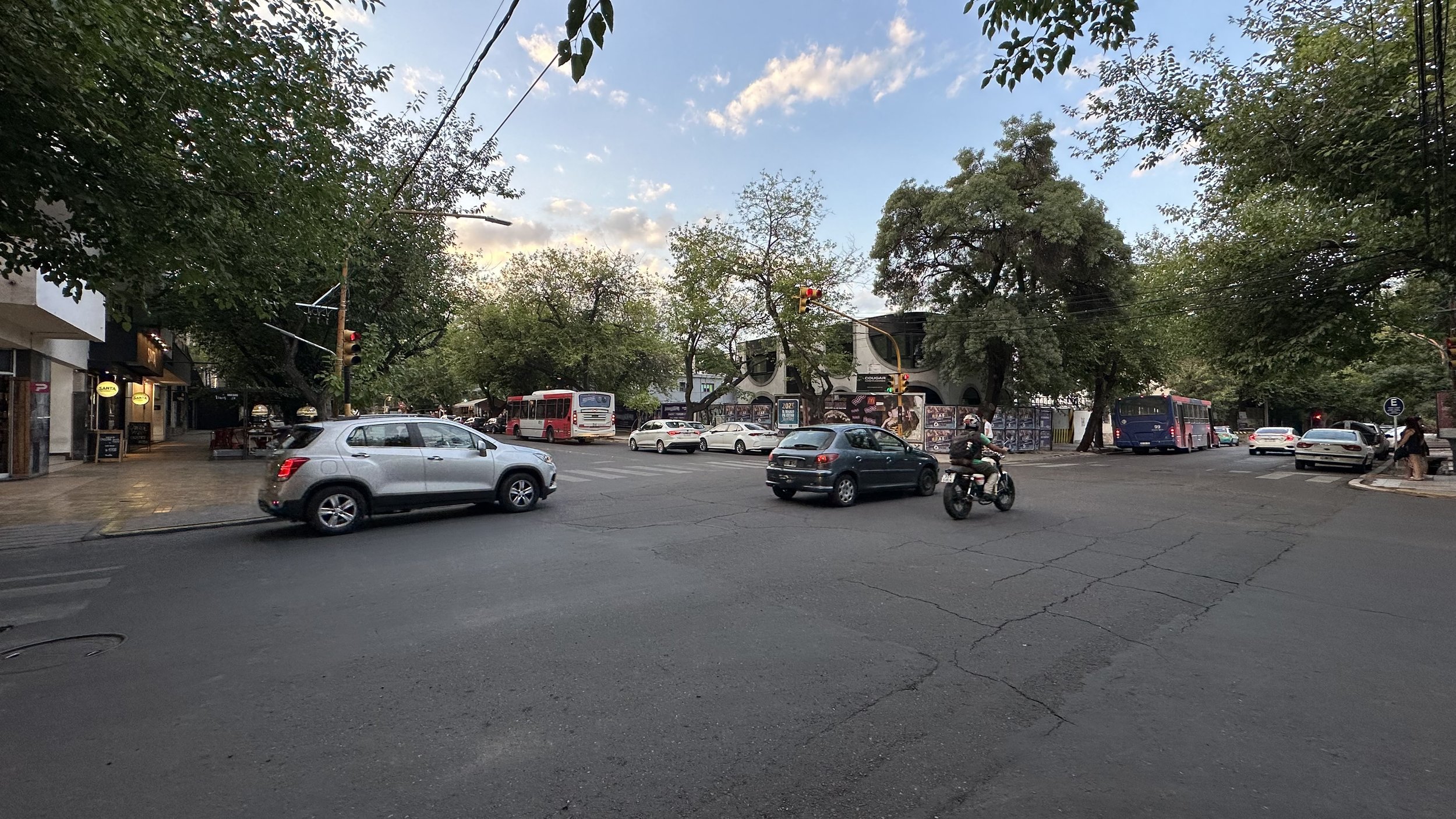
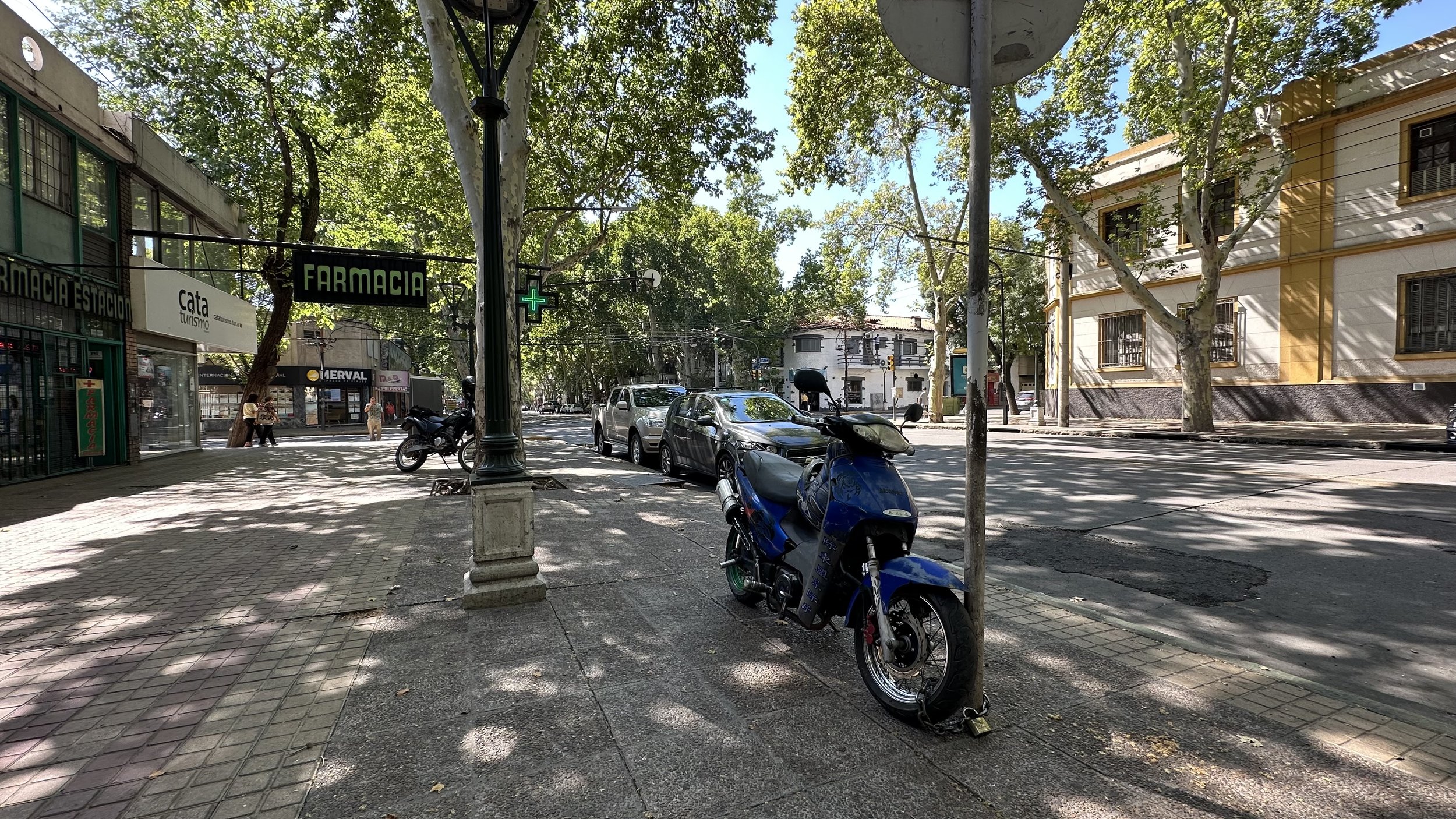
After a sweet sleep, we pack our things onto the mules and head to the Horconese nature park gate in one fell swoop. From there, a transfer takes us back to Mendoza, where we can finally sleep in a bed again and enjoy civilization.
Days 21-23: Reserve days
These three days are reserve days in case the weather doesn't agree with our ideal plan or we need more time to acclimatize in some places. However, if we don't need reserve days, we will spend this time in Mendoza — a free plan for sightseeing.
Day 24: End of trip*
Those who want to limit their trip to the mountains can now board a plane and fly home with vivid impressions and memories of a very awesome trip. However, those who didn't get enough of Argentina have the opportunity to stay a few days longer and explore the sights with the tour guides.
Days 24-27: Additional schedule
The additional program is not part of the package tour and is not included in its price. All expenses and activities made here are the responsibility of each participant. You can indicate whether you want to stay with us longer in the registration form. Essentially, the idea is to take a 1,5-hour domestic flight to Buenos Aires, the capital of Argentina, and look around there; then fly directly from Buenos Aires to Estonia. We will agree on a more detailed program, activities and accommodation with the participants on an ongoing basis.
NB! There may be minor changes to the schedule and planned activities. for example, due to weather and conditions or the wishes of passengers.
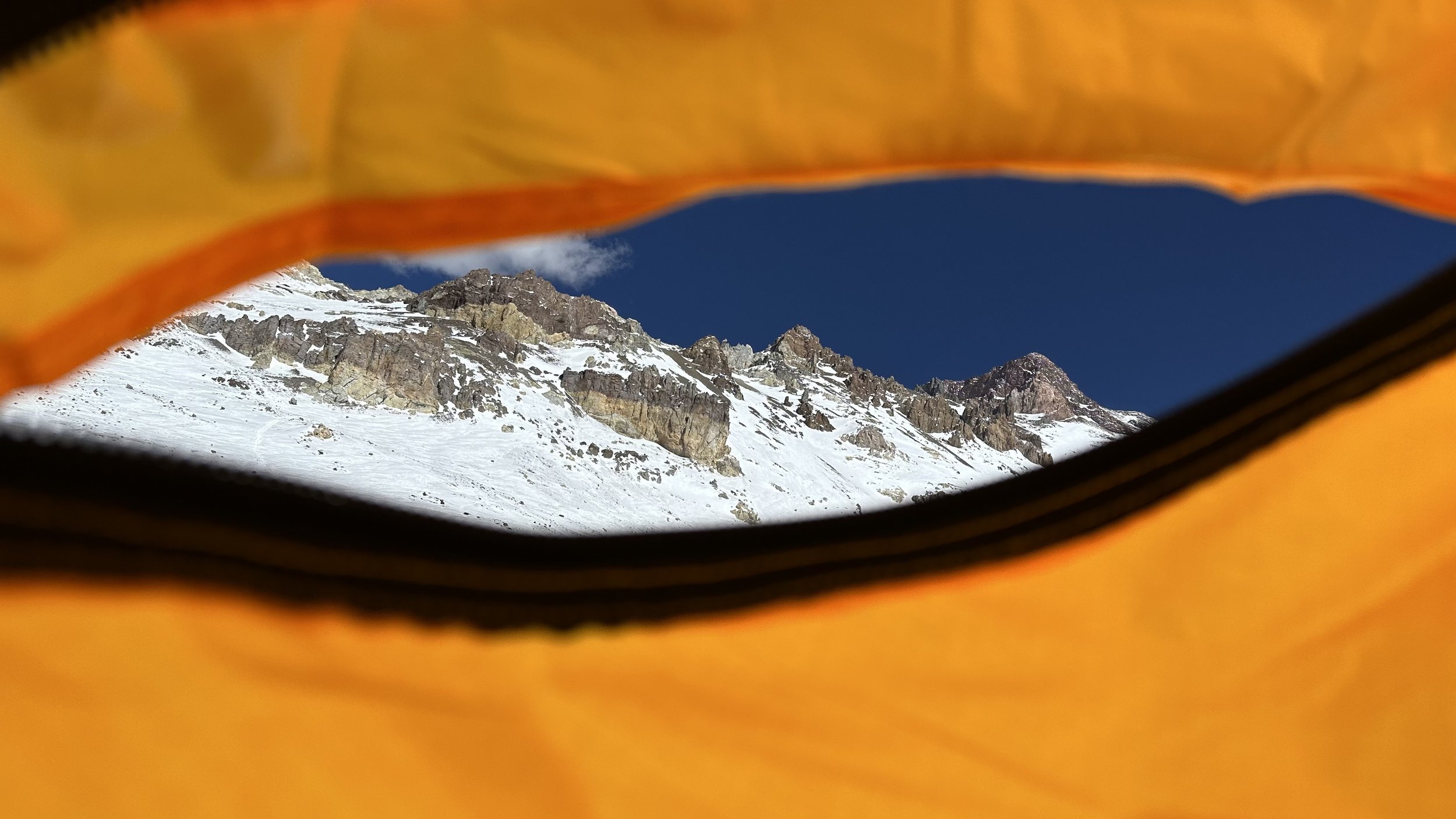
Photo: Kaspar Eevald
Argentina
Argentina is a Spanish-speaking country located in South America. The name Argentina comes from the Latin word argentum (silver), because it was the impetus for the colonization of the country. Argentina has a population of over 47 million and is divided into 23 provinces and one autonomous city (Buenos Aires); we are heading to the province of Mendoza. The currency is the Argentine peso (1€ = $250), but for larger transactions the US dollar is also accepted.
Argentina is considered one of the safest countries in South America, but petty theft can occur.
Prices are rather cheap: you can expect to spend around €15-25/day while spending time in the city. Card payments are possible, but there may be a minimum amount when paying, and you should always have cash on hand. There are ATMs in the city.
Tipping in restaurants is recommended, but not mandatory, and is generally 10-15%.
Traveling to Argentina
Estonian citizens can travel to Argentina visa-free for 90 days (up to 180 days).
There are no mandatory vaccines other than the usual ones, but the hepatitis A vaccine is recommended. Additional information can be found at vaktsineeri.ee and travel medicine offices.
There are restrictions on bringing food into Argentina, for example, meat products, dairy products, fresh fruits and vegetables, plant products, etc. are prohibited. In short, you can't take much food with you, we buy it locally. If you still want to bring food across the border, it must be in its original sealed packaging and must be declared at customs. As a warning, there are rumors that the border guards are simply hungry there too. Another option is to buy snacks and hiking food packages for high-altitude camps locally.
There are currently no Covid-19 restrictions.
You can consult with the travel agent regarding flight tickets, but it is important to be in Mendoza (MDZ) no later than the morning of January 6th.
Aconcagua
Aconcagua (6961 m) is a stratovolcano located on the border with Chile, one of the from the top of the seven continentsThere are several routes to the peak, but the most popular are the standard route, the Polish Traverse route, and the Polish Glacier Route; we will be doing the standard route, which has the best infrastructure. Many Estonians have also climbed it as a desirable peak.
Technically, Aconcagua is an easy mountain: you don't need ropes, climbing harnesses, ice axes, etc., but only a helmet, crampons, and, preferably, a pickaxe. Despite this, it is a high mountain, where the main dangers are altitude sickness, extreme sub-zero temperatures, and gale-force winds. As a result, you will need a proper mountain tent with snow aprons, as well as warm sleeping gear, clothing, and mountain boots (see equipment list above).
While on the mountain, we will stay in our own tents throughout the trip.
There are 5 camps on the regular route:
Confluencia (3400 m) or the first base camp
Plaza de Mulas (4200 m) or the second and main base camp
Plaza Canada (5000 m) or camp 1
Nido de Condores (5500 m) or camp 2
Colera (6000 m) or camp 3
At the Confluencia and Plaza de Mulas base camps, there is a mandatory medical check-up, where health indicators are measured and questions are asked - all with the aim of preventing cases of altitude sickness. Doctors have the right to cancel the mountain permit for health reasons, meaning they can prohibit the participant from continuing the hike.
Above base camp, we eat our own food and get drinking water mainly from melting snow (or bring our own if necessary). To account for meals not included in the package price:
Days on the acclimatization hill: 2
Days in Aconcagua high camps: 7 (+3 spare days)
Tipping porters is not mandatory, but is appreciated if the service is good.
Base camp services
Services included in the price:
Secure storage of belongings/equipment at base camps
Transport mules:
Penitentes (starting point) —> Confluencia (intermediate base camp) 15 kg/in
Penitentes —> Plaza de Mulas (base camp) 20 kg/in
Confluencia —> Plaza de Mulas 10 kg/in
Plaza de Mulas —> Penitentes 30 kg/in
Tent pitches at base camps
Breakfast, lunch and dinner at base camps (up to 9 days)
Using the dining tent
Up to 1h/day WiFi in base camps (up to 7 days)
Mobile phone charging at base camps
Use of toilet tents in base camps
Garbage removal from base camp
Services available for purchase at an additional cost:
Hot shower = 15 USD (Plaza de Mulas)
Charging batteries = $10, charging a power bank = $20
Food packs for high camps (breakfast, lunch, dinner and electrolytes) = 85 USD/day
Porters to high altitude camps (10 kg / 20 kg)
Base Camp —> C1 = 105/145 USD
C1 —> C2 = 150/255 USD
C2 —> C3 = 185/300 USD
C3 —> base bearing = 185/300 USD
Total package = 625/1000 USD
There is also a café in Plaza de Mulase, where you can also buy some goodies. And there are definitely other things you can spend money on if you want - for example, in the world's highest art gallery, equipment rental, a bed in shared tents, etc. Let us know in advance about any special requests, because January is the peak season for Aconcagua.
Travel documents and footnotes
The participant is responsible for the validity and condition of their travel documents. For this trip you will need:
passport;
sports insurance suitable for mountain hiking (read more on the FAQ page). A suitable sports insurance policy must be carried and is a prerequisite for participating in the mountain hike.
travel insurance.
Estonian citizens can stay in Argentina visa-free for 90 days.
At least one month before the trip, we will make a decision whether the trip is possible under Covid-19 conditions. If the trip is canceled due to circumstances caused by the pandemic that make the trip impossible (e.g. closing of national borders), we will refund the advance payment in full.
Summits are not guaranteed. As you might expect, weather is king in the mountains. So it is entirely possible that weather or dangerous conditions will prevent us from even attempting the summit. Nevertheless, it will definitely be an awesome experience!
Although at the end of the day everyone is still responsible for their own actions and consequences, we do our best to mitigate the risks associated with mountaineering. As a result, the group leader has the right to make ongoing decisions about the competence of the participants, the suitability of their equipment, physical/mental capacity, etc. and, if necessary, for example, to prohibit participation on summit day if it endangers the health of the group or the participant themselves. Hopefully, of course, there will be no need for this.
Read more also travel conditions or feel free to ask the adventure locomotives.
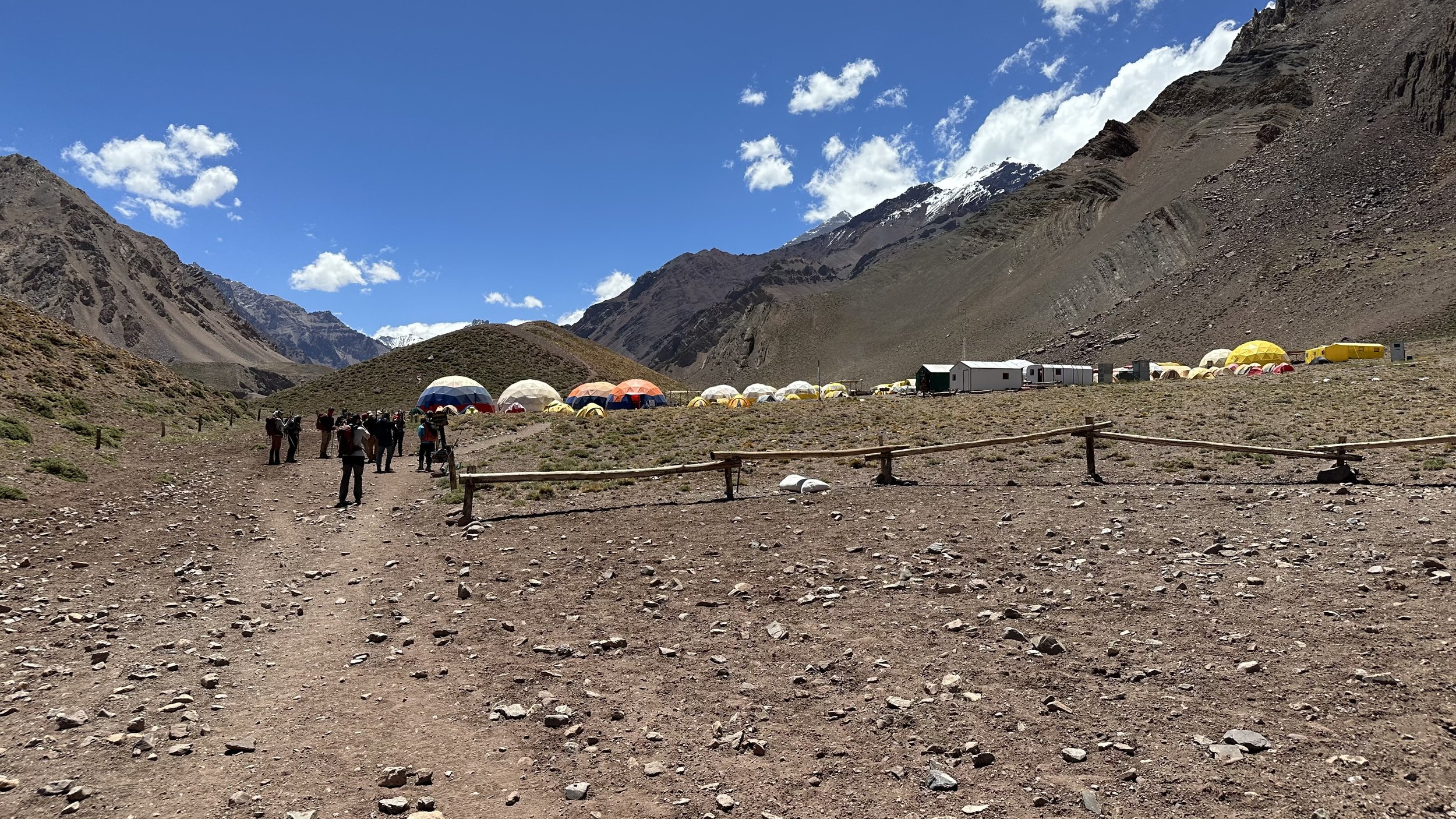
Photo: Kaspar Eevald
Don't worry, let's do it!
It seems difficult. Can I still do it?
Yes, you can. Trying to reach such a high peak may seem daunting at first glance, but it is definitely doable – especially if you have a good hiking guide at your side. You need to train and mentally prepare yourself for the effort. However, no mountain should be underestimated and reaching the top is not guaranteed. For this trip, we also assume previous mountain hiking experience at least over 4500 m, preferably over 5000 m.
But I don't have any travel gear, who can afford to buy it?
You'll have to spend a bit, because on such a high and cold mountain, proper equipment wears out. However, hiking and climbing equipment can be rented at a very reasonable price and can also be borrowed from friends. In addition, you can use any kind of clothing you have, especially sports and ski clothing.
What are the risks and will I survive?
It is an extreme sport/hobby that can be life-threatening, but there is no need to be overly afraid. Of course, there are certain dangers in the mountains and you have to take them into account, but that is what makes it such an exciting and exclusive experience. The most important thing for the group leader is to ensure the safety of the participants. The point is still to have an enjoyable experience and not to lose this mountain. The main dangers on Aconcagua are cold, storms and altitude sickness.
Okay, I registered. Now what?
Well, theoretically you could just vanish into thin air and appear on a plane. That's possible, but we highly recommend taking part in preparatory events - it's part of the fun. We organise preparatory hiking training, advise on suitable insurance and equipment, where to rent cheaply, what to train for, etc. We will definitely review the equipment you have collected just before the start of the trip and send reminders about important things.
Read more also frequently asked questions.
