
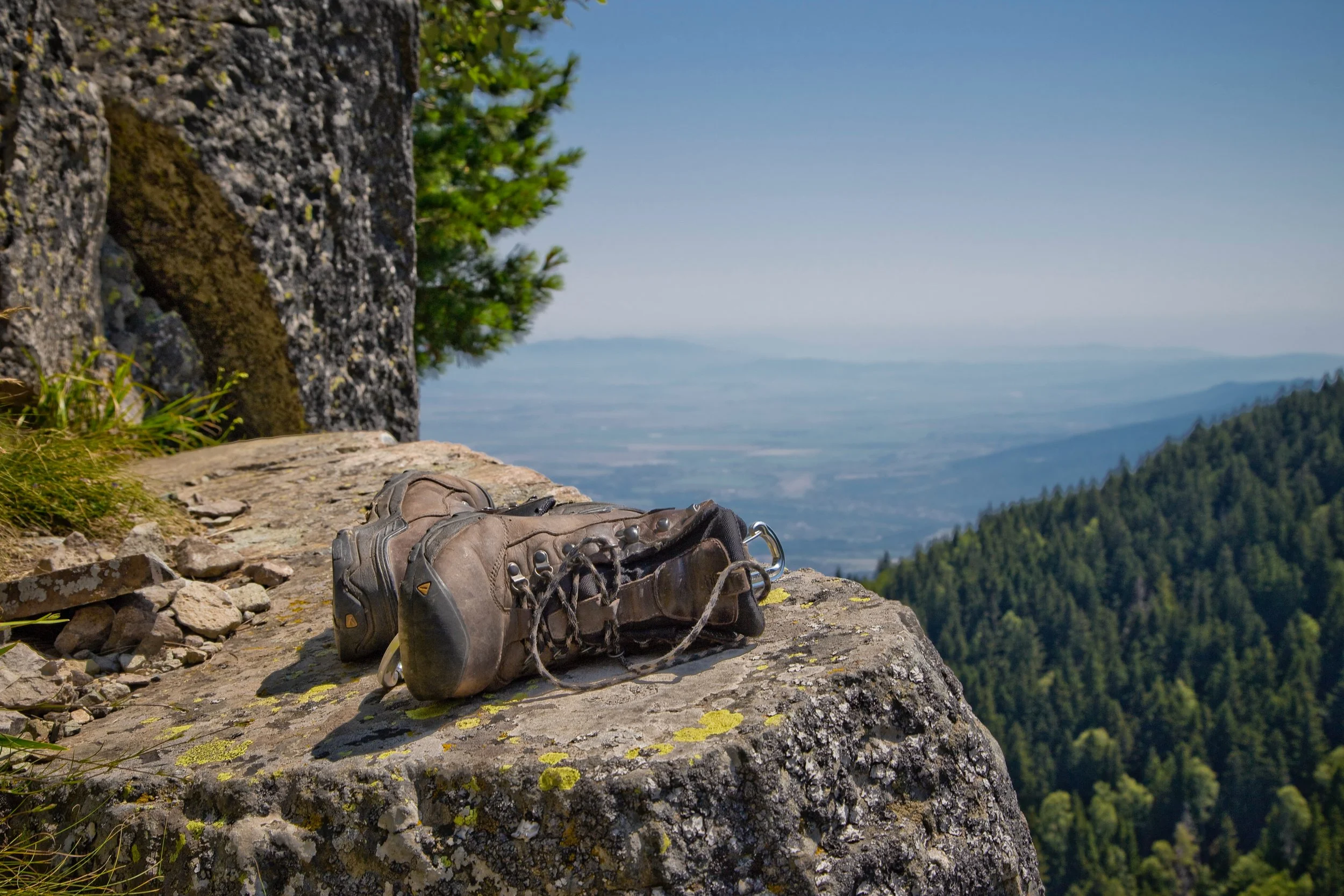
Suitable Footwear for the Mountains
From our own experience, we can say that hikes leave much more positive memories when you wear the right footwear. Footwear that suits both your body and the surrounding environment. But how do you choose that one perfect pair? What’s the difference between a mountain boot and an ordinary hiking shoe? And is there really a difference between socks and socks?
Different types of shoes
The range of different types of footwear that could, at least theoretically, be used for sporting activities is quite wide. Unfortunately, there is no one-size-fits-all solution for all outdoor activities, so you first need to think clearly about what you need the footwear for - mountaineering, long-distance hiking, walking or running.
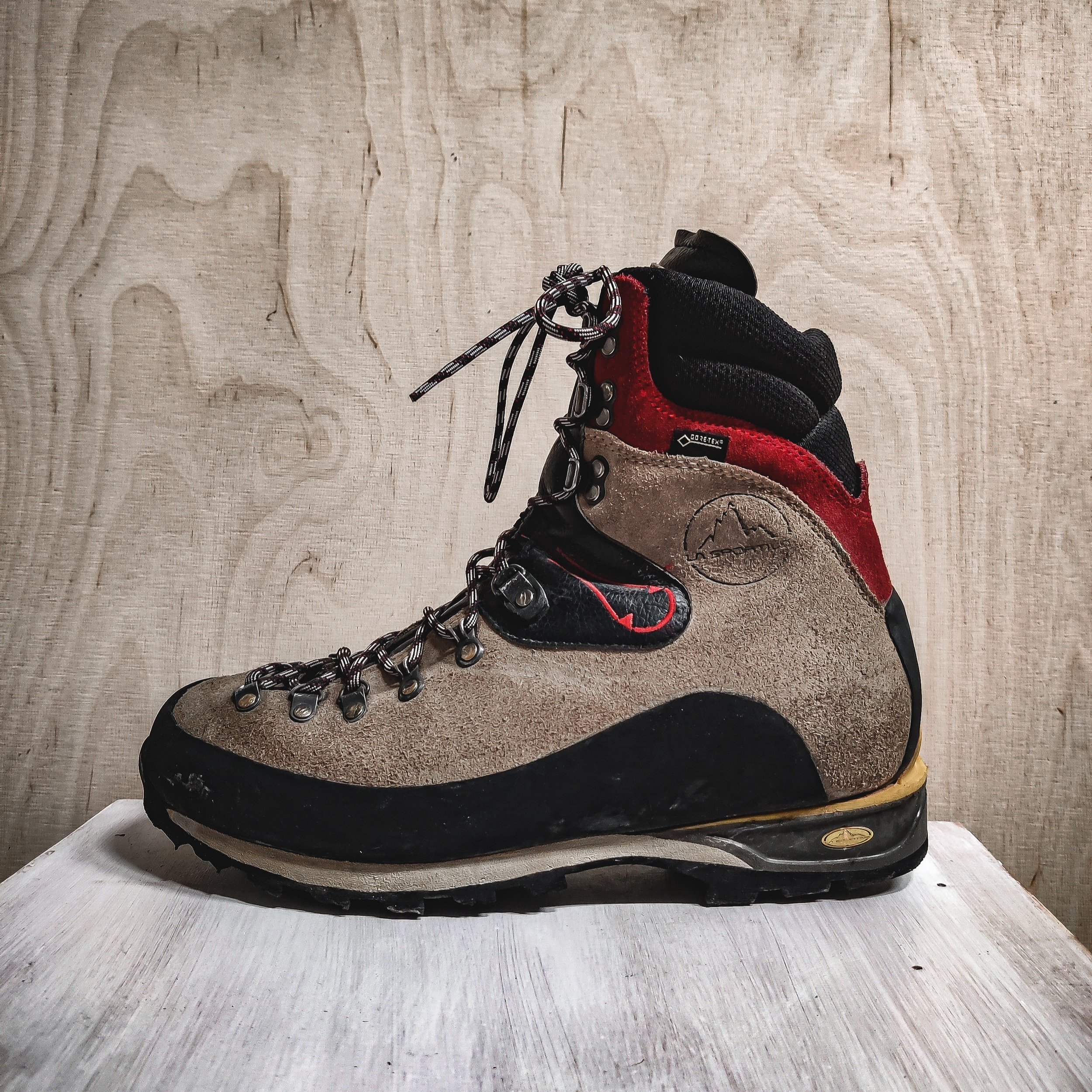
La Sportiva KARAKORUM EVO GTX in mountain boots.
Mountain boots are primarily designed for mountaineering and longer mountain hikes. Their stiff sole protects the soles of your feet from rocks and bumps so that your feet do not get too tired. They are higher than regular hiking boots to prevent ankle sprains on difficult terrain. The higher leg of the mountain boot also prevents snow from entering and thus getting your feet wet - it should be remembered that wet feet are the number one cause of blisters. Attention has also been paid to greater protection for the toes, which are easy to knock off against rocks in the mountains. Although mountain boots are heavier and may therefore seem clumsier, they are the safest and most foot-friendly option on glaciers and rock routes. Mountain boots generally also have special grooves on the back, where it is very convenient to attach crampons with quick-release fasteners. If your boots don't have such grooves, make sure you buy/rent boots that have a universal fastening system (with straps around the boot).
Mountain boots are distributed 4 categories:
B0 - softer and lighter unlined mountain boots that are not intended for winter conditions or on glaciers. These boots are suitable for mountain hiking in snowless conditions.
B1 - 3-4 season boots, designed for walking on easier snowy terrain and wearing with gentler crampons. These boots are already waterproof, have a rubber edge and a stiffer sole.
B2 - stiffer mountain boots, suitable for even colder conditions and rougher terrain. B2 category boots have an outer waterproof layer and a separate, insulated layer on the inside
B3 - specifically designed for climbing in winter conditions. Very stiff and heavy, but also very warm.
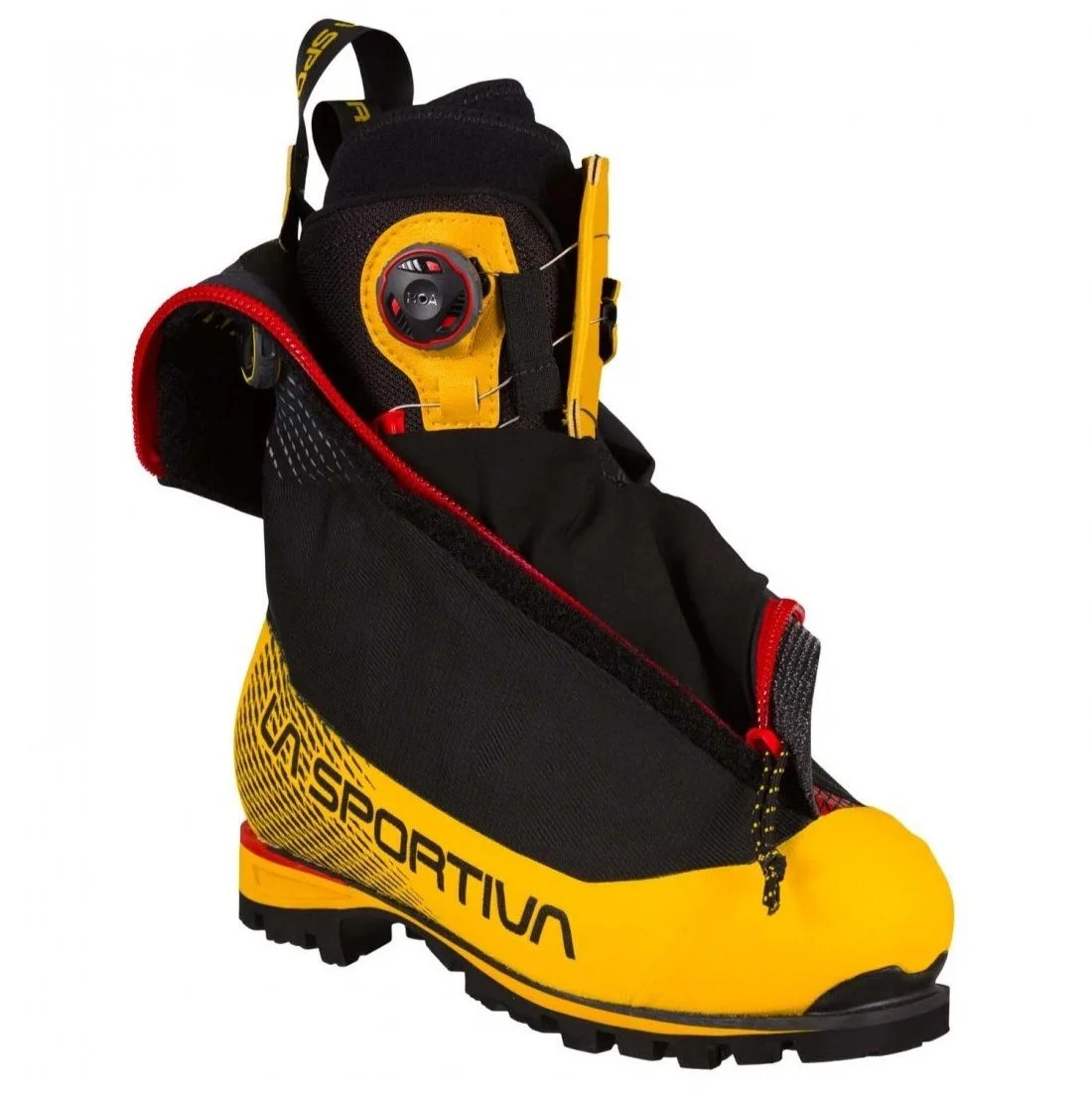
La Sportiva G2 EVO double-layered boot.
Classic mountain boots are suitable for climbing, for example, in the Alps in summer and peaks up to 5000-6000 m elsewhere in the world. It is not recommended to go higher in them, because mountain boots designed for lower altitudes usually do not have a warm enough lining. However, since temperatures above 6000 m (and in the Alps in winter) can drop below -20 ºC, simpler mountain boots are no longer sufficient. For high mountains, there are multi-layered mountain bootsto provide more warmth to the foot. They consist of an inner boot and an outer boot, which can be separated from each other. The inner layer is thermal (like a midlayer in clothing) and the outer layer is waterproof and windproof.

Lowa RENEGADE GTX MID The GTX in the name refers to the presence of the waterproof Gore-Tex membrane.
Hiking boots are lighter and have softer soles than mountain boots and are therefore intended for wearing on easier terrain for longer distances. Hiking boots also offer quite good support for both the sole and the ankle, but due to the softer sole and lower leg, they can be a little more uncomfortable to walk in on mountain routes, and cats may want to let their feet out of the boot if the flexible boot sole constantly twists them. However, if you only plan to go to the mountains once in your life, it is wiser to buy a decent waterproof hiking boot instead of an expensive mountain boot. As a rule, softer boots are more comfortable to walk on (but are correspondingly worse on technical terrain).
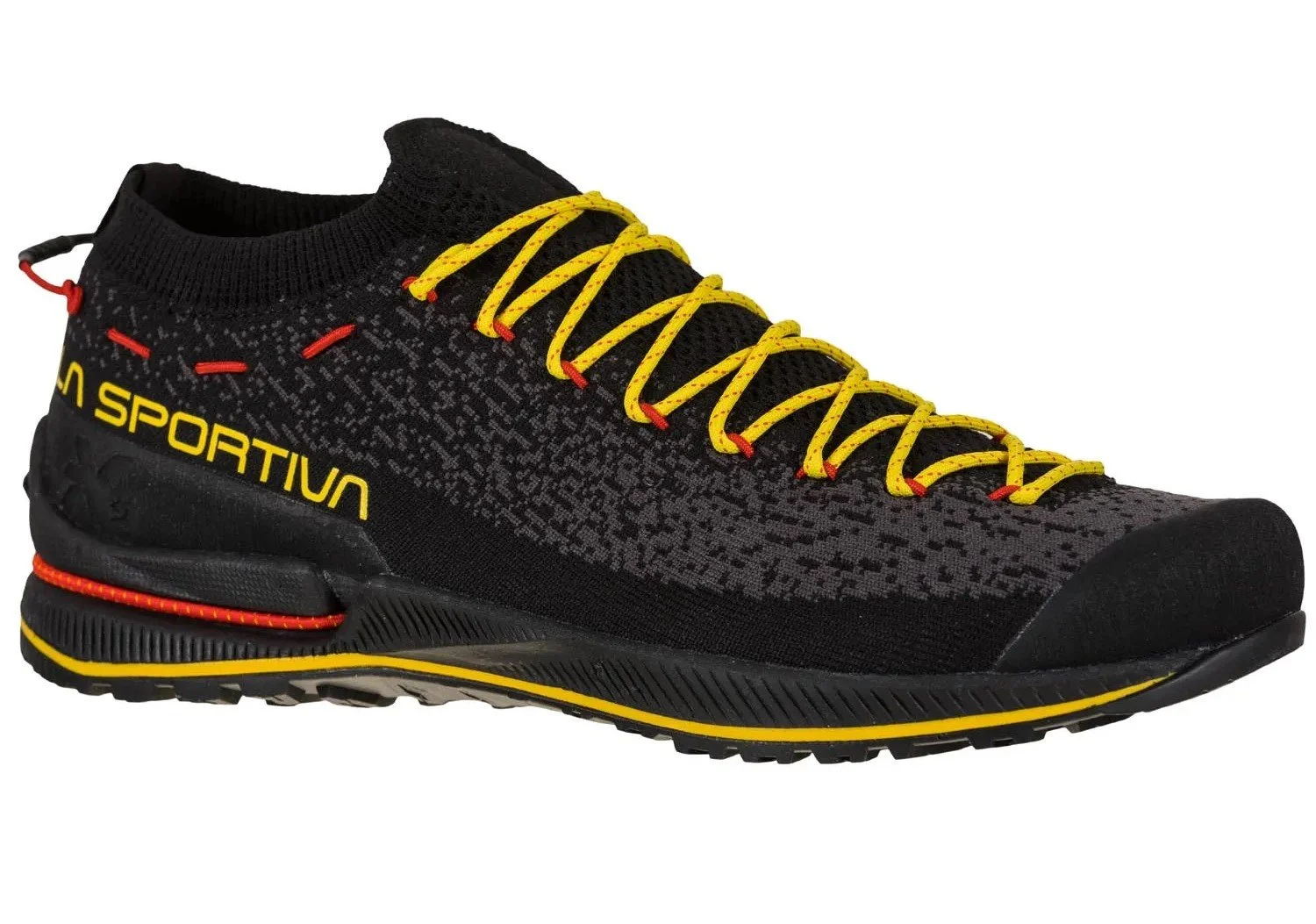
Approach shoe (engl approach shoe) is a special type of hiking shoe, which is designed specifically for hiking to the snow line in the mountains or, in the case of rock climbers, for moving to the rock wall. This is a very special category, where the main difference compared to a regular hiking boot is the climbing zone in the toe of the boot, i.e. the smooth part of the sole, which is good for stepping on small rock ledges. There is also more attention paid to reinforced toe protection and in some cases a longer part of the laces that runs out to the toe, to ensure an ideal fit for light rock climbing. The sole of these shoes is made of rubber, which ensures better grip on rocky surfaces. In general, approach shoes are divided into shoes for rock climbers (softer, lighter, more around the foot) and shoes for mountaineers (thicker, offering more support, with a thicker sole and designed for moving with a large backpack). There are also waterproof models.

La Sportiva ULTRA RAPTOR II LEATHER GTX hiking shoes.
Hiking shoes ja mountain-oriented trail running shoes Trail running shoes can also be a good choice for easier mountain hikes. They are especially suitable for hiking with a lighter pack, as they lack the ankle and foot support needed for a heavier backpack. Hiking and trail running shoes have a stiffer sole, a deeper tread pattern, and some models are also waterproof.
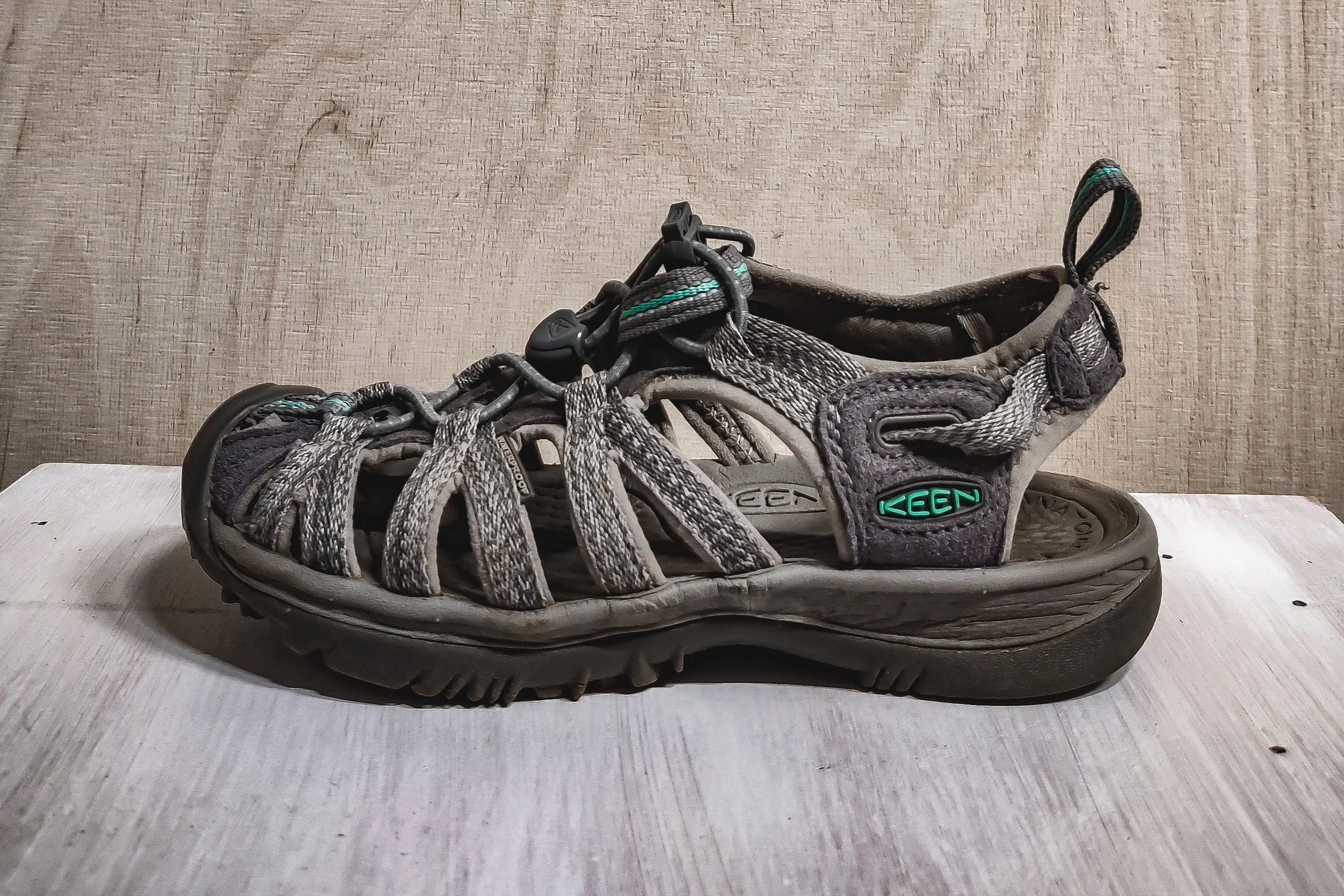
Hiking sandals – great companions for water hikes or river crossings on mountain hikes and shorter day hikes in hot weather. Usually, hiking sandals have a sturdy sole and are the most breathable footwear on this list. However, since sandals do not offer much support or protection for the foot, they are not recommended for long hikes. Hiking sandals can also be taken to camp in the summer if you want to let your feet breathe after a long day of hiking (Crocs are also ideal for this).
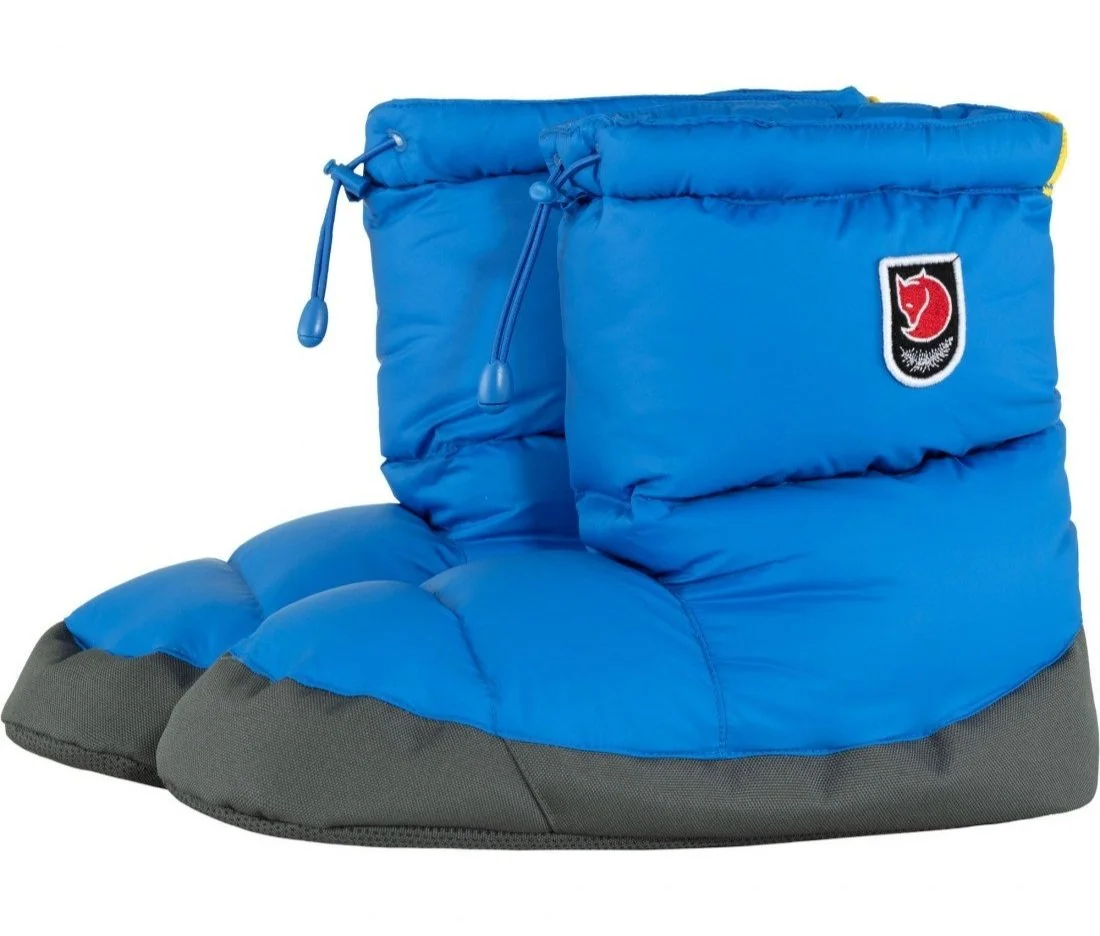
Camp slippers are comfortable footwear that are not suitable for hiking, but are very comfortable to wear at camp. Generally, they are lightweight slippers insulated with feathers or synthetic materials, suitable for walking in outdoor conditions. If your feet are swollen, blistered and tired, then they are a good choice for camping activities, but carrying them with you is of course a matter of preference.
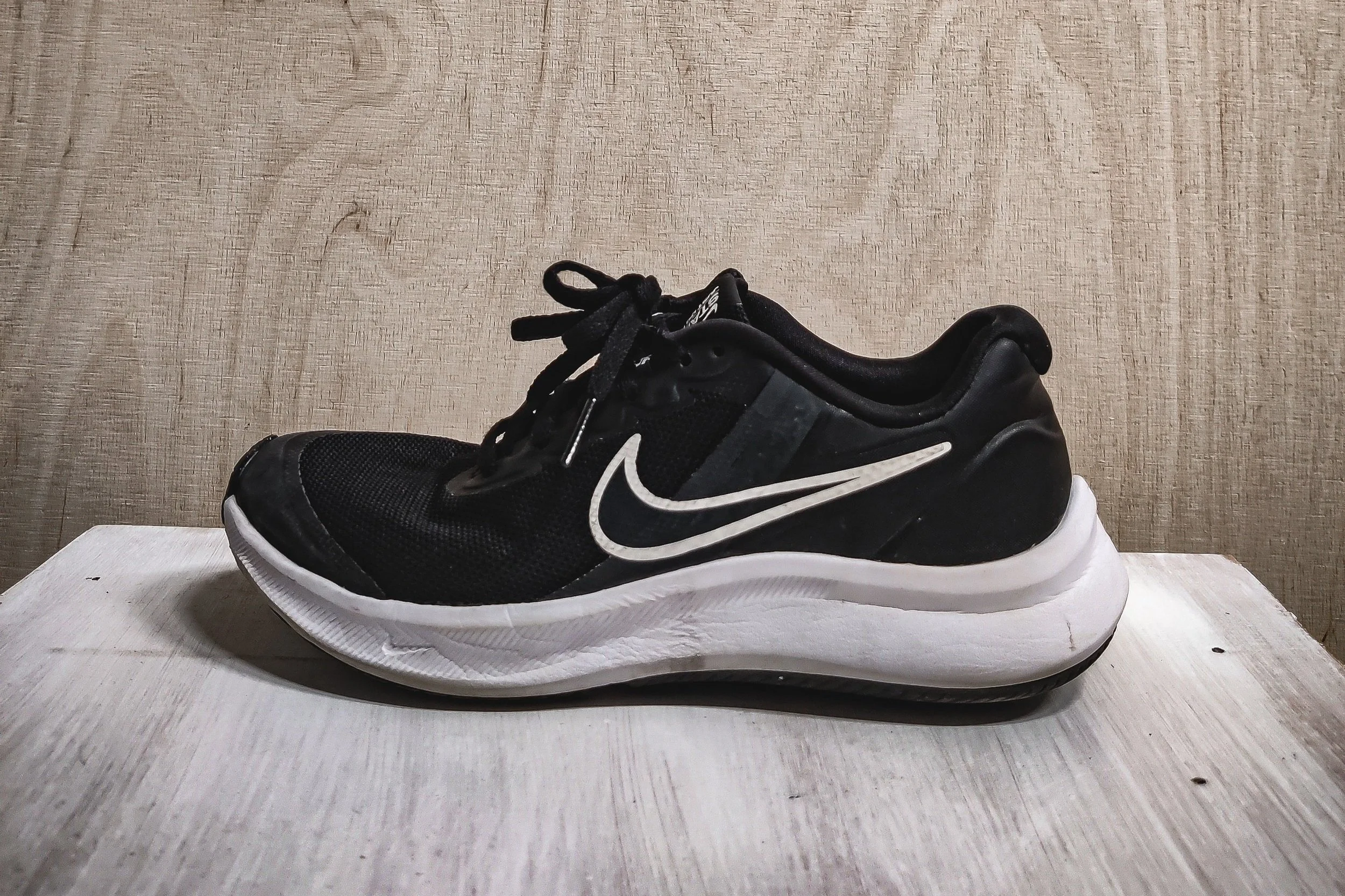
Running shoes, as the name suggests, are designed for running. Classic running shoes are not really suitable for long hikes in the mountains and/or with a heavy backpack. Their soles are too soft and/or thin for that, and they also do not support the ankle joint, which is why they tire your feet more than hiking boots. The purpose of a running shoe is to support your foot in a running stride, which is slightly different from a walking stride. However, without a heavy backpack, running shoes with a deeper tread pattern can be a great option for a day hike, especially in hot conditions.

Rubber boots. Rubber boots are definitely not suitable for hiking in the mountains or for longer hikes - they do not fit your foot properly, usually have thin and unsupportive soles, and do not breathe. This combination guarantees wet feet, blisters, and extremely tired soles at the end of the day. Rubber boots are suitable for shorter walks in very wet areas when waterproof boots are not available or the water level is higher than the calf of the boot. The exception is some very wet and muddy mountains, where rubber boots are also worth it.
Waterproof boots or not?
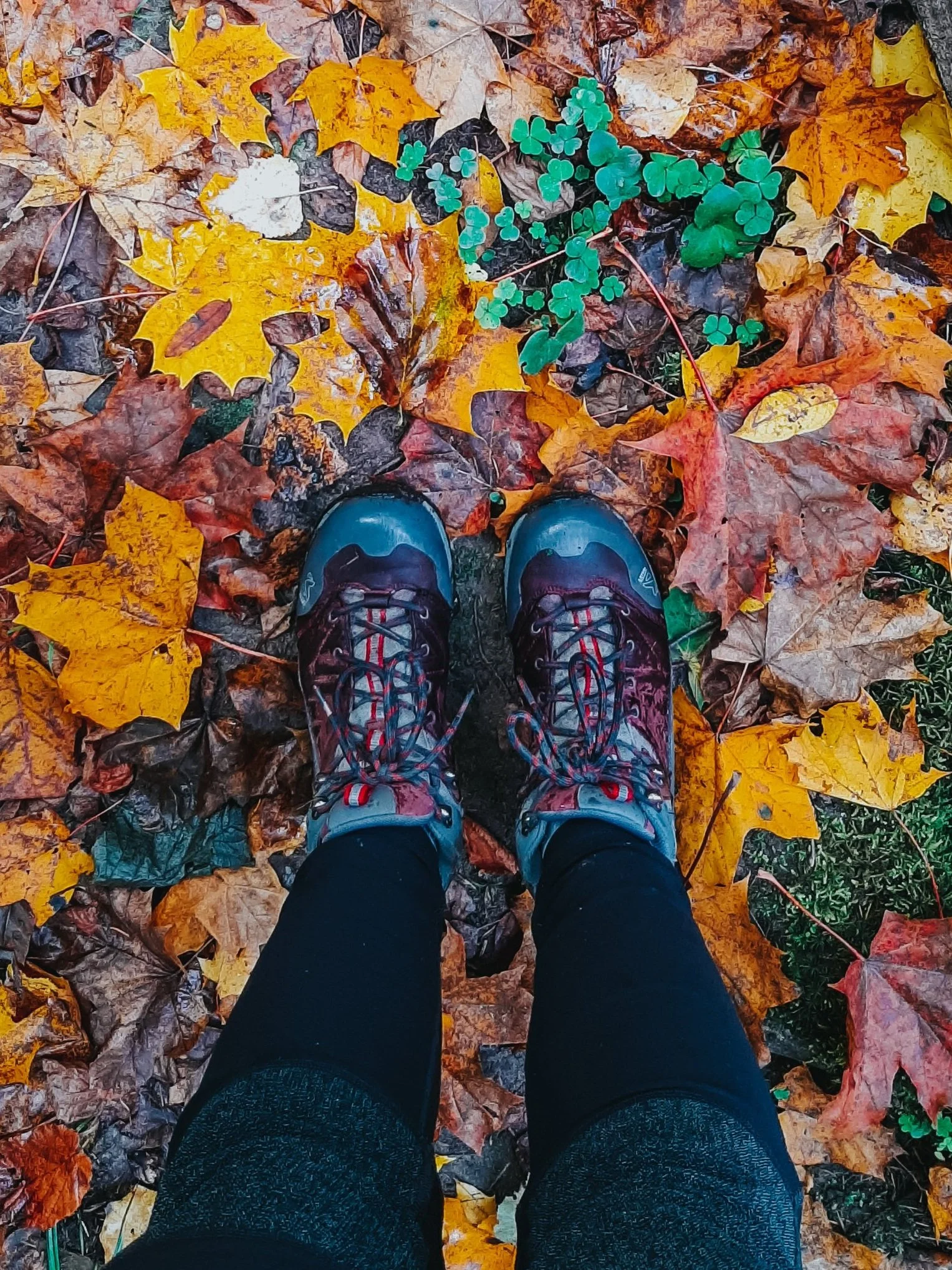
Wet shoes make your feet cold, cause blisters, and may not dry out overnight in sub-zero temperatures.
In warm weather and when hiking in Estonia, this may be considered a matter of taste, but in winter and when hiking on glaciers, it is very important that the boots are waterproof. Waterproof boots have waterproof membrane, which does not let water in from the outside, but allows water vapor from the body to escape. Note that some boots are also water-repellent - this means that the upper surface of the boots is treated with a substance that prevents the first drops from soaking through the boot, but when walking in wet conditions for a long time, water still squeezes its way through the layers of the boot. Generally, you should have at least one pair of waterproof boots on a mountain hike.
Why do you need waterproof boots when hiking on glaciers and in winter? Imagine what it feels like to walk for 10 hours with wet feet. It's -10 ºC outside and a cold wind is blowing. There's always cold snow around your feet. In addition, on a mountain hike with tents, your boots don't dry out overnight, so the next day you'll still be walking with wet boots. In the end, you probably won't have a very pleasant memory of the adventure... Your mountain boots need to be waterproof, because if you're stuck in the snow with wet feet all day, you might end up in a situation where you have to say goodbye to some of your toes.
When looking for waterproof boots, don't get confused by whether the upper is fabric or suede. It's just the upper, the design. The waterproof membrane is located in the inner layers of the boot. Usually, the outer layer of a waterproof boot is treated to be water-repellent so that it doesn't let the first water into the boot.
What else to pay attention to?
It is advisable to try the boots on in-store before purchasing online. trying The width of the sole, foot shape and foot sizes of different companies can vary greatly, and it would be disappointing to discover after walking a few kilometers in new boots that they are a bit tight. Take your time and try on models from many different companies, including in different sizes.
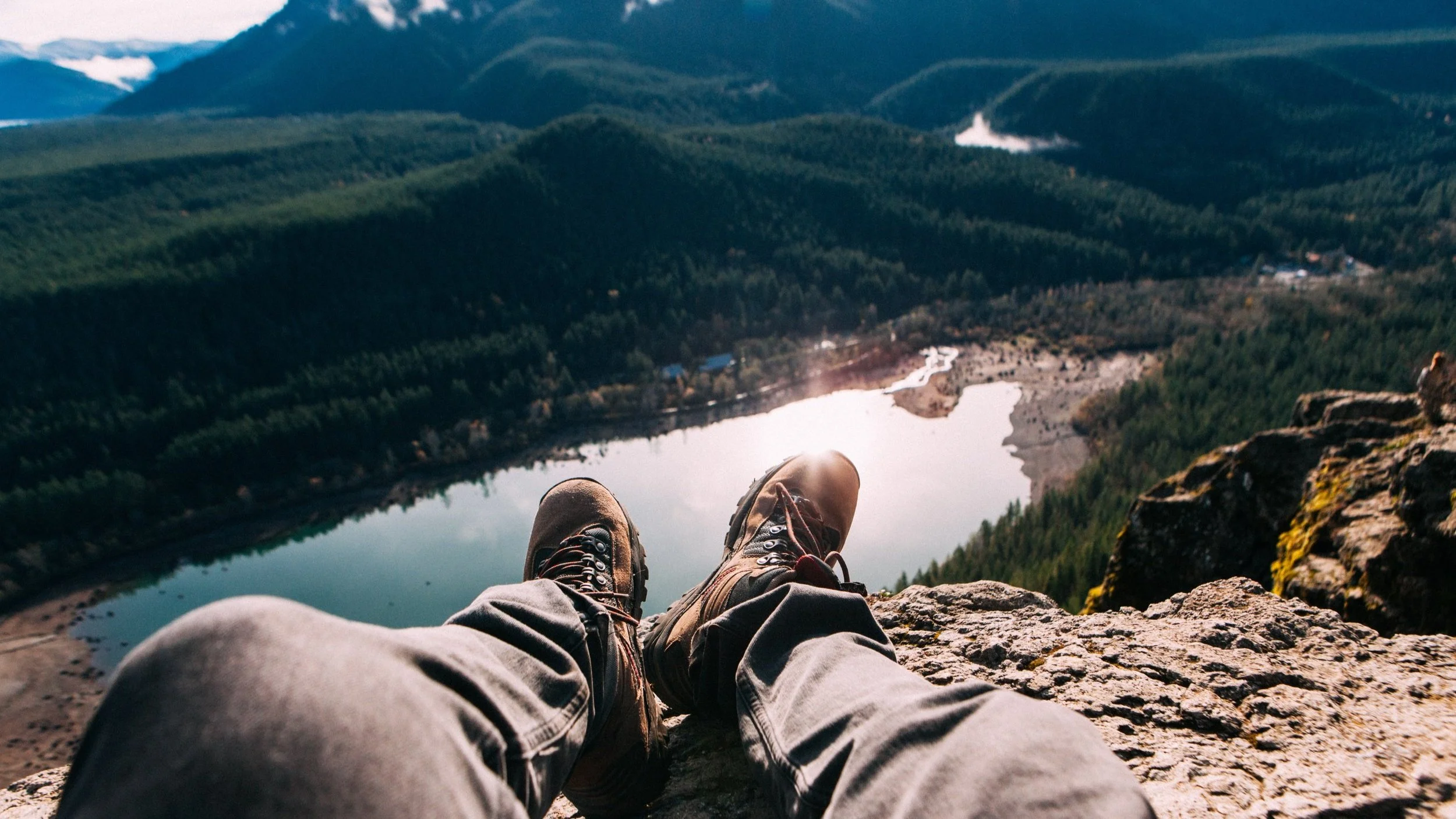
When trying on boots, bring the sock you plan to wear them with (not thicker or thinner). Make sure that the boot does not press against your toes, and at the same time, your toes cannot hold a big dance party in the toe of the boot. Keep in mind that when you move downhill, your foot will shift forward in the boot, but it should not hit the toe of the boot; in the worst case, you will be a few toenails poorer. Also pay attention to the width of the lacing - so that it does not squeeze on the sides, but so that your foot cannot move too much from side to side in the boot. Rock from heel to toe, squat, walk briskly around the store and, if possible, try walking on a slope - hiking stores generally allow you to try on boots this way.
When wearing a boot, you should feel like your foot is safely cradled (including the heel not moving much in the boot) and nothing hurts or rubs anywhere.
SOCKS
However, good boots alone won't solve the problem. The sock has to be good too. The classic cotton thread sock is probably the worst sock option for hiking, both in terms of material and fit. Cotton is known to be a material that absorbs water very well, but doesn't dry out. But what are the consequences of wet feet? Blisters and feeling cold. Also, regular cotton socks don't fit your foot tightly enough to keep them from shifting while you walk. But what are the consequences of friction between the sock and your foot? Again, blisters.
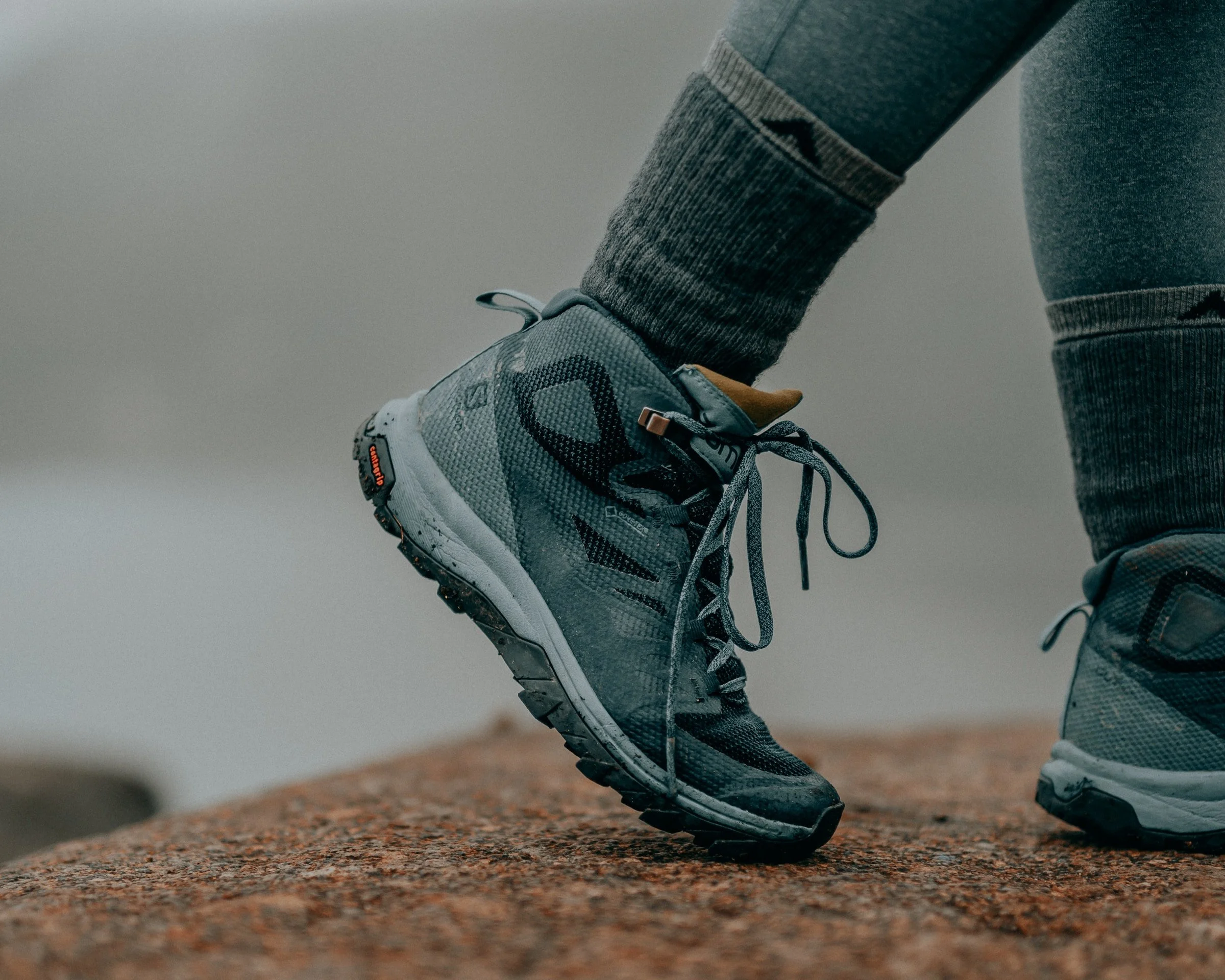
It is recommended to buy for hiking special hiking socks. It may seem absurd to pay 15-20 euros for a pair of socks, but they are truly worth the price. Before buying hiking socks, the author of the article had more blisters on his feet than fingers on one hand after every 20-kilometer hike, but after buying hiking socks, he has not had a single blister while hiking. Hiking socks are designed to stay tightly around the foot, and its different layers push moisture away from the sock, keeping the foot significantly drier. In addition, make sure that the sock extends higher than the edge of your hiking boot, otherwise there is a risk that the upper edge of the boot will rub against the skin.
When hiking in cold conditions, you may also need warmer socks. Be sure to note that if you have boots with a waterproof membrane, you should not wear classic granny socks with them. wool socks. Wool socks emit fibers that clog the microscopic holes in the waterproof membrane that allow body moisture to escape from the boot. You don't want to turn your expensive boots into rubber boots, do you? It is recommended to use socks insulated with synthetic materials or merino wool, which do not emit fibers. Merino wool is also much warmer than airy homespun wool socks because it is more tightly woven.
When choosing socks, it's important to know your feet - how cold-resistant are your feet? How well does your blood circulate? Think critically if someone recommends that you wear super-warm socks - could their feet be more cold-resistant than yours? Hiking with socks that are too warm will still result in dampness, no matter how good the sock is.
Since the world of hiking socks is big and wide, we'll finally share a few good models with you that have never caused any negative emotions:


